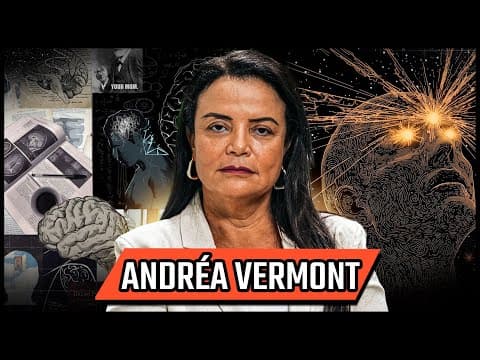
ANDREA VERMONT REVELA A MENTE HUMANA: traumas, desejo, vícios e cura | 3 IRMÃOS #736
The Physical and Emotional Fusion of Mother and Child
Pregnancy and early motherhood involve a profound physical and emotional fusion between mother and child, where the mother's body adapts significantly to accommodate the growing infant. This deep connection, often described as a mental strength rather than pure physical force, allows mothers to endure immense physical challenges, like carrying a child for extended periods, highlighting a unique biological and psychological bond.
The Role of Discipline and Love
Discipline, even if perceived as harsh by the child, can be an expression of a mother's presence and a necessary part of guidance, especially when contrasted with neglect or abuse. While strictness can be misconstrued, the intention behind it, when rooted in a desire for the child's well-being and development, differs significantly from pathological behavior. The key is whether the discipline is deserved or arbitrary.
The Unavoidable Trauma of Birth
The very act of birth is a profound trauma, marking the beginning of human suffering and the lifelong quest for connection and responsibility, as theorized by Freud. This initial disconnection from the womb's security sets the stage for seeking external validation and care throughout life.
Emotional Scars: Fragile Areas Requiring Care
Emotional wounds, like physical burns, result in 'thin-skinned' areas that are more vulnerable. While healed, these areas require careful management and protection from situations that could re-open the wound, necessitating a conscious creation of a safe environment.
The Perversity of Exploiting Wounds
Individuals who intentionally use another person's known vulnerabilities and past pains against them are 'perverse.' Engaging with such individuals is detrimental, as they will continuously reopen wounds, preventing healing. The only recourse is to distance oneself from them.
Setting Boundaries: Protecting Your 'Holy Ground'
Protecting oneself from emotional harm involves setting clear boundaries, akin to Moses being told to remove his sandals because the ground was holy. This means preventing others from bringing their 'dirt'—their negativity, prejudices, and unresolved issues—into your personal space.
Identifying Abuse: Trust Your Intuition
Recognizing an abusive relationship involves trusting your intuition and observing whether your life has improved or worsened since the person entered it. Abusers often shift blame, making you doubt yourself and isolating you from your support systems.
Self-Sufficiency in Relationships
Andrea Vermont posits that individuals should be whole and happy with themselves before entering a relationship. Relationships should aim to 'supplement' each other, enhancing an already good life, rather than trying to 'complete' a deficient self. This approach prevents unhealthy codependency and fosters growth.
Addressing Conflict: Directness vs. Recalque
The discussion touches on whether people are abusive knowingly or unknowingly. Vermont prefers to believe it's often unknowing, as intentional abuse suggests psychopathy. She introduces the concept of 'recalque' (repression), where issues with one person are taken out on another in an inappropriate setting, like discussing marital problems at a mother-in-law's house. This is deemed cowardly and immature.
Parental Influence on Partner Choice
Vermont and the hosts explore the idea that people often choose partners who resemble their parents. A man might choose a woman similar to his mother, and a woman a man similar to her father. This is linked to the primary reference for affection and role modeling during formative years.
Masculinity: Protection and Biology
Vermont defines a key aspect of masculinity as protection, rooted in biological differences like higher testosterone levels and greater physical strength in men. She contrasts this with women's natural roles in nurturing and caregiving, emphasizing these are biological distinctions, not social constructs of machismo.
The Danger of Romanticizing Societal Issues
Vermont argues that media coverage of issues like reborn babies often romanticizes them, failing to address the underlying psychological causes or potential harms. She calls for a more direct, honest approach that confronts societal problems head-on, rather than presenting them in a superficial or sensationalized manner, which can inadvertently encourage harmful behaviors.
Andrea Vermont: Eleutheronomy vs. Autonomy
Vermont introduces the philosophical concept of 'eleutheronomy' – an internal moral compass guiding behavior – as distinct from 'autonomy' (following external laws). She suggests some children, like her daughter Bia, are naturally eleutheronomic, requiring less external direction.
Andrea Vermont: Parenting as Training, Not Pampering
Vermont argues against 'pudding children' (overprotected, fragile individuals) and advocates for parents to act as authorities, not authoritarians, by setting firm boundaries and allowing children to face consequences. This 'training' prepares them for the realities of the adult world, where systems enforce rules.
Andrea Vermont: The 'Table' as Family Foundation
Vermont uses the analogy of a 'table with many chairs' to illustrate that family is built through shared meals, conversation, education, and correction, not just biological connection. She criticizes the modern trend of families eating separately with phones, losing this vital communal experience.
Andrea Vermont: The Mother's Instinct for Connection
Vermont observes that mothers, driven by hormones like progesterone and estradiol, tend to be more proactive in maintaining family connection and seeking updates from children, contrasting with a father's potentially more relaxed approach. She emphasizes the importance of this constant connection for child well-being.
Andrea Vermont: Ignorance as an Anesthetic
While ignorance can act as a temporary anesthetic, shielding individuals from overwhelming reality or pain, it's not always a gift. Excessive 'anesthesia' can prevent necessary growth and action, though in some extreme situations, temporary ignorance is a survival mechanism.
Andrea Vermont: Narcissism Explained
Narcissism is a natural stage of development, but Narcissistic Personality Disorder arises when early caregiving fails to provide validation, causing individuals to redirect love inward. This can lead to manipulative behavior, fear of abandonment, and severe damage to their children.
Andrea Vermont: The Weight of Parental Expectations
Parents often project their unfulfilled desires onto their children, creating immense pressure. This burden prevents children from living authentically and can lead to significant emotional distress, even impacting their ability to form healthy relationships or achieve personal success.
The True Motivation for Parenthood
The decision to have children, whether biologically or through adoption, must be rooted in a genuine desire to share love and emotional abundance, not in selfish or misguided reasons. Motivations like ensuring care in old age, fulfilling societal expectations, or seeking personal pride are fundamentally flawed and set up unhealthy dynamics.
Andrea Vermont: Navigating Narcissistic Relationships
Relationships with narcissists are inherently damaging because the narcissist prioritizes their own needs and benefits above all else, often sacrificing their partner. This behavior stems from a deep-seated fear of rejection, driving them to manipulate and control to avoid abandonment.
Andrea Vermont: Unpacking Parental Trauma
Deep-seated emotional wounds, particularly those stemming from parental relationships, can significantly shape an individual's life and perceptions. Vermont shares her own profound grief over her unfulfilled relationship with her father, lamenting the missed opportunities for connection and mutual pride.
The Importance of Living Fully for the Departed
The primary obligation to those who have passed away is to live a full and meaningful life, honoring their memory through one's own success and well-being. Vermont believes her father would be proud of the life she has built and the help she provides to others through her work.
Understanding Generational Trauma and Its Roots
Trauma and difficult family dynamics can be passed down through generations, impacting individuals in ways they may not initially understand. Vermont reflects on her mother's experiences with an alcoholic grandfather, recognizing how this likely influenced her mother's own struggles and her own fears regarding her mother's well-being.
Mental Illness vs. Spiritual Malady
Mental health conditions like schizophrenia, depression, and anxiety are legitimate illnesses requiring medical and scientific treatment, not spiritual interventions or 'evil spirits.' Relying solely on religious or spiritual remedies for mental illness can be detrimental, delaying proper care and exacerbating suffering.
The Liberating Power of Knowledge
Andrea Vermont emphasizes that knowledge is liberating; understanding a situation or oneself allows for correct action and freedom from ignorance. Conversely, ignorance enslaves individuals, making them susceptible to misinformation or manipulation. This principle is applied to personal growth and seeking help.
Therapeutic Modalities: A Matter of Style
Different therapeutic approaches, such as Cognitive Behavioral Therapy (CBT) and psychoanalysis, suit different individuals. What works for one person, like facing fears head-on with CBT, might be detrimental to another whose issues stem from deeper roots, requiring a psychoanalytic approach to explore the 'why' behind their struggles.
The 'Middle Child' Stigma and Family Dynamics
The common perception is that middle children may feel overlooked compared to the first (highly anticipated) and last (cherished) child. However, the speaker's personal experience with a complex family structure, including children born at different times and to different partners, challenges this simple categorization, showing how individual family dynamics create unique experiences.
The Call to Vote: IBET Podcast Awards
The hosts are urging viewers to vote daily for the 'Três Irmãos' podcast in the IBET awards to help it rank among the best in Brazil. They emphasize that viewer votes are crucial for their success and mention a surprising action if they win. The voting period extends until June 13th.