Victor Davis Hanson: Fauci's Narcissism and Diary Revelations
Dr. Anthony Fauci's private diary entries reveal a profound narcissism and an obsession with his own fame and public image, even amidst the escalating COVID-19 death toll. He meticulously documented flattering media coverage, including front-page articles and profiles, while the country faced significant loss of life. This self-absorption appears to have driven his decision-making and public pronouncements throughout the pandemic. The diary entries suggest a pathological need for validation, overshadowing genuine concern for public health outcomes. This self-aggrandizing behavior is compared unfavorably to other public figures, highlighting its extreme nature. The diary entries serve as a stark illustration of how personal vanity can corrupt public service. This self-serving focus raises critical questions about the integrity of his guidance during a national crisis.
Hanson: Smearing Critics and Silencing Dissent
Dr. Fauci systematically demonized and smeared scientists and public health experts who disagreed with his pandemic policies, including Scott Atlas, Jay Bhattacharya, Sunetra Gupta, and Martin Kulldorff. These individuals, who advocated for less restrictive measures like targeted quarantines and questioned the efficacy of universal masking and vaccine mandates, were labeled as 'fringe' or 'the three stooges.' Hanson recounts personal experiences of being pressured to stop writing in defense of Scott Atlas, illustrating the intense pressure to conform to Fauci's narrative. This suppression of alternative viewpoints, even from credible experts, stifled scientific debate and prevented a more nuanced and potentially effective response to the pandemic. The academic and professional ostracization faced by these critics highlights a disturbing pattern of silencing dissent to protect a particular agenda. This intellectual authoritarianism ultimately harmed the public discourse and the scientific process itself.
Megyn Kelly: The Weaponization of 'Follow the Science'
Megyn Kelly argues that the phrase 'follow the science' was weaponized during the pandemic, particularly by the Biden administration, to shut down debate and discredit any opposition to the established narrative. She contends that this slogan was used to portray Trump supporters and dissenting scientists as irrational or dangerous, thereby consolidating power and control.
The pandemic, despite its fear and disruption, provided Goldie Hawn with a much-needed pause from her constant travel and work. This forced stillness allowed her to appreciate the natural world's recovery, observing cleaner air and rivers, which made her reflect on humanity's impact. She found blessings in being home, cooking more, and spending precious time with her son, realizing that sometimes, going inward can lead to profound personal growth and a reconnection with what truly matters.
Goldie Hawn: Family First
Goldie Hawn emphasizes that family and genuine connections are paramount, far more important than Hollywood fame or celebrity parties. She recounts how her father instilled in her the importance of humility and recognizing one's place in the larger scheme of things, a lesson she has carried throughout her life and applied to raising her own children. This philosophy has led her to prioritize close relationships and a sense of belonging over the superficial aspects of stardom, fostering a grounded and normal life for her family.
Hawn's Near-Fatal Accident and Its Aftermath
Goldie Hawn recounts a harrowing car accident from her early career where she was a passenger in a speeding vehicle. The crash resulted in significant injuries and a profound out-of-body experience, leading to her hospitalization and a period of vulnerability. This traumatic event profoundly impacted her, highlighting the fragility of life and the importance of support systems, as she ultimately relied on a former associate for care after being sent home alone.
Megyn Kelly and her guests argue that Canadian authorities, including the Toronto Police Service and Swim Ontario, actively worked to suppress journalists and protesters during a swim meet event. They claim police issued trespass notices on public sidewalks and that the heavy police presence was disproportionate to the event, suggesting an intent to silence dissent rather than maintain order. The police's actions are framed as an overreach, potentially violating journalistic freedoms and public property rights.
David: Transgender Athletes and 'Woke' Ideology
David argues that Canadian athletic bodies are compelled by non-elected Human Rights Commissions to accommodate transgender athletes, overriding the criminal code. He questions the true intentions behind allowing transgender individuals in women's sports, suggesting it's less about fairness and more about invading female spaces and potentially causing harm. The lack of transgender participation in a separate 'other' category at World Aquatics events is cited as evidence that the issue is not solely about competitive swimming.
Jamil: Hypocrisy in Protest Responses
Jamil criticizes Canadian Prime Minister Justin Trudeau's response to the trucker convoy protests, highlighting hypocrisy by comparing it to his perceived support for BLM protests during COVID-19 lockdowns. He argues that Trudeau is 'gaslighting' Canadians by restricting civil liberties under the guise of freedom and that the mainstream media unfairly portrays protesters negatively while lionizing others. The use of police force against truckers, including a woman being trampled by a horse, is presented as excessive and unwarranted.
In October 1999, a grand jury voted to indict John and Patsy Ramsay on charges of child abuse resulting in death and accessory to murder, but District Attorney Alex Hunter chose not to file these indictments, publicly announcing that no charges would be filed. This decision kept the true bills sealed for 14 years, leaving the Ramsays under a cloud of suspicion without a formal trial.
The Financial and Personal Toll
The ongoing suspicion and legal battles following JonBenét's death imposed a severe financial and emotional burden on the Ramsay family, reportedly costing them millions in legal fees, investigators, and publicists, forcing them to sell their home and significantly diminishing their wealth.
The 'Daxis' Confession: A Digital Ghost
Beginning in 2002, an anonymous individual calling himself 'Daxis' began emailing Professor Michael Tracy, detailing a sexual and romantic interaction with JonBenét that allegedly led to her death. Daxis provided specific details about the crime scene and the Ramsay home, claiming to be under investigation in multiple states, but his identity and location remained elusive for years.
Warren Hudson, Nolan Wells's best friend, recounts that Nolan decided to stay behind on Horn Island for a girl named Katie, even after Hudson urged him to get on the boat back to the mainland due to the boat having issues. Hudson states it was common for people to switch boats, and Nolan's phone was likely left on the boat with many others due to drinking.
Crump's Independent Autopsy
Benjamin Crump's legal team released results from an independent autopsy, stating they could not determine the cause or manner of death, partly due to the absence of the throat structures. Kelly points out this is a common forensic practice and not indicative of foul play, while criticizing Crump's team for injecting race into the case.
Nolan Wells Case: Unanswered Questions
The investigation into Nolan Wells' death is ongoing, with authorities currently stating no signs of foul play. While an independent autopsy was inconclusive, the sheriff's office and the Ben Crump team are awaiting toxicology and further forensic examination of the victim's phone. Accusations have been made by Congressman Jackson suggesting deception and a cover-up by those close to Wells, which Megyn Kelly strongly refutes, calling them irresponsible and lacking evidence. The police report that the friends are cooperating.
Lou Smith's investigation focused on a basement window as the point of entry for an intruder, citing a scuff mark on the wall and a suitcase found beneath it. He demonstrated that a person could indeed fit through the window, suggesting it was manipulated.
The Enigmatic DNA Evidence
A partial male DNA profile found on JonBenét's underwear and long johns, belonging to no one in the family, is presented as strong evidence of an intruder. However, the small sample size and potential for transfer raise doubts about its definitive link to the perpetrator.

The Pattern of Violence
Lou Smith linked the Ramsey case to a 1997 home invasion where a 12-year-old girl was assaulted, suggesting a pattern of behavior by the same intruder. Both girls attended the same dance studio, a connection Smith believed was too significant to be a coincidence.
The debate surrounding women's sports, particularly concerning transgender athletes and statements by figures like Sophie Cunningham, serves as a critical litmus test for ideological alignment. Those who defend traditional definitions of women's sports are seen as authentic, while those who push for more inclusive policies are labeled as radical or out of touch with public sentiment.
The Radicalization of the Democratic Party
A significant portion of the Democratic party, particularly influenced by the DSA, is embracing increasingly radical policies such as abolishing prisons, police, borders, the Senate, and the Supreme Court. This ideological shift is causing internal fractures and alienating moderate voters, leading to concerns that the party is moving too far left for mainstream appeal.
Emily Jashinsky: Democrats' Radical Shift
The Democratic party is increasingly embracing radical socialist policies, such as open borders and defunding the police, which are litmus tests on a class basis. While some Democrats have attempted to walk back these positions, they haven't been able to fully escape them due to party pressure and the collapse of institutional trust among voters.
Megyn Kelly: Nolan Wells' Death and the Racial Narrative
Megyn Kelly asserts that the involvement of Benjamin Crump and Al Sharpton has racialized the death of Nolan Wells, arguing they are 'race hustlers' who exploit tragedy for personal gain and that their involvement prevents objective consideration of the case. She suggests the friends involved were white and loved Nolan, and that the focus on race is unwarranted and harmful to the investigation. Kelly believes the case should be investigated as a tragedy without premature accusations of foul play based on race. The core of her argument is that Crump and Sharpton's history of injecting race into cases makes them untrustworthy and detrimental to finding the truth. She concludes that their involvement has irrevocably tainted the case, making objective analysis impossible.
Nolan's Mother: Phone Discrepancies and Search Efforts
Nolan Wells' mother expressed suspicion due to his phone being found without any pictures from July 4th, despite Nolan being known for taking photos. She and her sister reviewed his Snapchat before the 24-hour expiration and found nothing saved, which she found concerning. She also noted a discrepancy in the color of Nolan's swim trunks, initially told black but pictured blue. The mother emphasized her desire for answers and her hope that any parent in her situation would seek help. She concludes by stating that all they want is to know what happened to their son. This highlights the parents' initial doubts and their active search for information, which led them to seek external legal help.
Benjamin Crump: Independent Autopsy Results
Benjamin Crump announced the results of an independent autopsy funded by Colin Kaepernick, stating that Nolan Wells' cause and manner of death are 'undetermined pending further investigation.' A key finding was that Nolan's throat was not delivered with the rest of his body for the second autopsy, leading the pathologist to state they 'cannot rule out injury to the neck as a contributing or a cause of death.' Crump also highlighted that the pathologist could not determine if Nolan was conscious or unconscious when entering the water, nor if he was forced, thus 'cannot rule out foul play.' He concluded that the circumstances of death are crucial for determining the manner of death and that non-medical factors could have contributed. This report directly contradicts the initial assessment of no foul play by local authorities.
The video details the Ramsey family's affluent background, with John Ramsey being a successful tech entrepreneur. It highlights Patsy Ramsey's past as a beauty queen and JonBenét's participation in child beauty pageants, suggesting a potential pressure or lifestyle that became a focal point of public fascination and scrutiny after the murder.
The Family's Past Tragedies
The video touches upon the Ramsey family's history of profound loss, including the death of John Ramsey's eldest daughter, Beth, in a car accident and Patsy Ramsey's battle with stage 4 cancer. These past traumas are presented as potentially influencing their outlook and priorities, particularly Patsy's desire to 'pack a lot of mother-daughter time' into what she perceived as limited time.
John Ramsey: The Father's Account
John Ramsey recounts the morning of the discovery, describing his wife Patsy's panic upon finding the ransom note and JonBenét's empty bed. He details his own actions, including finding his daughter's body in the basement wine cellar after being prompted by Detective Art to conduct a thorough search of the house. His narrative emphasizes his immediate focus on finding his child and his subsequent grief.
Michael Franzese was born into the Colombo crime family, growing up under the shadow of his father, the underboss, and constant law enforcement surveillance. This environment, marked by respect for his father and a distrust of authorities, shaped his early perceptions of the world.
Franzese: The Doctor Who Became a Mobster
Despite his father's desire for him to pursue a legitimate career as a doctor, Michael Franzese was drawn into the mafia life. This decision was primarily motivated by a desire to help his father, whom he believed was wrongly convicted and facing a life sentence, leading him to abandon his medical studies.
The 'Made Man' Oath: Blood, Loyalty, and Sacrifice
Becoming a 'made man' involves a rigorous process, including a period as a recruit or associate, proving loyalty, and taking a solemn oath of omertà. This oath demands absolute allegiance to the family above all else, including personal relationships and even life itself, with severe consequences for betrayal.
CNN's ratings have plummeted to historically low numbers, with overall viewership in the hundreds of thousands and key demo numbers around 100,000. This drastic decline is forcing the network into desperate, often amusing, attempts to regain relevance and audience attention.
Jesse Kelly: The Identity Crisis at CNN
CNN is experiencing a profound identity crisis, evidenced by their inconsistent and often contradictory attempts to rebrand. They are oscillating between low-tech authenticity and high-tech production, trying to be like podcasters one moment and leveraging their global resources the next, all while failing to connect with viewers.
Megyn Kelly: The Content Problem
The core issue for CNN is not its technical direction or on-air presentation, but its content. The network continues to push narratives that scold and lecture audiences about societal problems and the country's flaws, which is a major turn-off for viewers who have numerous other options for news and information.
Megyn Kelly: Foreign Influence Campaigns Undermining American Discourse
Foreign countries, notably Israel, are spending tens of millions of dollars to manipulate American public opinion through social media, labeling any dissent as anti-semitism. This influence operation aims to control narratives around foreign policy and political figures, using American citizens and influencers to push their agenda, which is a deeply immoral and unacceptable practice.
Alex Bruesewitz: Vindicating Trump's Election Integrity Concerns
President Trump's speech vindicated concerns about the 2020 election, challenging claims of its security and highlighting the access of 220 million US voter files by the CCP. He argues that countries like China and Israel meddle in elections, and the current administration is the only one prioritizing election security, urging Americans to support these efforts.
Elise Stefanik: Save America Act Opposed to Prevent Democratic Wins
Michigan Representative Elise Stefanik inadvertently revealed the Democratic opposition to the Save America Act, stating it would 'rig our democracy' and make it hard for Democrats to win. This admission suggests that the opposition to election integrity measures is rooted in a desire to maintain electoral advantages through potentially unfair means.
The murder of Ann Widdecombe, a former MP and prominent figure in right-wing politics, has been reclassified by UK authorities as a counterterrorism investigation, suggesting a political motive. This event is seen as a chilling escalation of 'stochastic terrorism' fueled by government rhetoric that demonizes political opponents, creating an environment where violence is sanctioned. The police's initial downplaying of the incident and the subsequent investigation's focus on counterterrorism raise questions about the state's willingness to acknowledge the political nature of the crime. This incident is presented as a stark warning of the dangers faced by those on the right, extending beyond political leaders to everyday citizens. The conclusion is that this is not just a murder, but a politically motivated assassination that reflects a dangerous trend of state-sanctioned violence against political rivals.
The Consequences of Political Demonization
The demonization of political opponents, particularly labeling them as 'dangerous,' 'divisive,' and 'evil,' has tangible and severe consequences. This rhetoric, amplified by government officials and media, creates a climate of fear and can incite violence, as exemplified by the murder of Ann Widdecombe and the assassination attempt on President Trump. The video highlights how individuals who express dissenting views, even ordinary citizens like Lucy Connelly, face harsh penalties, including imprisonment, while political leaders who use inflammatory language are largely unpunished. This creates a chilling effect on free speech, forcing people to self-censor for fear of social stigma, job loss, or even physical harm. The argument concludes that this is not merely political disagreement but a form of 'terrorism' that undermines democratic discourse and personal safety.
The Pervasive Influence of Left-Wing Ideology
The pervasive influence of radical left-wing Marxist culture has infiltrated public and private life in the UK, shaping media, entertainment, and even corporate training programs like DEI. This ideology, characterized by hatred and a desire to silence dissent, drives individuals to ostracize, cancel, and publicly shame those with opposing views. The video argues that this cultural shift has created an environment where expressing right-wing sentiments, even personal ones, can lead to severe consequences, from job loss to social isolation. The speakers contend that this ideological dominance is not about genuine belief or compassion but about wielding power and control, leading to a 'tyranny' that affects everyone on the right wing. The conclusion is that this cultural rot has been a long time in the making and is now deeply embedded, making it difficult to combat.
Michael Knowles: The Left's Disrespectful Reaction to Death
Michael Knowles argues that the left's tendency to celebrate the death of political opponents, exemplified by reactions to Lindsey Graham's passing, reveals a lack of religious grounding and a fear of mortality, contrasting with ancient wisdom that advises speaking only good of the dead.
Megyn Kelly: Lindsey Graham's Effectiveness as a Politician
Megyn Kelly posits that Lindsey Graham was an extremely effective politician because he understood politics as a team sport, consistently supported his party, and was good to people even in disagreement, a stark contrast to politicians who become irrelevant by opposing their party's leader.
Michael Knowles: Lindsey Graham's Political Acumen
Lindsey Graham's political legacy is defined by his ability to be an expert politician and a 'Trump whisperer,' earning respect from both allies and opponents due to his diplomatic skills and party loyalty. His sister could be a suitable successor to carry on his political vision.
Dr. Marty Makary acknowledges the dire state of public health in the U.S., marked by rising chronic diseases, and outlines his mission as FDA Commissioner to reform the agency. His agenda includes fostering teamwork, prioritizing scientific rigor, and addressing the 'revolving door' issue between the FDA and pharmaceutical companies.
Addressing Vaccine Distrust and Data Transparency
Dr. Makary acknowledges the epidemic of distrust in the FDA, partly due to past failures in monitoring adverse events like myocarditis post-COVID vaccination. He commits to using comprehensive electronic health record data for rigorous real-world complication rate analysis, moving beyond unreliable self-reported data.
Removing Industry from FDA Advisory Committees
In a significant reform, industry members are being removed from FDA advisory committees and replaced with patients and family caregivers. While pharmaceutical companies can still send representatives, they will observe and pose questions publicly, not as voting members.
Megyn Kelly introduces a controversy where Broadway actress Patty LuPone's comment comparing Christian right groups to the Taliban on 'The View' sparked significant backlash. This comment, made recently, is presented as the catalyst for a larger dispute involving other Broadway figures and community members.
LuPone's 'Veteran' Jab and McDonald's Subtle Support Fuel the Fire
Patty LuPone, in an interview with The New Yorker, downplayed Kesha Lewis's experience by noting her own extensive Broadway credits, questioning Lewis's 'veteran' status. The situation intensified when the article mentioned Audra McDonald, a highly decorated Broadway actress, had supported Lewis's video, prompting LuPone to dismiss McDonald as 'not a friend.'
LuPone's Apology: A Calculated Move or Genuine Remorse?
Patty LuPone issued a public apology for her demeaning and disrespectful words towards Kesha Lewis, stating she was 'devastated' and had made a mistake. However, Megyn Kelly frames this apology with skepticism, contrasting it with LuPone's past statements and suggesting it might be a strategic response to the backlash, rather than genuine contrition.
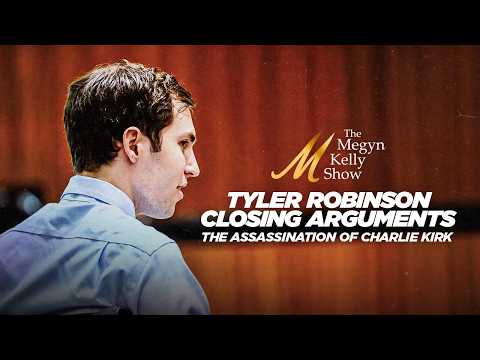
Judge Tony Graf is exhibiting a severe lack of confidence and decisiveness, causing unreasonable delays in the Tyler Robinson hearing. His reluctance to rule on probable cause, despite a 'mountain of evidence,' is characterized as absurd and a dereliction of duty, potentially mirroring the 'Judge Ido' situation. This indecision forces the case into a prolonged summer of briefing and oral arguments, pushing a potential trial date back a full year from the victim's death.
Cash Patel: Investigation into 'Transifa' Connection
FBI Director Cash Patel confirmed in a previous interview that an investigation into a potential 'transifa' connection to Charlie Kirk's murder is ongoing. This investigation stems from online communications from individuals within the trans community who seemed to have foreknowledge of the assassination. Patel stated that all relevant information has been disclosed to prosecutors, but the extent of the FBI's findings and their relation to the case remains unclear.
Viva Frei: Lance Twigs' Credibility and Conspiracy
Viva Frei expresses skepticism about Lance Twigs' testimony, particularly his claims of not discussing politics or LGBTQ+ issues with Tyler Robinson. Frei believes Twigs is lying about these discussions, given the political climate and their close relationship. He suggests Twigs may be lying to distance himself from the conspiracy or to protect himself, questioning whether Twigs' testimony is sufficient for probable cause and highlighting the potential for preliminary hearings to become de facto trials.
The court must ensure the safety and well-being of all parties and uphold constitutional rights, while also reminding attendees of decorum rules and prohibiting electronic devices. This sets the stage for a controlled and respectful hearing environment.
Prosecution Ballard: Exhibit 16 Redactions
Chris Ballard confirms the state's position that publishing exhibits is appropriate and honors the victim representative's right to be present, aligning with the court's consideration of transparency while also agreeing to further redactions based on defense input.
Defense Counsel Novak: Upholding Victim Rights
Richard Novak argues that the court's previous rulings and the handling of exhibits comply with the Utah Constitution's provisions for victim rights, asserting that the current hearing process does not infringe upon these rights. He emphasizes the need to be mindful of timing due to witness availability.
The prosecution, through Ryan McBride, argued that the defense's standing objection to hearsay and reliable hearsay was unnecessary for preserving the record, as it had already been briefed and ruled upon. They requested the court instruct counsel that further objections on this ground would cause undue delay, while allowing specific objections not covered by the standing order.
Mr. Olsen's Statement on Video Accuracy (Exhibit 12.3)
Agent Hull read from Mr. Olsen's 1102 statement (Exhibit 12.3), which affirmed that State's Exhibit 12.1 (the UVU video compilation) and its recordings, including timestamps and dates, were true and accurate, with the only alterations being zooms and red highlights not present in the original.
State's Motion to Admit Unaltered UVU Footage (Exhibit 12.4)
The prosecution moved to admit State's Exhibit 12.4, another compilation of UVU surveillance footage from September 11-12, 2025. Agent Hull noted this version contained the same footage as 12.1 but without circles or blurs, and without zooming, appearing identical to the raw footage he reviewed.
John McPhee recounts a childhood marked by severe bullying on the South Side of Chicago, living in challenging circumstances including a period in a brothel, which forged a deep sense of resilience and self-reliance that would later define his military career. He emphasizes that despite these hardships, he learned to choose good and take responsibility for his own path.
Embracing the Ranger Challenge
McPhee describes his initial entry into the Army and the rigorous training required for the Ranger Regiment, including basic training and Airborne School. He found the training, particularly the 'RIP' phase, to be an intense test of mental and physical endurance, designed to build resilience and a refusal to quit, which he embraced despite initial skepticism from recruiters.
Redman: The Tora Bora Crucible
During the Tora Bora operation, Redman's unit was tasked with finding Osama bin Laden, facing a formidable stronghold that even the Russians couldn't conquer. He notes the intense bombing campaign and the sheer scale of the enemy presence.
Vance's Rebuke of Mandani's 'Incompleteness' Argument
JD Vance strongly criticizes Zoron Mandani's July 4th post, which highlighted America's 'incompleteness' and 'contradiction.' Vance argues that such language lacks gratitude and disrespects the sacrifices made by previous generations who built the nation, questioning Mandani's right to insult the country that offered his family refuge from persecution. He emphasizes that America's generosity and the opportunities it provides are paramount, contrasting it with the violent ethnic conflicts common elsewhere.
Megyn Kelly's Patriotic Fourth of July Celebration
Megyn Kelly describes her family's elaborate Fourth of July celebration, which includes dressing up in costumes and performing a reading of the Declaration of Independence. She emphasizes the importance of remembering the founders' intent and the principles of liberty, contrasting this with the idea of America being 'unfinished' or defined by 'original sin.' Kelly asserts that the day is about celebrating the 'more perfect union' and the absence of kings, a sentiment she feels is misunderstood by critics.
The Sentry's Steadfastness Amidst Storms
The video highlights footage of a sentry at the Tomb of the Unknown Soldier in Arlington National Cemetery maintaining their post during severe storms with high winds and heavy rain. Megyn Kelly uses this as a powerful metaphor for American resilience, suggesting that just as the sentry endures the storm, the nation can overcome its challenges. She connects this image to the act of honoring those who sacrificed for the country, urging viewers to maintain faith and remember the nation's strength.
Megyn Kelly expresses skepticism about Serena Williams' return to Wimbledon, suggesting her 'queen bee' days are over and new stars have emerged, implying a need for athletes to recognize when their peak performance has passed.
Taibbi: Elite Disconnect from Reality
Matt Taibbi argues that the radical policy positions advocated by socialist candidates, such as police and prison abolition, are driven by an elite disconnect from the realities faced by ordinary people in marginalized communities. He contrasts this with the pragmatic concerns of residents in areas like Staten Island who value police presence for safety.
Kelly: Totenberg's NPR Reporting Blunder
Megyn Kelly highlights Nina Totenberg's significant error in reporting Justice Alito's retirement, calling it a 'massive face plant' and a 'rookie mistake.' Totenberg's explanation, involving mishearing 'announcements' as 'announcement' and assuming Alito's retirement, is presented as an egregious failure of journalistic standards.
The Supreme Court, in a 5-4 decision, upheld a Mississippi law allowing ballots postmarked by election day to be counted if received within five business days. Justices Amy Coney Barrett and John Roberts sided with the liberal justices, a move criticized by conservatives as a 'massive gift to Democrats' and a threat to election integrity. Justice Alito, in dissent, warned of 'lamentable consequences' and undermining confidence in elections.
Presidential Power Over Independent Agencies
The Supreme Court ruled that the President has the power to fire executives at independent agencies like the FTC, overturning the precedent set in Humphrey's Executor. This decision is seen as a victory for conservatives, expanding presidential authority. However, in a separate ruling, the Court determined that the Federal Reserve Board of Governors is distinct from the executive branch, limiting the President's ability to fire its members.
Mullen's TPS Stance Sparks Outrage
DHS Secretary Mark Wayne Mullen's statement that Temporary Protected Status (TPS) is not permanent and that Haitians could apply for permanent residency, a visa, or accept a plane ticket and $2,100 to return home, has ignited fury among conservatives. They argue that TPS recipients should be deported immediately after their status expires, viewing Mullen's offer as too lenient and a betrayal of hardline immigration principles.
Megyn Kelly introduces the 'Double Feature' episode, framing it as a look back at two tragic cases involving Amanda Knox and John Ramsey, whose lives were irrevocably altered by horrific crimes. She highlights the enduring public fascination and lingering questions surrounding these events, setting a somber and investigative tone for the interviews.
Knox's Alibi: A Night with Raffaele Sollecito
Knox clarifies her relationship with Raffaele Sollecito, whom she had only known for five days at the time of Meredith Kercher's murder. She explains that on the night of November 1, 2007, she was with Sollecito, having cancelled a work shift. This alibi, and the nascent nature of their relationship, is presented to counter claims of them being in cahoots or plotting the crime.
Giuliano Mignini: The Prosecutor's Bias
Knox critiques the Italian prosecutor, Giuliano Mignini, who she states had a history of unethical conduct and was on trial for abuse of office during her case. She argues that Mignini's role as both investigator and prosecutor, combined with his early conviction of her guilt, led to a biased investigation focused on confirming his preconceived notions rather than seeking justice.