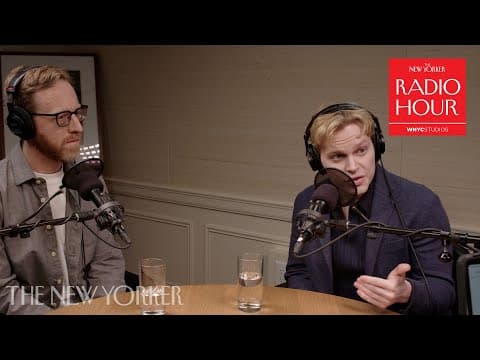
Sam Altman’s Trust Issues at OpenAI | The New Yorker Radio Hour
Andrew Ronin: The Non-Profit Foundation and Its Erosion
OpenAI was founded as a non-profit to prioritize safety, a pitch that attracted top talent by offering a 'good guy' status over higher salaries. However, critics allege Altman's true motives were always profit-driven, leading to internal rebellion and a gradual shift away from the original mission.
Ronin: The Pentagon Contract vs. Public Stance
OpenAI secured a Pentagon contract after Anthropic was blacklisted for refusing to develop autonomous weapons. While Altman publicly supported Anthropic's ethical boundaries, he was privately negotiating for the same contract, revealing a potential conflict between stated values and business pursuits.
David Remnick: The 'Shakespearean' Conflict and Lack of Rules
The AI industry is characterized by 'Shakespearean' rivalries and a lack of established rules, with leaders hurling 'mud' at each other. Despite the existential stakes of AI, the personal and petty conflicts among key figures obscure the real issues and the need for elevated integrity.
Andrew Ronin: The Turing Test and AI Deception
Modern AI, like ChatGPT, has surpassed the Turing Test, capable of deceiving humans into believing it is human. This advanced conversational ability, while useful for applications like diagnostics and weather warnings, also fuels concerns about addiction, psychosis, and the potential for AI to manipulate human perception.
Ronin: Altman's Internalization of Critiques
While resistant to deep self-reflection, Sam Altman has internalized some critiques, acknowledging his past struggles with identity and a tendency towards people-pleasing. He downplays the impact of a homophobic attack, fearing it would be perceived as manipulative, suggesting a nascent awareness of how his actions are perceived.
Ronin: The Prevalence of Allegations and Obfuscation
Widespread allegations about Altman's dishonesty and personal life, though lacking evidence, ironically obscure the more substantive critiques of his leadership and OpenAI's practices. The 'Shakespearean' conflict in the industry, fueled by these lurid claims, creates an atmosphere where genuine concerns can be dismissed.
Ronan Farrow: Allegations against Altman are pushed by rivals
Allegations against Sam Altman, particularly those concerning his personal conduct, appear to be unsubstantiated and are being amplified by his business rivals, including intermediaries connected to Elon Musk. The New Yorker's investigation found no factual basis for these claims, suggesting they are part of a coordinated effort to undermine him. This narrative suggests a pattern of opponents leveraging personal attacks when factual arguments falter. The core issue remains whether these claims are genuine concerns or manufactured attacks designed to disrupt OpenAI's trajectory.
Andrew Marantz: OpenAI's complex and conflicting business deals
OpenAI, under Sam Altman, has a history of making announcements about deals that appear to conflict with existing business partnerships, notably with Microsoft and Amazon. This creates tension and potential legal disputes, as seen with the Amazon deal that seems to circumvent Microsoft's exclusivity. The circular nature of these deals, where partners also become rivals, highlights a complex web of dependencies. This situation underscores the challenges of navigating rapid growth and ambitious partnerships in the AI sector, where clarity and consistency are often sacrificed for strategic advantage. The question remains whether these conflicting deals are a sign of strategic brilliance or operational chaos.
Ronan Farrow: OpenAI's immense cash burn and infrastructure costs
OpenAI is burning through cash at an unprecedented rate, with its latest fundraising rounds reaching astronomical figures, potentially exceeding $122 billion. A significant portion of this capital is being invested in massive data centers, such as the one planned in the UAE, which will consume vast amounts of electricity. Despite the immense investment, OpenAI appears to still be losing money. This financial reality raises questions about the sustainability of its business model and the true cost of developing advanced AI. The sheer scale of investment in infrastructure, while necessary for AI development, highlights the immense financial pressures and potential environmental impact.
Ronan Farrow: Altman's conflict aversion and its ramifications
Sam Altman is described as profoundly conflict-averse, a trait that appears to influence his business dealings and leadership style. This aversion leads him to reflect and adapt to the desires of those he interacts with, sometimes leading to accusations of political maneuvering or shifting allegiances. While this trait may be understandable on an emotional level, its extraordinary extent has significant ramifications for his businesses and the broader world. The reporting suggests that this conflict aversion, coupled with a lack of self-doubt, allows him to genuinely believe his shifting positions, but it also means his decisions may be driven more by immediate appeasement than by steadfast principle. This trait is central to understanding his complex character and the challenges facing OpenAI.
Andrew Marantz: Altman's shifting stance on AI safety and regulation
Sam Altman's public stance on AI safety and regulation has evolved significantly, from initially emphasizing existential risks to now downplaying them. This shift, which he attributes to evolving research and circumstances, is viewed by some as a redefinition of the problem to align with current business objectives. Critics suggest that his initial pitch of being the trustworthy guardian against AI-induced apocalypse has been replaced by a more pragmatic, less alarmist narrative. This evolution raises questions about the sincerity of his past concerns and the potential for a 'lying then or lying now' scenario. The core issue is whether Altman's current perspective reflects genuine scientific progress or a strategic pivot to facilitate commercial expansion.