Let’s Talk About This Year’s Book Awards
Dave Kim unpacks M. John Harrison's Booker winner
Dave Kim explains that M. John Harrison's 2026 Booker Prize-winning novel, The End of Everything, takes place roughly 20 years after an alien-like invasion that never truly ends. The plot follows a 38-year-old beachcomber who finds and tries to sell a biological shape-shifting artifact that grows from child size into an adult human form. Kim notes the win was a surprise because the book eschews prestige drama conventions and leaves narrative arcs and setting deliberately incomplete.
How The End of Everything broke sci-fi barriers
Quoting Booker chief executive Gaby Wood that M. John Harrison is the first winner from the bona fide science fiction world, John Maher explains that Harrison beat heavyweights like former Booker winners Marlon James and Douglas Stuart. While writers like Margaret Atwood have won with sci-fi-adjacent books, Maher notes that traditional science fiction magazine veterans like Harrison were historically boxed out of literary prizes. Even so, Dave Kim points out that The End of Everything dispenses completely with traditional sci-fi world-building to create a disorienting, absorbing effect.
Anne Carson wins the 2026 Nobel for mythic verse
The panel examines Canadian poet and classicist Anne Carson winning the 2026 Nobel Prize in Literature for creating new forms in playful dialogue with classical tradition. Citing New York Times poetry columnist Elisa Gabbert, Joumana Khatib calls Carson the easiest difficult poet, while Dave Kim explains how works like Norma Jeane Baker of Troy merge Greek tragedy with pop culture figures like Marilyn Monroe. John Maher highlights Carson's 2010 box-pamphlet elegy Nox as proof of her willingness to experiment with physical form as well as classical themes.
Khatib questions National Book Award entry fees
MJ Franklin recaps the five 2026 National Book Award winners: David Levithan and Gabrielutz for Young People's Literature, Vicente Luis Mora and translator Rahul Bery for Translated Literature, Brenda Hillman for Poetry, Abdelrahman ElGendy for Nonfiction, and Hala Alyan (spoken as Hanna Lelith Assadi) for Fiction. Turning to controversies, Joumana Khatib notes major fiction snubs like The Disappearers, The Renovation, and Passengers, while pointing out that three fiction finalists shared the same editor at a big house. She questions whether the $135-per-title entry fee disadvantages nonprofit presses like Milkweed, Graywolf, and Copper Canyon compared with major conglomerates.
Paradiso 17 wins Fiction with a life in exile
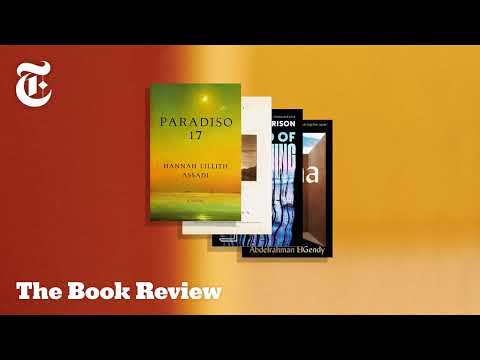
Dave Kim introduces the 2026 National Book Award winner for fiction, Paradiso 17, a whole-life novel following a Palestinian man named Sufian born shortly before the 1948 war. The narrative traces Sufian's displacement from mandatory Palestine to Kuwait, college in Italy, driving a cab and falling in love with a Jewish woman in New York City, and finally aging in Arizona. Kim and John Maher emphasize that the book, loosely inspired by the author's father's life, avoids literary gimmicks and overt political polemics to tell an old-fashioned, deeply human story of exile and flaws.
Abdelrahman ElGendy's Huna wins amid visa dispute
Joumana Khatib explains that nonfiction winner Huna is a memoir by 30-year-old Abdelrahman ElGendy, who was sentenced at age 17 in Egypt to 15 years in prison for unlawful assembly and served over six years before writing the book as his creative writing thesis. MJ Franklin and John Maher detail the surrounding controversy: ElGendy was denied a U.S. visa to attend the ceremony, and a New Yorker essay revealed he left the U.S. in April 2025 fearing arrest, raising questions about the award's December 1, 2025 U.S. residency rule. Khatib faults the National Book Foundation for outdated eligibility rules that distracted from the book's literary merit, before the panel closes by praising poetry winner Brenda Hillman.