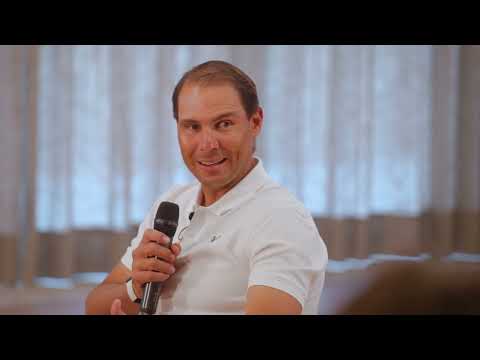
Rafa Nadal in conversation with Players of the academy
The Foundation of Footwork: Intensity Over Everything
Nadal attributes his exceptional movement and footwork, particularly early in his career, to practicing with extremely high intensity. He emphasizes running for every ball, even those seemingly out of reach, as this habit trains reaction time and improves the ability to return difficult shots. He criticizes players who don't chase balls when the opponent misses, stating that overall intensity, not just specific drills, is the key differentiator for improvement and mental alertness.
Adapting to the Pro Tour: A Young Player's Challenge
Transitioning to the ATP tour at a young age (15-16) presented Nadal with significant challenges. He had to adapt from dominating lower-level play to competing against physically superior and more experienced players. This required adjustments to his game, including his forehand technique, to compensate for less power. The early exposure, while beneficial for his ranking, also meant his body wasn't fully prepared, forcing him to constantly adapt and find solutions to remain competitive.
The Pillars of Mental Strength: Humility and Self-Criticism
Nadal identifies humility and self-criticism as cornerstones of mental strength. He argues that an inflated ego prevents continuous improvement, while humility allows players to recognize the need for daily work, even after victories. He believes it's easier to learn from wins by identifying areas for improvement, rather than relying solely on losses to identify weaknesses. This self-aware approach fosters faster and more effective development.
The Value of Each Point: Practice and Perspective
While not every point holds equal strategic value in a match, Nadal advocates for practicing with maximum effort on every single point. This consistent intensity during practice builds resilience against frustration from lost points or opponents' winners. He notes that even top players have a slim majority of points won over lost, emphasizing that managing mistakes and frustration is key to sustained performance.
Technology as a Tool, Not a Crutch
While technology like video analysis can be a useful tool to track improvement and identify specific areas for refinement, it should never replace real practice. Over-reliance on technology can lead to feeling lost and losing focus on the essential elements of the game, such as the feel of hitting the ball.
Tactical Adjustments: The Art of In-Match Changes
Small, quick tactical adjustments during a match can significantly impact the outcome. Maintaining emotional control is vital to analyze the situation effectively and make the right decisions, whether things are going well or poorly, to adapt to an opponent's strategy or maintain momentum.
The Evolving Game: Serve, Return, and Baseline Control
Modern tennis demands aggressive play and quick decision-making, making the first few shots after serve and return critical. While players must practice these initial phases, maintaining control from the baseline and the ability to play long rallies remain essential for sustained success, even as the game accelerates.
ATP vs. WTA: Learning from Each Other's Strengths
While male players often exhibit superior movement, female players typically display clearer strategies and more aggressive shot selection from the outset. Both tours can learn from each other; women could benefit from greater tactical variation, while men could adopt the decisive aggression seen in the women's game.
Mental Resilience: Analyzing Mistakes, Not Frustration
True mental resilience involves analyzing mistakes to understand why they happened and correcting them, rather than succumbing to frustration. Being humble enough to listen to others and accept help is key to navigating challenges and finding solutions, both in practice and competition.
Tennis's Greatest Gift: Life Lessons and Respect
The most valuable lesson from tennis is the development as a human being through exposure to diverse cultures, learning from rivals and friends, and understanding different realities. The sport instills values of respect and provides experiences that foster personal growth beyond the court.
The Discipline of Longevity
Despite numerous injuries, Nadal attributes his long career to strict professionalism, diligently following medical advice, and maintaining the right attitude, discipline, and work ethic to overcome challenges.
The Joy of the Process
Nadal emphasizes that the true satisfaction in any pursuit, whether sports or life, comes from enjoying the process of becoming better and achieving personal growth, rather than solely focusing on titles or external achievements.
Health as the Ultimate Priority
Nadal asserts that health is the most critical element in life, more so than any sport, as it underpins the ability to achieve anything; proper habits, even if their benefits aren't immediately apparent, are essential investments in long-term well-being.