The independent autopsy conducted for the Nolan Wells family by Dr. Roger Mitchell could not definitively establish foul play, stating that Nolan Wells did not die by accident or natural causes, but also ruling out homicide. However, the state's autopsy results are still pending, and the removal of organs, including the throat, from the initial state autopsy raises questions.
Smith Questions Phone and Keys Left Behind
Stephen A. Smith highlights the suspicious detail that Nolan Wells' car keys and phone were left on the boat with his friends, despite reports that he chose to stay behind with a girl. This action seems contradictory for a teenager planning to leave with a different group, raising questions about his intentions and the circumstances of his departure from the friends.
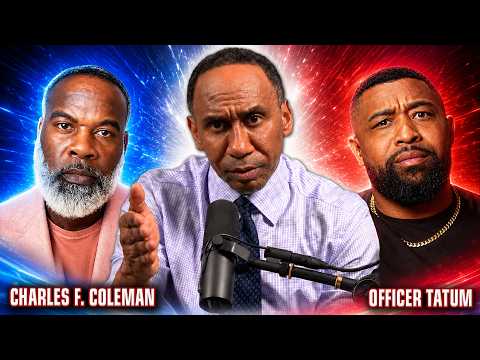
Tatum: The Accusation vs. Suspicion Debate
Officer Tatum argues that statements of suspicion, particularly those made publicly by figures like Al Sharpton and Benjamin Crump, are being unfairly interpreted as accusations against the young men present with Nolan Wells. He contends that such public pronouncements, especially before a full investigation, are damaging and premature, leading to unwarranted scrutiny and threats.
Carlson: Trump's Iran War Decision Was a Catastrophic Mistake
Tucker Carlson asserts that Donald Trump's decision to initiate a war with Iran was the most disastrous presidential decision in his lifetime, fundamentally altering global power dynamics and harming the United States. He claims Trump was not acting independently but was controlled by external pressures, specifically from Israel, despite Carlson's direct warnings against it. This move, he argues, has diminished US influence and will negatively impact living standards in the West. The final sentence is: This catastrophic decision, driven by foreign influence, has irrevocably damaged America's standing and future prosperity.
Carlson: US Political Parties Share 'Paymasters' and Foreign Loyalties
Tucker Carlson posits that both the Democratic and Republican parties in the US are beholden to the same 'paymasters' and donors, compelling them to maintain loyalty to foreign countries, specifically Israel. He suggests this shared allegiance is why neither party would impeach Trump for his actions regarding Iran, as both are aligned with the interests demanding this policy. This lack of bipartisan opposition, he argues, explains the absence of significant public protest against the war. The final sentence is: This bipartisan alignment, driven by donor influence, effectively silences dissent and ensures continuity in foreign policy regardless of the administration.
Carlson's Pivot on Trump
Tucker Carlson admits he was wrong about Donald Trump, initially supporting him as an outsider challenging the establishment. However, he now believes Trump changed significantly after the 2024 Butler shooting incident, acting contrary to his previous promises and shutting down investigations, which Carlson finds deeply concerning and potentially sinister.
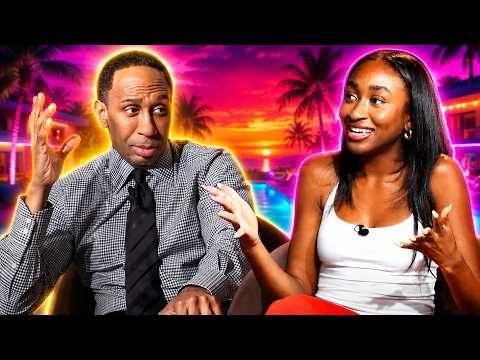
Samantha A. passionately defends her enjoyment of 'Love Island,' stating it's essential for her well-being and social life, comparing it to basic necessities like air and water. She describes watching it as a nightly ritual with friends, highlighting its significant role in her life.
Stephen A. Smith: 'Love Island' is Soft Porn
Stephen A. Smith expresses extreme disgust with 'Love Island,' calling the season finale he watched 'soft porn' and questioning how 34 prior episodes of similar content could be aired. He is appalled by the public displays of affection and perceived promiscuity among contestants.
Samantha A. on Melanie & Sincere: Compatibility vs. Respect
Samantha analyzes the 'toxic' relationship between Melanie and Sincere, arguing they are compatible due to shared humor, background, and appearance, despite Sincere's manipulative behavior. She questions if compatibility trumps respect in a relationship, ultimately advising Melanie to leave Sincere.
Representative Anna Paulina Luna asserts she is an independent thinker rather than a disruptor, emphasizing her deep understanding of congressional rules and procedures. She argues that the messy nature of Congress is a sign of healthy debate, contrasting it with streamlined processes that may favor special interests. Luna believes her actions, like pushing for voter ID in legislation, are effective in representing the American people and galvanizing the Republican base.
Luna on Corruption and Declassification
Representative Luna discusses corruption across all branches of government, noting her role in forcing resignations of both Democrats and Republicans. She emphasizes her commitment to declassifying the Jeffrey Epstein files, stating that a full picture is unlikely due to a past cyber attack. Luna believes the Trump administration, particularly on declassification and public corruption efforts, has performed positively, while acknowledging that bureaucrats in any administration can act improperly.
Trump's Foreign Policy and Iran
Representative Luna defends President Trump's foreign policy, particularly his approach to Iran, by referencing the 'Nastyer Plan' which indicated Iran's intent to launch missiles if attacked. She states Trump was presented with intelligence about incoming casualties and chose not to escalate militarily, prioritizing peace talks. Luna criticizes Prime Minister Netanyahu's actions and believes Trump's stance against putting boots on the ground in Iran was the correct decision, advocating for peace negotiations over military conflict.
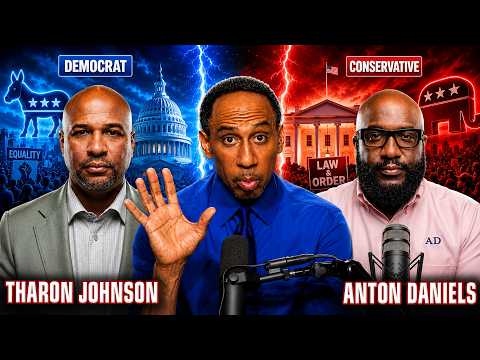
Tharon Johnson argues that while personal responsibility is important, systemic barriers, lack of leadership, and policy failures, particularly from federal administrations like Trump's, have significantly impacted Black America. He emphasizes the need for investment in public schools, quality jobs, and healthcare, and for holding elected officials accountable for delivering on promises.
Daniels: No Inequities, Just Lack of Discipline
Anton Daniels refutes the notion of systemic inequities, stating he hasn't experienced them and highlighting immigrants who succeed with nothing. He attributes the struggles of Black communities to a lack of discipline, poor decision-making in education and career choices (e.g., avoiding STEM fields), and a failure to learn from history, arguing that external blame prevents progress.
Daniels: Detroit's Fiscal Collapse and Leadership Failures
Anton Daniels points to Detroit's history of bankruptcy under Black leadership (Kilpatrick, Young) as evidence that identity politics doesn't guarantee good governance. He credits Mayor Mike Duggan and business leaders for the city's subsequent recovery and surplus, arguing that effective leadership and business acumen, not race, are key to success.
Stephen A. Smith refutes Dr. Umar Johnson's claim, echoed by Officer Tatum, that Carmelo Anthony's victim, Austin Metaf, 'fell on a knife.' Smith emphasizes that no witnesses or defense arguments supported this narrative, and that Anthony himself admitted to stabbing Metaf after being provoked. He criticizes the 'conspiracy theorists' for ignoring evidence and fabricating scenarios.
Critique of Jury Composition and Legal Representation
Smith acknowledges the argument that Carmelo Anthony's jury lacked Black members, which many consider not a 'jury of peers.' He also questions whether the defense team and community did enough due diligence in preparing for the trial and jury selection, suggesting that a lack of preparedness may have contributed to the unfavorable outcome.
Prioritizing Battles: Community vs. External Cases
Smith argues that the Black community must 'pick the right battles' and focus its energy on addressing internal issues like violence in cities like Chicago, rather than solely on external legal cases like Carmelo Anthony's. He believes that by directing attention and resources towards solving community problems, they can achieve greater positive impact and self-determination.
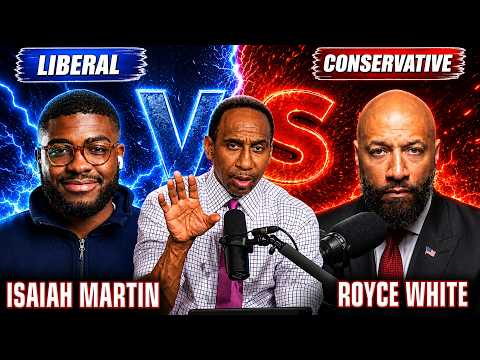
Isaiah Martin argues that economic indicators like inflation and unemployment were worse under Donald Trump, and that Joe Biden's policies, such as the infrastructure and chips acts, have significantly boosted manufacturing investment. Royce White counters that Trump's policies were effective and that Biden's approach, including tax cuts and government spending, is detrimental.
Royce White: The Unbridgeable Chasm
Royce White asserts that there is no possibility of accord between the two political sides due to fundamental disagreements on issues like border control and social policies, specifically mentioning the normalization of gender-affirming care for minors. He believes Democrats are 'unmoored from reality' and their agenda is a threat to the country's core values.
Isaiah Martin: A Pragmatic Approach to Immigration
Isaiah Martin proposes a pragmatic solution to undocumented immigration, advocating for an earned pathway to citizenship that includes paying taxes and a penalty fee, which he believes would generate billions for public services like trade education. He criticizes mass deportation as wasteful and contrasts his 'America First' policy with what he views as Royce White's 'America Last' stance.
Stephen A. Smith expresses his strong disagreement with the 35-year sentence for Carmelo Anthony, viewing it as excessive and unfair, especially for a first-time offender. He also questions the jury's composition, noting the absence of African-Americans.
Laura Coates: Foreseeable Conviction, Questionable Sentence
Laura Coates states that a conviction was foreseeable given the defense's failure to convincingly argue self-defense, particularly regarding the weapon's presence and use. However, she finds the 35-year sentence particularly striking and questions its alignment with typical sentencing guidelines and past cases.
The Nuance of 'Jury of Peers' and Jury Selection
Coates emphasizes that while a jury of peers doesn't require identical demographics, the exclusion of potential jurors of color based on subjective reasons raises concerns about objectivity in the deliberation process. She notes that the prosecution's challenges to certain jurors were based on perceived biases.
Stephen A. Smith: The Core of the Carmelo Anthony Case
Stephen A. Smith asserts that Carmelo Anthony's conviction for murder and subsequent 35-year sentence are direct consequences of his actions at the track meet, specifically pulling out and using a knife. He dismisses the idea that the system is inherently against Anthony, arguing that the focus should be on personal responsibility for bringing a weapon and escalating a confrontation that led to the death of Austin Metaf. Smith concludes that while the sentence is severe, it reflects the gravity of taking a life over a dispute.
Jasmine Crockett's Argument: Sentencing Disparity
Representative Jasmine Crockett's argument, as presented by Smith, focuses on the perceived disparity in sentencing. She highlights the case of Kase Allison, who received a 10-year sentence for criminally negligent homicide in a 2022 stabbing, questioning why Carmelo Anthony received 35 years for first-degree murder in a similar stabbing incident. This comparison is used to question the severity and consistency of the Texas justice system's punishments.
Champ's Insight: The Problem of Post-Verdict Advocacy
A guest named Champ offers a critical perspective on high-profile cases, observing that many advocates, politicians, and media personalities only engage after a verdict or sentence is handed down. He argues that this late involvement can shift the focus from individual justice to publicity, politics, or broader narratives. Champ stresses the importance of honesty about the facts and fairness throughout the legal process, regardless of the defendant's guilt or innocence.
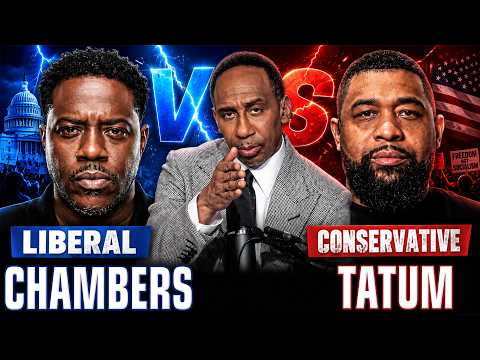
Chambers: Trump's Policies Fueling Chaos and Economic Hardship
Gary Chambers argues that the Trump administration's policies have led to a chaotic, divided, and disorganized America, with few solutions for the working class. He points to high gas and food prices, and what he calls Trump's daily lies, as evidence that ordinary Americans are not seeing improvements in their lives. Chambers criticizes the focus on geopolitical ventures like Greenland while domestic issues in states like Louisiana are neglected. The argument concludes by questioning the effectiveness of Republican leadership in improving the lives of citizens in struggling states.
Gary Chambers challenges the notion that Donald Trump's foreign policy aligns with his 'America First' promise. He argues that actions like engaging in a prolonged war and pursuing geopolitical ventures such as acquiring Greenland, while domestic issues like Louisiana's poor ranking persist, contradict the core principle. Chambers criticizes the economic repercussions, such as increased gas prices, and questions the wisdom of sending a governor with a low-ranked economy on such missions. He concludes that Trump's actions are not prioritizing American citizens' immediate needs.
Chambers: Supreme Court Undermining Black Representation
Gary Chambers argues that the conservative-majority Supreme Court, influenced by Donald Trump, is actively stripping power from Black people to serve in Congress. He uses Louisiana's history of Black representation, noting the long periods without it and the recent election of Black representatives like Troy Carter, to illustrate the importance of fair representation. Chambers contends that decisions based on race, even if intended to ensure representation, are being denied, thereby hindering the progress and political power of Black communities and impacting institutions like Southern University.
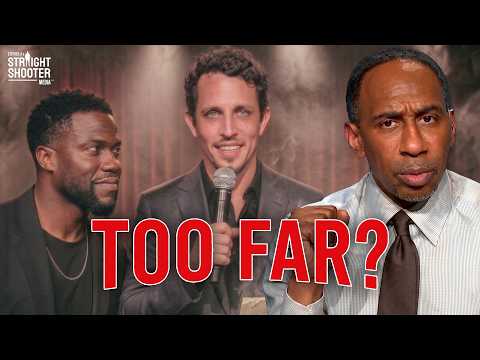
Stephen A. Smith acknowledges that roasts are designed to be offensive and that audiences should expect controversial humor. He states that while he understands the intent, there are lines that should not be crossed, especially concerning sensitive topics like violent deaths. He emphasizes that if one is not a fan of this type of content, they should simply not watch it.
Stephen A. Smith: Personal Context and Roast Controversy
Smith explains his personal connection to addressing the roast controversy, noting he's had a difficult year with people close to him turning their backs. He clarifies his relationship with Kevin Hart is good, and he only commented on the roast because it was Hart and because of the ensuing public outcry. He stresses that he doesn't always know what's happening outside his busy work schedule.
Stephen A. Smith: The Roast's Content and Initial Reactions
Smith details the controversial jokes from the Kevin Hart roast, specifically mentioning Tony Hinchcliffe's joke about George Floyd and Shane Gillis's jokes about slavery and lynching. He notes the widespread criticism from various figures and organizations, including Terrence Floyd and the Gianna and George Floyd Foundation, who denounced the jokes as disrespectful and racist.
Stephen A. Smith: Jaylen Brown's 'Favorite Season' Comment
Stephen A. Smith clarifies his criticism of Jaylen Brown's statement that his playoff-eliminated season was his 'favorite.' Smith insists his commentary was not an attempt to silence Brown but a critique of the sentiment from a star player after a disappointing playoff exit, arguing it was inappropriate for fans and teammates.
Mace: The Perils of Powerful Platforms
Mace argues that individuals with powerful platforms, like Stephen A. Smith, should not exclusively focus on negative commentary about athletes. He suggests that such negativity can create a biased narrative and questions whether personal feelings can seep into journalistic reporting, impacting fairness.
Stephen A. Smith: Critiquing Performance, Not Identity
Smith asserts that his commentary focuses on performance and actions, not on the identity or race of individuals. He provides numerous examples of praising Black athletes and artists, arguing that his criticisms are based on their professional output and decisions, not on any form of prejudice.
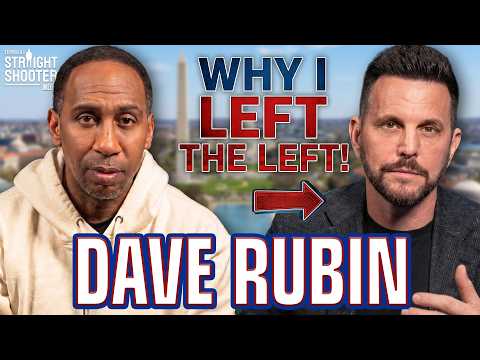
Rubin's Evolving Identity: From Liberal to Classical Conservative
Dave Rubin describes himself as a classical liberal whose values now align more with conservatism, emphasizing individual rights, logic, and limited government. He argues that the modern progressive movement, which he associates with 'wokeism,' has shifted so far that defending traditional liberal tenets has become a conservative stance. He notes that while he holds some views like being pro-choice and supporting marriage equality, his core desire for government to stay out of people's lives and his critique of identity politics place him at odds with the contemporary left.
The Larry Elder Debate: A Turning Point
Rubin recounts a pivotal moment about ten years prior when he debated conservative host Larry Elder on systemic racism. Elder factually dismantled Rubin's arguments, leaving him intellectually unprepared. This experience, though personally humbling, was career-defining because Rubin insisted on airing the unedited exchange, demonstrating a commitment to intellectual honesty. This event marked the beginning of his engagement with conservative thinkers and his departure from the left's intellectual framework.

Political Rhetoric and the 'Show' of Politics
Rubin acknowledges that political discourse, particularly from figures like Donald Trump, can be bombastic and performative, likening it to a 'show.' He suggests that while he doesn't always appreciate the rhetoric, it's a tactic Trump uses to keep opponents off balance. He expresses hope that post-Trump, Republicans might elect more statesmanlike figures. Both Rubin and Smith agree that the vitriolic rhetoric from politicians contributes to societal division, though they differ on the extent to which Trump's rhetoric is problematic versus a response to left-wing attacks.
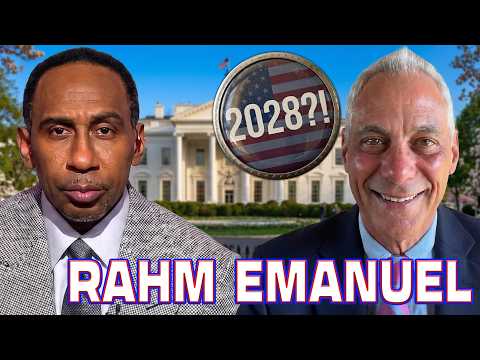
The US military, a marvel of post-Vietnam recovery and a global gold standard, is being undermined by the Trump administration's dismissal of over 20 military leaders. This destruction of a merit-based system, the only institution still highly respected by Americans, weakens national security and discards invaluable talent.
Iran's Strategic Leverage: The Strait of Hormuz
Iran's control over the Strait of Hormuz is a significant economic and geopolitical weapon, capable of disrupting global energy supplies and challenging US influence in the Gulf. Their strategy aims to re-establish a Persian Empire and expel American presence, leveraging their control of this vital waterway as a 'nuclear option' against the world economy.
Rahm Emanuel: China's Global Ambitions
China presents a serious and multifaceted threat, aiming to replace the US as the world's primary power. While the US focuses on the Strait of Hormuz, China is solidifying its control in the South China Sea and offering energy stability through renewables, positioning itself as a reliable partner while the US is perceived as a 'chaos machine.' The US is actively forfeiting its competitive edge by cutting investments in research, education, and critical infrastructure.
Stephen A. Smith asserts that a woman's sex appeal, intellect, and domesticity are crucial for a relationship, specifically stating he wants a partner who cooks for him, not one who expects him to cook or rely on takeout. He argues that if he has to cook for himself, he questions the need for a partner, framing this as a earned right and a deserved expectation.
Somatra Abernathy: Agreement on Home-Cooked Meals
Somatra Abernathy surprisingly agrees with Stephen A. Smith, stating there's nothing wrong with a man wanting a home-cooked meal after a long day. She shares her personal experience of cooking for her family and believes it's a natural part of a relationship, suggesting that modern women shouldn't feel pressured to abandon this aspect.
Tori Cooper: Cooking vs. Womanhood
Tori Cooper challenges Stephen A. Smith's emphasis on cooking, arguing that a good meal should not be elevated over a good woman, especially one who is financially stable and attractive. She questions if Smith would leave a partner who is a poor cook but possesses other valuable qualities, suggesting his focus might be superficial.
The New York Knicks delivered an absolutely crushing performance against the Atlanta Hawks, securing a series victory with an overwhelming 47-point lead at halftime and a 61-point lead in the third quarter. This level of domination, characterized by suffocating defense and efficient offense, signals a significant threat in the Eastern Conference playoffs. The Knicks' ability to outscore the Hawks by 96 points over the final three games, shooting over 55% from the field, demonstrates their championship aspirations.
Lakers' Historic Collapse Looms
The Los Angeles Lakers are on the precipice of an unprecedented collapse, having lost two straight games after leading their series 3-0. This potential historic failure, where no team in NBA history has lost a 3-0 lead, puts immense pressure on LeBron James. Despite his age and the team's supporting cast issues, the narrative will inevitably focus on this unprecedented playoff failure, potentially tarnishing his legacy.
Shams on Knicks' Championship Aspirations
Shams Charania confirms that the New York Knicks genuinely believe their current roster construction, featuring depth and key players like Brunson and Anunoby, positions them to compete for a championship. Despite earlier doubts, their recent dominant playoff performance has solidified this belief within the organization, with owner Jim Dolan setting a high bar for success.
The Knicks secured a decisive victory against the Atlanta Hawks, largely due to a balanced offensive attack and exploiting Atlanta's defensive weaknesses, particularly against their bigs. This strategy allowed them to maintain a comfortable lead throughout the game.
Mike Brown's Rotation Strategy
The coaching decisions of Mike Brown are scrutinized, particularly his rotation choices and not playing key players like Diwara and Jordan Clarkson more minutes. This approach is questioned, especially during the playoffs, as it limits the team's depth and potential impact players.
Orlando's Playoff Threat
The Orlando Magic are presented as a significant dark horse in the playoffs, capable of challenging top seeds like the Detroit Pistons. Their versatile roster, with players who can defend 94 feet and create turnovers, makes them an unpredictable and annoying opponent that teams struggle to plan for.
Stephen A. Smith expresses immense relief and happiness that the New York Knicks have tied their playoff series 2-2, highlighting key performances from Carl Anthony Towns and OG Anunoby. He believes the Knicks are the superior team and should advance, putting the Atlanta Hawks on the brink of elimination. Smith also critiques Mikal Bridges' underperformance, noting the significant draft picks traded for him and his struggles compared to players like Desmond Bane.
Smith's Defense Against Fame-Obsessed Accusations
Stephen A. Smith directly addresses comments made by Steve Stout and Rich Kleiman on 'The Boardroom,' where they suggested his journalism is 'homogenized' by his pursuit of fame. Smith finds these remarks offensive and untrue, vehemently defending his career, which spans over 30 years. He argues his success is a result of hard work, authenticity, and earning his platform, not chasing clout, and points to his Hall of Fame induction and consistent audience engagement as proof.
Betrayal of Trust: Two-Faced Conversations
Smith expresses deep disappointment with Steve Stout and Rich Kleiman for speaking negatively about him behind his back, especially after maintaining cordial relationships face-to-face. He contrasts this behavior with his own professional conduct and that of his close associates like Jay-Z and Michael Kaiser, who engage in direct, respectful disagreements. Smith feels betrayed by the perceived hypocrisy and states he does not appreciate being characterized as someone who sold out his principles for fame.
The Knicks' Game 2 loss to the Hawks is attributed to a lack of in-game adjustments, particularly concerning defensive matchups like Kaminga on Cat. To win Game 3 in Atlanta, the team must revert to their gritty, defensive identity and focus on dominating in the fourth quarter, as they did against Boston in the previous playoffs.
Mitchell Robinson's Free Throw Struggles
Mitchell Robinson's poor free-throw shooting (missing 10 in Game 2) is a critical issue, especially since the Hawks intentionally foul him. A potential fix involves strategically substituting him when in the penalty and replacing him with a better free-throw shooter like Cat, or exploring specialized training methods, as demonstrated by trainer Remy's work with Andre Drummond.
James Harden's Playoff Unreliability Debate
A heated debate ensues regarding James Harden's playoff performance. While acknowledging his regular-season scoring prowess, critics argue he becomes unreliable in crucial moments, citing physical fall-offs and a perceived lack of clutch performance compared to players like Kobe Bryant or Carmelo Anthony. Supporters contend that his high usage rate and consistent regular-season effort should be considered, and that playoff collapses are sometimes due to facing superior teams.
Stephen A. Smith argues that the Dallas Cowboys are making a mistake by franchising George Pickens instead of offering a long-term deal. He believes this puts Pickens at risk of injury and financial loss, and that the Cowboys' strategy is short-sighted given the current market for wide receivers. He also notes that Pickens' agent, David Müller, also represents Micah Parsons, who had a similar contract dispute with the Cowboys.
Stephen A. Smith is deeply frustrated by the New York Knicks' repeated failure to protect a double-digit fourth-quarter lead, citing their 12-point collapse against the Pelicans. He highlights their historically poor record in such situations, questioning their grit and ability to compete with top teams like the Celtics. The final sentence emphasizes that this pattern of blowing leads erodes confidence in their playoff potential.
Houston Rockets' Point Guard Void: An Inexcusable Oversight
Stephen A. Smith vehemently criticizes the Houston Rockets' front office, specifically GM Rafael Stone and owner Tilman Fertitta, for failing to acquire a point guard after losing Fred VanVleet. He finds it inexcusable that a team with an MVP candidate like Kevin Durant lacks a primary ball-handler, questioning how they could overlook such a critical need. The final sentence declares this oversight will haunt the Rockets and that they desperately need to find a solution, even suggesting bringing back Chris Paul.
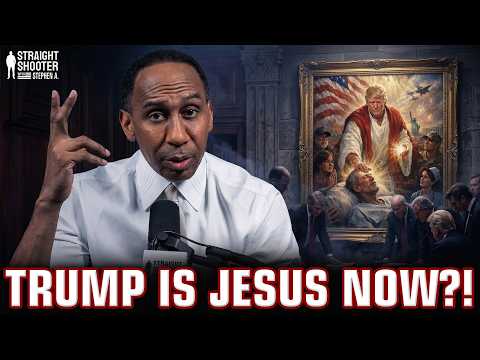
Donald Trump posted an AI-generated image depicting himself as a Jesus-like figure and criticized Pope Leo for being 'weak on crime' and catering to liberals. This move has drawn condemnation from some Christian groups and alienated potential Catholic voters.
Swalwell's Gubernatorial Campaign Collapse
Representative Eric Swalwell has suspended his campaign for California governor due to accusations of sexual misconduct and lapses in judgment, a move supported by party leaders.
Dean Withers on Trump's Mental State
Dean Withers suggests Donald Trump's actions, including the 'Jesus' image and past controversial statements, indicate a potential decline in mental coherence, possibly due to age or early dementia, rather than strategic distraction.
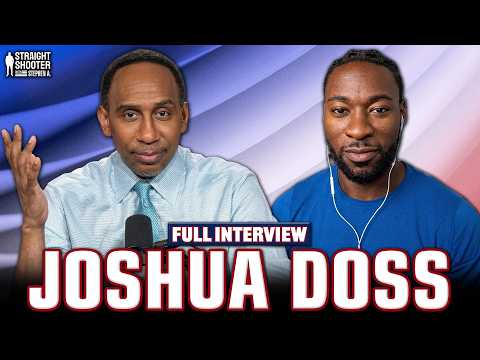
Joshua Doss posits that staying informed, particularly about historical context, serves as a form of resistance against deliberate misinformation campaigns. He cites research indicating that a lack of knowledge about the Civil Rights Movement correlates with support for figures like Donald Trump, suggesting that ignorance can be politically exploited.
Doss: Democrats Taking Black Voters for Granted
Joshua Doss argues that the Democratic Party has become politically inexpedient and strategically flawed by not prioritizing the economic needs of the Black community, leading to voter disillusionment. He suggests that while addressing LGBTQ+ issues is important, economic populism should be the forefront for the working class and Black communities.
Smith: Independent Voter Appeal
Stephen A. Smith explains his independent political stance, emphasizing fiscal conservatism due to high taxes while leaning liberal on other issues. He argues that upsetting the political apple cart by making both parties compete for the Black vote is essential for representation, drawing parallels to the Latino community's strategic positioning.
Representative Burchett describes Congress as a 'crooked game' where advancement is tied to fundraising and appeasing lobbyists, rather than merit or public service. He states that members are issued a piece of paper detailing how much money they need to raise to get on certain committees, and that this system is legal but corrupt. He contrasts this with his own approach of not prioritizing fundraising, leading him to serve on multiple committees despite not playing the 'game.' The core issue is that personal enrichment and financial contributions dictate legislative power, not the will of the people. This system is designed to benefit those who play along, leaving honest representatives at a disadvantage.
Burchett on Trump's Fitness and Negotiating Style
Representative Burchett believes Donald Trump is fit for office, viewing his 'rough talk' as a negotiating tactic and a reflection of the 'contact sport' that is politics. He compares Trump's unfiltered style to historical figures like Nixon, suggesting that such language is common in high-stakes negotiations. Burchett argues that while Trump's rhetoric can be alarming, it's a strategy to appear strong and achieve goals, rather than a sign of unfitness. He concludes that Trump's directness, while unconventional, is a necessary approach when dealing with 'thugs' and 'dirt bags' on the world stage, and that his lack of a filter is part of his effectiveness.
The Absurdity of Congressional Ethics: Skateboards vs. Insider Trading
Representative Burchett illustrates the flawed nature of congressional ethics by recounting his experience trying to sell custom-made skateboards. He was told he couldn't sell them directly, requiring him to form an LLC and work for his wife, with strict salary limits. This is contrasted with the legality of insider stock trading by members of Congress. Burchett finds this system ridiculous, forcing him to 'mislead the public' to be legitimate. He argues that transparency and disclosure should be paramount, and that the current rules create unnecessary hurdles for honest entrepreneurial activity while allowing more lucrative, ethically questionable practices to persist.