Game juice, or game feel, encompasses all the subtle 'bells and whistles' that make video games fun and engaging, such as visual effects like dust clouds, camera bobbing, screen shake, and satisfying sound effects like coin hits. It's the frosting that enhances the core experience, making interactions more enjoyable and immersive.
Andrew Gruss: Sound Design and 'Landman's' Juice
Sound design is a crucial component of game juice, as exemplified in the show 'Landman.' The use of local radio broadcasts, weather reports, and specific regional music (like Red Dirt Country) immerses the viewer in the show's setting and enhances the narrative's authenticity and atmosphere.
Aaron Bleyaert: Enhancing 'Game of Thrones' with Interactive Options
To juice up the 'Game of Thrones' franchise, viewers should have the option to choose their soundtrack (e.g., symphonic, death metal) and access interactive elements like a family tree and map when pausing the show. This would provide much-needed context for the complex lineage and geography, enhancing the epic scale of the narrative.
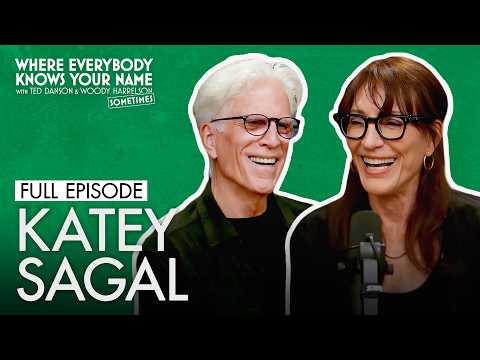
Ted Danson's performance as Sam Malone in 'Cheers' served as a profound inspiration for Jake Johnson, acting as a 'northstar' for his own acting aspirations. Johnson admired how Danson made Sam Malone feel like a real, relatable person, a quality he strived to emulate with his character, Nick Miller, in 'New Girl'. This deep appreciation stems from 'Cheers' being a formative viewing experience for Johnson's family, connecting them and offering an escape into a fantasy world.
Jake Johnson: The Dangerous Leading Man
Jake Johnson is described by Ted Danson as a favorite type of leading man because he is both funny and possesses a 'dangerous' edge, capable of intense performances. This duality creates a compelling tension, making him captivating to watch. Danson's admiration stems from Johnson's ability to make characters feel real and his consistent performance quality, even when tackling challenging roles like in 'Let's Be Cops'.
Jake Johnson: The 'Danny' Performance Anxiety
During the filming of 'The Dink,' Jake Johnson experienced significant performance anxiety during a crucial monologue scene. Despite preparation, the close-up shots and pressure led to a 'B-minus' performance. His anxiety was alleviated when a crew member playfully gave him a 'Danny' card from their 'Who's the Boss?' game, a character known for being forgettable. This humorous, yet grounding, interaction allowed Johnson to loosen up, embrace the absurdity, and ultimately deliver a better performance, transforming his 'Danny' take into something more akin to 'Alyssa Milano' or even 'Angela' from the show.
Molly Shannon and Conan O'Brien recount their distinct and often humorous childhood experiences learning to swim, highlighting the contrast between Sona's sons' structured lessons and Conan's traumatic Red Cross classes in a marsh, and Molly's own swim instructor mix-up. These stories reveal different approaches to childhood development and the lasting impact of early experiences.
Conan O'Brien: The Extrovert-Introvert
Conan O'Brien describes his dual nature as both an extrovert who thrives on audience energy and an introvert who values quiet solitude, reading, and time with his dogs. He relates this to Jack Nicholson's concept of being 'the mayor' in public, suggesting that performers often navigate a public persona distinct from their private needs for reflection.
Molly Shannon: Navigating Personal Ruts with Creative Atmospheres
Molly Shannon describes her strategy for overcoming feelings of being in a rut or depressed: intentionally seeking out new and inspiring environments. This included visiting hospitals for lunch to observe doctors or going to beauty schools for hair treatments. She views these as inexpensive ways to 'travel' and shift perspective, a technique she still employs to change her mental state and feel better. This approach is rooted in the idea that changing one's environment can positively impact one's mindset and creativity.
Bleyaert: Star Wars Prequels Are Superior to Originals
The original Star Wars trilogies are 'so slow' and boring, causing him to fall asleep. He prefers the more recent trilogies and 'Solo,' finding them to be great movies that better capture the action and excitement without getting bogged down in excessive lore.
Bleyaert: Bulletproof Suits Ruin Action Tension
The introduction of bulletproof suits in the John Wick franchise, where characters can block bullets with their coats, fundamentally ruins the tension and groundedness of the action. This makes shootouts less impactful and removes the stakes that made earlier action films like Die Hard compelling, where characters were vulnerable and their struggles felt real.
Caller Aaron: Gimli's Grief Undermines Lord of the Rings Logic
In The Fellowship of the Ring, Gimli's loud, prolonged wailing at his cousin's tomb in the Mines of Moria does not alert the enemy, while Pippin's minor action of knocking down armor does. This inconsistency in how threats are perceived within the film's world undermines its internal logic and the stakes of the narrative.
Maria Sharapova has embarked on a new career as a podcaster with her show 'Pretty Tough,' interviewing high-achieving women to explore the definition of success and the vertical challenges faced after reaching the top. She finds joy in the process and avoids listening to her own episodes to prevent self-judgment, preferring to stay present in the moment of creation.
Sharapova on Discipline: The Photographer's Insight
Maria Sharapova admired photographer Patrick Demarchelier for his decisive approach, knowing when he had the perfect shot and not needing excessive takes. This resonated with her own experience as an athlete, where knowing when to trust one's preparation and let go of control is crucial for peak performance.
Maria Sharapova: Forging a Unique Path from Childhood
Maria Sharapova's journey was marked by a distinct path from a young age, living in a dorm at a tennis academy and not fitting the typical social mold. This early experience of being different, coupled with financial constraints, fostered a deep determination and self-reliance that fueled her drive to succeed without needing external validation.
Conan O'Brien: The fanboy's dream interview with a rock legend
Conan O'Brien expresses his immense excitement and honor at interviewing Mick Jagger, calling it a 'bucket list' moment. He recounts the surreal experience of being invited to London for the interview, highlighting his long-standing admiration for Jagger and The Rolling Stones.
Mick Jagger: The meticulous organizer behind the rock and roll chaos
Mick Jagger reveals that despite the wild image of The Rolling Stones, he has always been deeply involved in the organizational details of their performances and events, ensuring everything runs smoothly. This meticulousness extends to approving venues and understanding the audience's energy, a trait he shares with Conan's own approach to live shows.
Conan O'Brien: Navigating the chaotic early days of The Rolling Stones
Conan O'Brien reflects on the intense and often hostile environment The Rolling Stones faced in their early years, particularly in America. He notes how the media and public perceived them as 'freaks' and 'punks before punks,' a stark contrast to their current iconic status, highlighting the dramatic shift in their reception over six decades.
Aaron Bleyaert establishes a strict rule for trilogies: all films within the core series must be counted, preventing cherry-picking of only the best installments. This means franchises with numerous entries, like Star Wars or Fast & Furious, are problematic if not all films are considered good. The discussion highlights the difficulty in defining a 'trilogy' when a franchise expands significantly beyond three films, leading to debates about what constitutes the core narrative.
Mission Impossible: Evolution and Excellence
Andrew Gruss argues for the Mission Impossible franchise, noting its remarkable evolution from a serious spy thriller to a high-octane action series. He praises the shift in tone starting with Mission Impossible 4: Ghost Protocol, directed by Brad Bird, which introduced more humor and spectacle. The inclusion of strong villains like Philip Seymour Hoffman and the consistent quality of action sequences, along with the ensemble cast, make it a compelling choice for a top trilogy.
Jackass: The Art of Prank and Pain
Aaron Bleyaert defends Jackass as a top-tier trilogy, emphasizing its unique blend of physical comedy, genuine danger, and the camaraderie of its cast. He highlights Johnny Knoxville's background in skateboard culture and his self-inflicted stunts as the genesis of the show. Bleyaert argues that the pranks are ingenious and executed with a spirit of fun, making it a 'remote drop' for viewers who appreciate its raw, often absurd, humor and the shared experience of enduring pain for laughs.
Bergen discusses the success of 'Murphy Brown,' a show for which she won five Emmys, and the subsequent interest from '60 Minutes' in her as a journalist. This highlights her significant impact on television and her potential as a respected figure in media.
Charlie McCarthy's Shadow
Candice Bergen felt overshadowed by her father Edgar Bergen's ventriloquist act, with Charlie McCarthy often treated as a more significant family member, even having his own bedroom and being included in the will over her. This early dynamic shaped her perception of her place within her famous family.
The Love of Her Life: Louis Malle
Candice Bergen reflects on her deep connection with French filmmaker Louis Malle, whom she describes as cultivated, educated, and charming. Their relationship, which began after meeting at a party, was a significant chapter in her life, marked by shared experiences and his celebrated filmmaking career.
Danny McBride humorously begins by stating he feels 'thrilling' to be Conan O'Brien's friend, a playful misstatement that sets a lighthearted tone for the interview. Conan playfully questions this choice of word, suggesting it implies a lack of genuine personal connection and more of a performative stance.
Danny McBride: The Ink-Stained Creative
Danny McBride reveals a peculiar habit of constantly having ink on his hands, stemming from his love for writing with a fountain pen. He describes the tactile nature of writing and doodling, even admitting to using a fountain pen gifted by Jeff Ross. This detail serves as a quirky personal insight into his creative process, contrasting with Conan's suggestion to embrace digital tools like the Kindle Scribe.
Danny McBride: 'Thrilling Tales of Modern Men'
Danny McBride discusses his new book, 'Thrilling Tales of Modern Men,' a collection of short stories. Conan expresses admiration and jealousy, particularly noting the impressive quote from Sturgil Simpson on the book's cover. McBride elaborates on his admiration for Simpson, even joking about wanting him as a friend and the potential 'deal' to make it happen.
Sona Movsesian: The Perils of Writing and Motherhood
Writing a book, especially one as personal as 'World's Worst Mom,' presents unique challenges. Sona Movsesian found the word count daunting for her first book and discovered that writing about motherhood is more vulnerable than writing about her previous role as an assistant, fearing judgment from her children.
Childhood Media Trauma: A Shared Experience
The hosts and guest Sona Movsesian reminisce about TV shows and movies they saw too young that left a lasting, 'scarring' impression. Aaron Bleyaert, being the 'tip of the spear' as the older sibling, saw dark content early, while Sona Movsesian also recalls disturbing childhood media experiences, finding humor in how 'cheesy and goofy' some of those once-terrifying things now appear.
Disney's Unintentional Scares
Several Disney animated films, not intended to be scary, inadvertently traumatized childhood viewers with their bizarre or unsettling imagery. Examples include the 'Night on Bald Mountain' sequence in Fantasia, the drug-like 'Pink Elephants on Parade' in Dumbo, and the death of Mufasa in The Lion King, which left an entire generation hardened.
Mary Steenburgen & Alfre Woodard: Fighting Apartheid
Both Alfre Woodard and Mary Steenburgen were actively involved in the anti-apartheid movement, organizing efforts and confronting political figures like Senator Pete Wilson. Their shared commitment highlights a powerful intersection of personal conviction and public action, demonstrating how artists can leverage their influence for significant social causes.
Woodard's Portrayal of Winnie Mandela
Afre Woodard's portrayal of Winnie Mandela in a film allowed her to connect with the activist on a human level, understanding the complexities of her life and the abuse she endured. This artistic endeavor fostered a lasting friendship and provided a nuanced perspective on Mandela's resilience.
Generational Dynamics and Mystery in 'Burrows'
The new series 'Burrows,' executive produced by The Duffer Brothers, offers a unique blend of humor and suspense set in a retirement community. It cleverly explores generational differences and the anxieties of aging, while weaving a sinister mystery that keeps viewers engaged, highlighting the 'Stranger Thingsness' that attracted its producers.
Conan O'Brien admits to a lack of genuine interest and knowledge regarding the World Cup, making it a challenging topic for the podcast, especially given the recording's distance from the actual event. He acknowledges that neither he nor his co-hosts are well-versed in soccer, leading to a humorous attempt to discuss it with limited expertise.
Eric Andre's Comedic Philosophy
Eric Andre explains his comedic influences, citing Gonzo from The Muppet Show and classic Warner Brothers cartoons as formative. He describes his style as embracing absurdity, physical comedy, and breaking the fourth wall, likening his potential for defying gravity to cartoon physics. This approach is rooted in a desire to create a unique, often chaotic, entertainment experience.
Andre's Absurdist Humor and Creative Process
Eric Andre discusses his unique approach to comedy, which often involves surrealism and pushing boundaries. He mentions his new album 'Film Scores for Films That Don't Exist' and his early musical training, highlighting a serious artistic foundation beneath his chaotic persona. Andre also touches on his experiences at Berkeley College of Music, humorously noting his dedication to playing the Seinfeld theme.
The core debate revolves around defining what constitutes a 'duo' in film. The hosts establish that romantic couples are excluded, emphasizing that duos must work together towards a common goal, even if they start as adversaries. This distinction separates 'couples' from 'duos,' setting the stage for their selections.
Lethal Weapon: The Archetypal Cop Duo
Andrew Gruss argues for the 'Lethal Weapon' duo (Gibson and Glover) as a strong contender, emphasizing their role in popularizing the buddy cop genre. He highlights Danny Glover's 'straight man' dynamic as crucial to Mel Gibson's wild character, suggesting their chemistry and the film's success paved the way for similar cinematic pairings.
The SNL Duo Pipeline: From Blues Brothers to Bill & Ted
The conversation shifts to the legacy of SNL-born duos, drawing parallels between The Blues Brothers and Wayne and Garth. The hosts express a desire for SNL to create new iconic character duos, acknowledging the challenges of casting and timing in the show's ever-changing landscape. This leads to an honorable mention of Daniel LaRusso and Mr. Miyagi from 'The Karate Kid' as a compelling, unexpected pick.
Edward Norton shares vivid anecdotes about his surfing experiences, including a remarkable day at Teahupo'o in Tahiti where the wave conditions were unusually safe, allowing him and Charlie McDowell to surf it without the usual crowds or danger.
Edward Norton: 'The Invite' as a Creative Triumph
Edward Norton describes 'The Invite' as one of the most creatively satisfying and joyful experiences of his career, likening the collective energy to that of 'Birdman' and 'Fight Club,' but with an added sense of operating without a net in a terrain of uncertainty and discovery.
The 'Double Date Movie' Marketing Strategy
Ted Danson humorously suggests 'The Invite' is the 'double date movie of the summer,' recommending it as an ideal film to see with a couple you find attractive, as it sparks interesting post-movie conversations.
Conan O'Brien and Josh Groban discuss a viral video of a robot kicking a child. O'Brien expresses fascination with the robot's subsequent retreat, questioning if it felt shame, while Groban humorously suggests the child might have 'had it coming.' The conversation touches on the dark nature of such content and how algorithms can surface disturbing videos, leading to a discussion about online bullying and the anonymity of modern interactions compared to past forms of harassment.
Conan O'Brien: The Oscars and the 'Fake Falcon'
Conan O'Brien recounts the experience of hosting the Oscars and the comedic bit involving Josh Groban singing a tribute. O'Brien reveals that Groban was the clear first choice for the musical segment, with Patton Oswalt as a distant second. The bit involved Groban singing absurd lyrics about O'Brien while O'Brien was being pulled off stage on a fake falcon. Despite the success of the bit and Groban's stellar performance, O'Brien notes the transient nature of show business, where such collaborations often end abruptly, leaving no time for backstage camaraderie.
The Grammy Gamble
At 16, Josh Groban was unexpectedly asked by producer David Foster to step in for Andrea Bocelli and sing 'The Prayer' with Celine Dion at the Grammys, a moment that could have defined his career but which he initially doubted his ability to perform due to insecurity about his voice and the business.
Henry Winkler reveals that his early struggles with dyslexia and his parents' disappointment led him to feel like a failure and an outsider, despite his later fame. He felt like a 'kid looking in the glass,' not truly part of the success he was experiencing. This internal struggle persisted for decades, even as he achieved widespread recognition.
Winkler's Hopi Cultural Immersion
Henry Winkler shares a deeply personal story about visiting Hopi villages in Arizona with his family, facilitated by his father's work as a museum director. Despite the cultural barriers and restrictions on photography, Winkler was granted special access to witness sacred Kachina dances and received a profound gift of freshly baked bread from a Hopi grandmother, an experience he considers one of the greatest honors of his life.
The Power of Pivoting
Winkler emphasizes the crucial life lesson of learning to 'pivot' when faced with career stagnation or uncertainty. He explains that after Happy Days, he felt lost but learned to embrace new roles as a producer and director, trusting that the universe would open up if he willed it. This mindset shift allowed him to explore new creative avenues and find continued success.
Conan O'Brien muses on hypothetical scenarios for his final days, including taking up smoking for the 'cool factor' or experiencing heroin, contrasting these with more conventional 'last meal' fantasies. He even conceptualizes a 'Death Row' restaurant where patrons can order their final meal before a simulated execution, which ultimately leads to a valet handing them their car keys. This dark humor explores the human fascination with the forbidden and the absurdities of life and death.
The Los Angeles Paradox: Walking as a Sign of Distress
Conan O'Brien and Atsuko Okatsuka observe the peculiar social dynamic in Los Angeles where walking in public is often perceived as a sign of being unmedicated, dangerous, or going through a personal crisis. They contrast this with their own preferences for indoor activities, humorously describing nature as 'hard' and a place where one is left alone with their thoughts. This highlights a cultural observation about urban living and the perception of physical activity.
Atsuko Okatsuka: Embracing the 'Freak Flag' with Her Iconic Haircut
Atsuko Okatsuka discusses her distinctive bowl haircut, a style common in her childhood and among many Asian children. She explains that while initially feeling like an outsider with this look, she now embraces it as a way to signal her unique identity and attract fellow 'weirdos.' This intentional choice allows her to 'let her freak flag fly,' signaling authenticity and comfort with her individuality, a sentiment she believes Conan also embodies.
Timothy Simons recounts the bizarre and enduring legacy of a commercial he worked on early in his career, which gained notoriety and even inspired erotic fanfiction. The commercial's unexpected cultural footprint, spanning 15 years and multiple media retellings, highlights how art can take on a life of its own, often in unforeseen ways. This phenomenon underscores the unpredictable nature of cultural impact and the subjective interpretations that can arise from creative works.
Simons: Embracing the 'Odious' and 'Not Gross' Actor
Timothy Simons expresses gratitude for the opportunity to play complex, sometimes 'odious' characters in 'Nobody Wants This,' where the creative team allows for nuanced portrayals that avoid being inherently 'gross.' He values the chance to explore characters who might be morally ambiguous but are presented in a way that allows for audience connection, drawing a parallel to actors like Humphrey Bogart who exuded confidence despite playing villains. This approach allows for a richer exploration of character and avoids simplistic good-vs-evil narratives.
The Paradox of Fame: Validation vs. Substance
Timothy Simons reflects on his experience with fame, noting that while recognition can be a 'nice pick-me-up,' he actively tries to steer his teenage children away from chasing external validation. He contrasts his own grounded upbringing in a small Maine town with the Los Angeles environment, emphasizing the 'intoxicant' of public approval. Simons stresses the importance of focusing on the 'good thing'—the work itself—rather than the fleeting affirmation, a lesson learned through his own career trajectory and observations.
Conan O'Brien and his team revisit a past incident where Sona Movsesian called Conan a "little bitch" during a cornhole game. Initially, Conan believed Sona would never use such harsh language, but footage revealed she did so twice. Sona defends her actions by stating she was drinking and competitive, suggesting that alcohol loosens inhibitions and can reveal true feelings, even if forgotten later. This incident serves as a humorous exploration of competitive dynamics and the effects of alcohol on behavior.
The Absurdity of Modern Press Tours
Patton Oswalt and Conan O'Brien lament the current state of promotional tours for movies and comedy specials. They describe a shift from traditional talk show appearances to increasingly bizarre and humiliating stunts, such as fingerpainting, goat yoga, or catching exploding pigs. Oswalt notes that even esteemed actors like Dame Judy Dench are subjected to such indignities. This evolution is driven by the need for viral moments in a fragmented media landscape, where content creators are often given out-of-context lines to say.
The Decline of In-Depth Conversation
Conan O'Brien contrasts the current promotional environment with the past, citing Dick Cavett's interviews as an example of in-depth, unedited conversations. He recalls an interview with James Baldwin that lasted 35 minutes, focusing on significant social issues. Today, O'Brien suggests, such substantive discussions would be interrupted by stunts like holding exploding pigs or eating hot sauce, with only a brief mention of serious topics at the end. This highlights a perceived loss of patience and depth in media consumption.
John C. Reilly: Spreading Love Through 'Mr. Romantic'
John C. Reilly created his performance art show, 'Mr. Romantic,' as a way to spread love and empathy in a weary world. The show features him as a character who travels the world in a steamer trunk, seeking to fall in love with someone in the audience each night. This concept aims to unite the audience and create a present moment free from past or future concerns, offering a form of pure theater that has given his life meaning.
Reilly's Rediscovery of Musical Theater
After a career that initially steered him away from musicals towards 'serious acting,' John C. Reilly rediscovered the art form through his role in 'Chicago.' He realized that musical theater is a demanding, original American art form requiring significant skill. This realization inspired him to collect songs over two decades, leading to his 'Mr. Romantic' show, which he sees as a continuation of this passion.
Ted Danson: The Unscripted Connection
Ted Danson highlights the genuine nature of his relationship with his wife, Mary Steenburgen, by sharing an unscripted phone call during the interview. He also reflects on his own career longevity and the search for meaning, drawing parallels to Reilly's artistic journey. Danson's personal anecdotes and his admiration for Reilly's work underscore the authentic and engaging nature of their conversation.
Conan O'Brien laments the state of his hair in podcast photos, realizing he no longer combs it as he did for his TV show, leading to a wilder, 'mood hair' appearance. He humorously questions whether he needs to control it or accept it as his current look.
Sona's Elaborate Haircare Routine
Sona Movsesian details her extensive haircare routine, involving argan oil, leave-in conditioner, styling cream, and gel, followed by blow-drying. She emphasizes the expense and Moroccan origin of argan oil, humorously suggesting Conan try it to tame his hair.
Andrew Scott's Irish Roots and Comedy
Andrew Scott discusses his Irish heritage, noting that while in Ireland, he doesn't consciously think about it, but outside the country, his Irishness becomes more pronounced. He attributes the Irish reliance on storytelling and humor as a survival mechanism that keeps people alive.
Lisa Ann Walter's Theatrical Debut and Improvised Save
Lisa Ann Walter recounts stepping into a lead role in a play with only one day's notice due to the original actress's breakdown. She successfully performed the dual role, saving the summer season for the Y Mills Theater and the town's economy, demonstrating remarkable quick-thinking and adaptability under extreme pressure.
The Thrill and Fear of Live Performance
Both Walter and Danson acknowledge the inherent fear and adrenaline rush associated with live performance, whether in theater or stand-up comedy. Walter admits to experiencing physical anxiety, like needing to urinate before going on stage, but finds that this fear often enhances her performance, a sentiment Danson echoes from his own theatrical experiences.
Lisa Ann Walter's Love for Theater-Centric Films
Walter expresses a deep affection for old movies, particularly those centered around theater, citing "All About Eve" as an example. She is drawn to the stylized "Mid-Atlantic" accent and the dramatic interpersonal dynamics often depicted in such films, reflecting a lifelong fascination with the world of stage acting.
Matt Gourley discusses his extended paternity leave, highlighting the magical experience of bonding with his older daughter and the ease with which his youngest daughter, Nell, has adapted. He contrasts this with Conan's brief paternity leave, which was only 20 minutes for his first child and four for his second, leading to humorous banter about fatherhood and time off.
The 'Sympathy Weight Gain' Theory
The conversation humorously explores the idea of 'sympathy weight gain' in fathers postpartum, linked to a supposed temporary drop in testosterone. Matt Gourley jokes about gaining 10 lbs and developing 'huge lactating breasts,' while Conan playfully suggests Gourley is experiencing 'male pregnancy' or 'menopause.' This lighthearted discussion touches on the physical and emotional changes associated with new parenthood.
Eduardo's 'Little Bitch' Comment and Podcast Unity
The team revisits the moment producer Eduardo called Conan a 'little bitch,' which they humorously describe as a unifying event for the country, transcending political divides. This incident is framed as a moment of shared truth and brings people together, highlighting the podcast's ability to generate memorable, albeit controversial, moments.
Andrew McCarthy's new book, 'Who Needs Friends?', directly addresses the pervasive issue of male loneliness and the struggle to build genuine connections in a world that often prioritizes superficial interactions. He admits to being someone who often skirts the edges of connection, finding solace in solitude but recognizing its potential to veer into isolation. This introspection fuels his exploration of what it means to be truly connected.
The Genesis of McCarthy's Writing Career
McCarthy's writing career began unexpectedly during a solo trip to Saigon, where he penned a story that felt as authentic as his first acting experience. This realization, coupled with transformative travel experiences like walking the Camino de Santiago, ignited a passion for writing. He pursued this path diligently, eventually working for publications like National Geographic Traveler before his book projects.
Cheers' Impact on Sobriety and Connection
Andrew McCarthy reveals that the TV show 'Cheers' played an unexpected but vital role in his sobriety journey. During his time in alcohol rehab, he and fellow patients bonded over watching 'Cheers' reruns, finding a shared experience and connection through the show's portrayal of an alcoholic bar. This communal viewing helped him form a unit and ultimately contributed to his lasting sobriety.