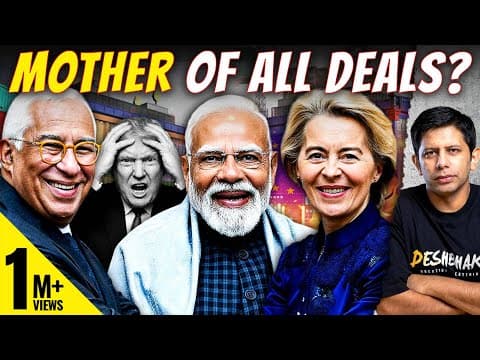
Thank You Trump?! | Historic Trade Deal With EU | What’s The Catch For India? | Akash Banerjee
Trump's Shadow: Catalyst for the Deal
Akash Banerjee argues that Donald Trump's trade policies and tariffs played a significant role in catalyzing the EU-India trade deal. Trump's actions pushed both the EU and India to seek alternative partnerships and reduce their dependence on the US. This deal, along with others, represents a strategic response to US pressure, with both sides recognizing the need for new markets and reliable long-term partners, especially given concerns about China.
India's Export Boost: Tariff Reductions
India is poised to benefit from the trade deal through increased exports, particularly in labor-intensive sectors like textiles and garments, which have faced rising duties. The deal aims to restore concessions previously enjoyed by India, similar to those given to least developed nations, providing relief to sectors affected by US tariffs. This presents an opportunity to recover from job and economic losses, especially for micro, small, and medium enterprises, by significantly reducing tariffs across various sectors.
Automobile Sector: EU Gains Preference
The EU's automobile sector receives preferential treatment under the trade deal, with India reducing import duties on EU cars from 110% to 40%, eventually dropping to 10% over several years. These concessions extend beyond luxury cars to include premium segment vehicles, intensifying competition for domestic manufacturers like Mahindra & Mahindra. While electric vehicles are excluded initially to protect domestic manufacturers, the overall impact on the automobile market is significant.
Carbon Tax Impact: Reduced Competitiveness
The EU's new carbon tax, the Carbon Border Adjustment Mechanism (CBAM), poses a challenge to Indian exporters, particularly in the steel and aluminum sectors, by imposing levies based on carbon emissions. Even with reduced tariffs under the trade deal, these sectors face additional costs that could diminish their competitiveness. The full benefits of the deal hinge on India's ability to address these taxes and reduce its carbon footprint, otherwise, the EU may benefit more than India.
Banerjee: Trade Deal's Geopolitical Angle
Akash Banerjee asserts that the EU-India trade deal carries a significant geopolitical message, signaling to the US and China that India and the EU are not pawns in their power games. This deal, along with others, demonstrates a move towards a multipolar world where middle powers assert their independence and choose their own allies. The deal is as much about sending a political message as it is about trade and investment.