The United States is trapped in a quagmire in the Iran conflict, unable to escalate and win, nor find an exit that doesn't signify defeat. This situation mirrors the Vietnam War, presenting a disastrous scenario for President Trump and the global economy.
Mearsheimer: Israeli Influence and Flawed Strategy
The US strategy in Iran was likely driven by Israeli influence, particularly from Mossad head David Barnea, who convinced President Trump of a flawed plan for regime change through shock and awe. This was despite warnings from the US intelligence community and conventional wisdom.
Mearsheimer: Damaged US-European Relations
The Iran conflict, coupled with the Ukraine war, is severely damaging transatlantic relations. President Trump is likely to blame Europeans for any failures, further poisoning the relationship and reinforcing the idea that allies should distance themselves from the US.
Mearsheimer: The Peril of US Security Guarantees
Providing security guarantees to Ukraine, or maintaining deep US involvement, is unrealistic given US resource constraints and its strategic pivot away from East Asia. The lesson from the Persian Gulf is that US security relationships can lead to significant trouble.
Mearsheimer: Nuclear Temptation and Israeli Response
A victorious Iran might pursue nuclear weapons, a prospect Russia opposes. If Israel perceives it cannot conventionally prevent Iran from obtaining nukes, it may be tempted to use nuclear weapons preemptively, a scenario Russia and China would seek to avoid.
Mearsheimer: Trump's Desperate Situation
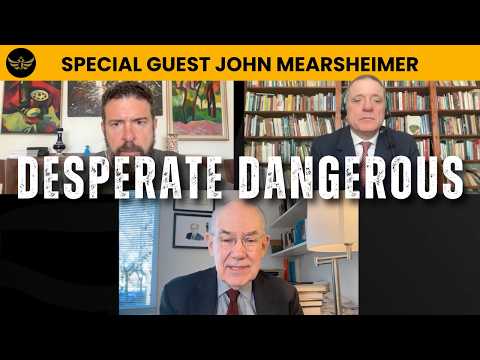
John Mearsheimer posits that President Trump is in a lose-lose situation regarding the Iran conflict, where shutting it down leads to losses and letting it continue leads to bigger losses. He believes Trump has made a catastrophic blunder and destroyed his presidency, leading to a high level of desperation reflected in his erratic public statements.
Mearsheimer: Trust Deficit and Israeli Influence
John Mearsheimer highlights the immense trust deficit in negotiations, noting that US targets for assassination are the very people needed for dialogue. He also points out that Israel will heavily pressure the US to destroy Iran, potentially leaving any negotiated deal 'out in the cold' and making it difficult for Trump to cut a deal.
Merouis: The F-15 Incident and Cover-Up Claims
Alexander Merouis discusses the F-15 incident, suggesting that alternative media analysis points to a failed mission to extract enriched uranium near Isfahan, with Iran releasing verified evidence of the crash. He questions whether Trump is covering up this colossal failure by advertising the pilot's rescue as a victory.
Merouis: The Futility of Capturing Uranium
Alexander Merouis contends that even if the US had successfully extracted enriched uranium, it would not fundamentally alter the course of the conflict. He argues the real threat from Iran lies in its ability to disrupt global oil and fertilizer markets, not its nuclear program at this stage.
Alexander: Trump's Strategy Mirrors Zelensky's
Alexander argues that Donald Trump's approach to foreign policy, particularly concerning Iran, mirrors Volodymyr Zelensky's strategy in Ukraine. Both are accused of not fighting the necessary war or addressing critical issues like the Strait of Hormuz and impending economic crises, instead focusing on seemingly meaningless victories. This suggests a pattern of strategic misdirection rather than substantive problem-solving.