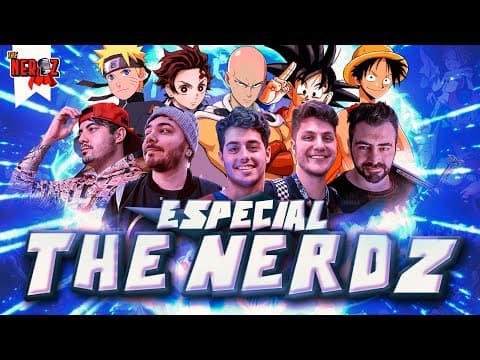
LIVE 5H! ESPECIAL ANIMES FT. BRENO, TIO SAN, SETE, MANGAQ, TIO BRUCE E FRED | The Nerds Podcast #071
Breno: Boruto's Identity Crisis
Boruto has failed to capture the audience's attention because it strayed too far from its roots, embracing technology and losing the 'oriental' essence of Naruto. The introduction of cyborgs and the departure from traditional ninja tools like kunai and shuriken have alienated fans who miss the original series' core identity. The narrative's attempt to sideline Naruto to elevate Boruto, including killing off beloved characters like Kurama, has backfired, creating a disconnect with the audience.
Sete & MangaQ: JoJo's Generational Saga
JoJo's Bizarre Adventure excels at generational storytelling by following the Joestar family lineage across different eras. Each 'Jojo' carries the family's legacy, maintaining a thematic throughline while introducing distinct characters and plotlines. This approach allows for fresh narratives while honoring the series' core identity, a feat that other anime struggle to replicate.
Tio Bruce: Overlord's Isekai Power Fantasy
Overlord presents a compelling isekai narrative where the protagonist, Ainz Ooal Gown, is trapped in his favorite MMO as his powerful avatar. As the supreme leader of an overpowered guild, Ainz navigates this new reality with a mix of his player-mindset and the expectations of his loyal, sentient NPCs. The anime brilliantly contrasts his internal, often humorous, gamer thoughts with his imposing, 'villainous' external persona, creating a unique power fantasy where he effortlessly dominates any challenge.
Sete: Scissor Seven's Understated Brilliance
Scissor Seven, a seemingly simple comedy anime, evolves into a surprisingly complex narrative where initial episodic stories eventually interconnect. The protagonist, Seven, a former elite assassin with amnesia, uses his scissor-controlling abilities alongside a talking chicken to navigate a world of superpowers and assassins. Its charm lies in its fast-paced, 10-minute episodes and its ability to build a compelling overarching plot from seemingly disparate elements.
MangaQ: The Dragon Ball Wish System's Flaws
The Dragon Balls in Dragon Ball, while powerful wish-granting artifacts, are fundamentally flawed due to their limited uses and the tendency for wishes to fall into the wrong hands. The introduction of a radar by Capsule Corp. exacerbates this issue, centralizing the power within a select few. The system's inherent limitations and the potential for misuse highlight a narrative weakness in how such powerful tools are managed within the story's universe.
Live-Action Adaptations: A Risky Proposition?
The panel debates the viability and quality of live-action adaptations of anime and manga, referencing past failures like Dragon Ball Evolution. While acknowledging the potential for success with well-executed projects like Kung Fu Soccer or the animated Saint Seiya film, they express skepticism about translating complex anime narratives to live-action without compromising their essence.
Solo Leveling: A Game-Changer for Manhwa Adaptations
The discussion enthusiastically introduces Solo Leveling, a popular Korean manhwa, and its upcoming anime adaptation. The speakers detail its compelling narrative of a weak hunter gaining immense power through a game-like system, highlighting its intricate plot and character development, and predicting its massive success.
Anime's Mainstream Potential: Bridging the Gap with Hollywood
The panel ponders why anime hasn't reached the same global mainstream appeal as Marvel or DC. They suggest that increased investment in high-quality productions, more cinematic releases, and potentially live-action adaptations could bridge this gap, overcoming the perception of animation as solely for children.
Anime Production Quality Debate
The discussion begins with a critique of Japanese anime production quality, with one speaker calling it 'trash' and 'garbage' compared to Western animation like Spider-Verse and Puss in Boots. While acknowledging Japan's past cinematic influence, the current production standards are deemed low, suggesting a need for investment in higher-quality animation to compete.
Meruem: A Masterclass in Villain Development
The character Meruem from Hunter x Hunter is lauded as the best villain in the series due to his complex and compelling development. Initially a ruthless, absolute being, Meruem evolves through his interactions, particularly his relationship with Komugi, developing emotional attachments and questioning his own destructive nature, ultimately leading to a tragic yet profound end.
Pacing Issues in Naruto and Dragon Ball
The discussion criticizes the pacing of popular anime like Naruto and Dragon Ball, citing excessively long filler arcs and repetitive plot progression. For instance, Naruto's pursuit of Deidara is described as taking '15 episodes' of minimal action, a stark contrast to Bleach's perceived efficiency, which speakers find frustrating and indicative of poor storytelling.
Nostalgia Trip: Digimon and Blue Dragon
The conversation kicks off with fond memories of classic anime like Digimon, with participants recalling the opening theme sung by Angélica and the iconic transformations of the main Digimon. They also touch upon Blue Dragon, noting its creator and the unique 'shadows' concept, comparing it to Attack on Titan.
Debating Anime Villains and Lore
A super chat prompts a debate on the best anime villains, with Aizen, Frieza, Madara, and Meruem being mentioned. The conversation also touches on lore inconsistencies, such as why Goten and Trunks lack tails, exploring theories about genetics, childhood development, and narrative 'plot holes' in series like Dragon Ball.
Einerd's Impact on Pop Culture
The discussion celebrates Einerd's significant role in popularizing nerd culture beyond its niche, reaching mainstream audiences with content on anime, movies, and comics. Participants acknowledge the channel's impressive growth and its ability to rival general entertainment channels in viewership, attributing this success to its broad appeal and consistent output.
Crunchyroll: The Premier Anime Streaming Platform
The podcast highlights Crunchyroll as the leading anime streaming service, emphasizing its high-definition content, ad-free experience, and simulcast releases from Japan. The affordability of its plans, starting at R$15, and features like offline viewing are praised, underscoring its value for anime enthusiasts.
Daniel's Pioneering Anime Channel
Daniel recounts his 11-year journey with the Anime Forever YouTube channel, emphasizing its role as one of the first major anime channels in Brazil. He explains how he capitalized on underserved niches, like Naruto, during a time when many creators focused on negative content, thereby building a dedicated audience.
Anime Adaptation Challenges: From Dragon Ball to One Piece
The panel explores the difficulties of adapting beloved anime into live-action, citing Dragon Ball Evolution's failure due to misinterpreting the source material and Westernizing it excessively. They praise Rurouni Kenshin and Fullmetal Alchemist for retaining essence despite budget constraints, and express optimism for the upcoming One Piece live-action series, highlighting its potential to satisfy a passionate fanbase.
Anime's Life-Altering Impact
Naruto, in particular, has profoundly changed the lives of the speakers, impacting them financially, professionally, and personally. This deep connection goes beyond mere entertainment, shaping their life paths and current circumstances.
Oda's Unwavering Devotion to One Piece
Unlike other creators who have delegated control of their series, Eiichiro Oda maintains an exceptional level of personal investment and oversight in One Piece, ensuring its creative integrity and reflecting his deep passion for the work. This dedication is seen as a key factor in the series' enduring quality and his reluctance to let it be mishandled.
Boruto's Financial Viability vs. Fan Perception
Despite negative fan sentiment, particularly in Brazil, Boruto is a highly profitable anime and manga, ranking as TV Tokyo's second most profitable series after Naruto. This financial success, driven by global sales, demonstrates that critical reception doesn't always align with commercial viability, and creator Masashi Kishimoto is unlikely to abandon a lucrative franchise.
The 'Genjutsu' Teaser Explained
A viral teaser featuring Madara addressing Naruto was not a plot twist or 'genjutsu' as speculated, but rather a promotional tactic for a popularity poll of Naruto characters. This highlights how online speculation can misinterpret marketing strategies, leading to widespread fan theories that lack factual basis.
Kishimoto's Bold Narrative Shift in Boruto
Masashi Kishimoto has taken a dramatic turn in the Boruto manga, transforming Boruto into a renegade ninja framed for Naruto's supposed death. This narrative pivot, orchestrated by Ada's powers, creates significant plot potential and reshapes the series' structure, indicating Kishimoto's commitment to evolving the story despite potential fan backlash.
Kishimoto's Narrative Prowess
Masashi Kishimoto's writing demonstrates a masterful ability to build narrative depth and character impact, exemplified by the strategic foreshadowing of Asuma's death. By developing Asuma's character and introducing his child shortly before his demise, Kishimoto ensured the death resonated emotionally, a technique that showcases his skill in crafting impactful plot points. This deliberate pacing and character development are key to his storytelling.
Shonen Tropes and Evolution
The core of Shonen anime, like Naruto and One Piece, often revolves around the 'journey of the hero,' emphasizing friendship, growth, and overcoming challenges. While these tropes are foundational, successful series evolve by exploring secondary characters and complex themes. The discussion suggests that while the formula is consistent, the execution and depth of character exploration differentiate enduring anime.
Otsutsuki: Cosmic Powerhouses
The Otsutsuki are revealed to be powerful aliens who consume chakra fruits from planets to ascend to god-like status. Their abilities, such as Eida's reality alteration or Kawaki's absorption powers, are fragments of a singular, immensely powerful Otsutsuki being. This cosmic threat operates on a scale far beyond traditional ninja conflicts, fundamentally altering the power dynamics within the Naruto and Boruto universes.
Amado's Enigmatic Role
Amado is presented as a central, manipulative figure in the Boruto narrative, with hints suggesting he might be a god-like entity or orchestrating events from behind the scenes. His motivations, possibly tied to resurrecting his daughter Delta, remain a key mystery.
The Under-Explored Power of the Jogan
The Jogan, Boruto's unique eye power, is a potent ability with potential comparable to the Rinnegan and Sharingan, yet it remains largely unexplored in both the anime and manga, leaving fans wondering about its full capabilities and narrative significance.
Kawaki's Destructive Philosophy
Kawaki's motivation to destroy the ninja world stems from a belief that shinobi powers, originating from Otsutsuki descendants, are unnatural and inherently corrupting. This perspective positions him as a radical force seeking to dismantle the existing order.
Anime Longevity and Fan Demand
Despite the prevalence of short-form content, there remains a strong audience demand for long-running anime series like Black Clover, which successfully blend popular tropes to create engaging, extended narratives that fans are eager to follow.
Goku vs. Saitama: A Power Scaling Conundrum
The debate over who would win between Goku and Saitama hinges on whether to consider their personalities or pure combat power. If personalities are included, Saitama's playful nature might lead to his defeat, but in a pure brawl, Saitama's overwhelming strength could be decisive, though Goku's ability to evolve mid-fight complicates this.
YouTube Copyright Strikes and Anime Content
Creators face significant challenges on YouTube due to copyright strikes, particularly with anime content. Manual strikes from rights holders, like those from TV Tokyo for Boruto, can lead to channel penalties, even for content that might otherwise pass automated checks.
The Evolving Landscape of Anime Popularity
While long-running series like One Piece and Naruto maintain a strong following, newer anime like Kimetsu no Yaiba and Blue Lock have achieved massive popularity, demonstrating the dynamic nature of the anime market. Sports anime, in particular, are seeing a resurgence.
The Complex Depths of Evangelion
Evangelion, despite its mecha premise, delves into profound philosophical and psychological themes, exploring depression, trauma, and existentialism through its characters' struggles. The series uses its giant robots as a vehicle for deep character studies, revealing complex emotional landscapes.
The 'Cult' Appeal in Shonen Anime
Even seemingly straightforward action anime like Naruto and One Piece contain 'cult' elements, offering political commentary and complex character motivations that reward deeper analysis. The story of Itachi, for instance, reveals layers of sacrifice and difficult choices beyond a simple villainous portrayal.
The Impact of Anime on Viewers
Anime like Boruto can have a profound, even life-changing, impact on viewers, inspiring them in unexpected ways. This is illustrated by a humorous anecdote about a friend being so moved by the anime that they changed channels, showcasing the emotional connection fans develop.
Navigating Social Media Growth
Successful content creators differentiate their approach across platforms, tailoring content to specific audiences rather than simply cross-posting. This strategy fosters distinct communities on each network, from TikTok to YouTube, and requires understanding audience demographics and preferences.
One Piece's Enduring Legacy and Fan Theories
One Piece, a series with a nearly 30-year history, continues to captivate audiences with its intricate plot and enduring mysteries, fueling a vibrant fan culture of theories, such as the 'Crocodile is Luffy's mother' hypothesis. The series' longevity and depth invite continuous engagement and speculation.
MangaQ: The Mythical Zoan Nature of Luffy's Fruit and the 'D.' Connection
Luffy's Gomu Gomu no Mi is revealed not as a Paramecia, but a Mythical Zoan of Nika, the Sun God. This revelation connects to the 'D.' initial, suggesting that those bearing it are inheritors of Joy Boy's will and destined to challenge the World Government's oppressive rule, embodying the spirit of liberation.
Sete: The Nature and Origin of Devil Fruits
Devil Fruits, born from humanity's collective desire for evolution, grant extraordinary powers. When a user dies, the fruit reincarnates, and its true nature, like Luffy's being the Nika fruit, was hidden by the World Government to prevent the spread of liberation-associated powers.
Breno: The 'D.' and Inherited Will
The 'D.' initial represents individuals who carry the inherited will of Joy Boy, acting as a hidden force against the gods (World Nobles) and embodying a lineage connected to divinity and liberation, fundamentally opposing the World Government's agenda.
Zoro vs. Mihawk: A Power Scaling Debate
The discussion posits that while Zoro is a formidable swordsman, he has not yet surpassed Mihawk, the World's Strongest Swordsman. Comparisons are drawn to other powerful characters like Yorich from Demon Slayer, highlighting that power levels are often context-dependent and vary between anime universes. The debate emphasizes that Zoro's potential is immense, but his current achievements do not yet place him above Mihawk.
Luffy vs. Naruto: A Clash of Power Systems
A hypothetical battle between Luffy and Naruto is analyzed, focusing on the strengths and weaknesses of their respective power systems. Luffy's advanced Observation Haki, allowing him to see the future, is contrasted with Naruto's Genjutsu. While Luffy's physical power and rubber abilities pose a significant threat, Naruto's potential to trap Luffy in illusions is also considered. Ultimately, the consensus leans towards Luffy due to his overwhelming power and adaptability, particularly his ability to turn opponents into rubber.
Demon Slayer's Phenomenal Rise and Impact
Demon Slayer's success is analyzed as a confluence of factors: its stunning animation, its release during the pandemic providing a much-needed escape, and its relatively simple yet resonant story of vengeance and family. The series is lauded as a visual masterpiece that revolutionized anime animation quality, making it a beloved and enduring franchise for many, potentially becoming a lifelong favorite due to its timing and emotional connection.
The Nature of Breathing Techniques in Demon Slayer
The visual effects of breathing techniques in Demon Slayer, such as the 'Flame Hashira' or 'Thunder Hashira,' are debated. While the author has stated these are illustrative effects, the discussion suggests they function as actual powers within the anime's world, influencing the environment and demons. The consensus is that these techniques, rooted in martial arts and spiritual focus, are treated as tangible powers within the narrative's logic.
The Nuances of Nen
The Nen system in Hunter x Hunter is a highly complex and adaptable power framework that can theoretically explain any superpower across different anime series. It involves six categories: Enhancement, Transmutation, Emission, Manipulation, Conjuration, and Specialization, with individuals typically excelling in one or two, and Specialists possessing unique, uncatalogable abilities.
Gon's Sacrifice and the Dark Continent
Gon Freecss's transformation into an adult form, a peak of his power achieved through a life-force contract, was a pivotal moment in Hunter x Hunter, costing him his abilities. This event highlights the extreme risks associated with Nen contracts. Furthermore, the true world is revealed to be a vast Dark Continent, a dangerous, uninhabitable landmass from which humanity has brought back calamities.
Demon Slayer's Swordsmith Village Arc Controversy
The 'Village of the Swordsmiths' arc in Demon Slayer is considered by many, including some speakers, to be one of the best arcs for its exploration of powers and introduction of new characters. However, it's also controversial due to the temporary absence of popular characters Zenitsu and Inosuke, leading some fans to unfairly label it the worst arc.
Vinland Saga's Narrative Shift and Philosophical Depth
The discussion shifts to Vinland Saga, with initial praise for the first season's ending but a critique of the second season's slower pace and philosophical focus. While some find the shift jarring, others appreciate the narrative's exploration of Torfin's journey beyond pure combat. The consensus is that despite the change in tone, the story remains compelling and is expected to develop logically, even if it deviates from initial expectations.
Saitama vs. Goku: The Ultimate Power Debate
A spirited debate erupts over whether Saitama or Goku would win in a fight. The argument for Saitama centers on his 'Tom Force' ability – his power is whatever he needs it to be, allowing him to overcome any obstacle, including dimensional portals and replicating other powers. While Goku's Saiyan heritage and constant growth are acknowledged, Saitama's unique, narrative-driven power is seen as transcending conventional power scaling, making him the ultimate protagonist.
Manga Recommendations and Industry Trends
The conversation touches on the booming popularity of Korean webtoons like Solo Leveling, Nano Machine, and Mercenary Enrollment, with discussions on their potential to surpass Japanese manga. The series Kingdom is also highly recommended for its strategic depth and character development, drawing parallels to Vinland Saga but with a stronger emphasis on warfare and unification.
Hunter x Hunter's Villains and Nen System
The discussion shifts to Hunter x Hunter, debating who the ultimate villain will be: Gyro or Pariston. Gyro's tragic backstory and rise to power, culminating in his transformation into a Chimera Ant and potential divine avatar status, are highlighted. The complexity of the Nen system and how characters like the Chimera Ants utilize it is also explored, suggesting Gyro's persistence and unique abilities make him a strong candidate for the final antagonist.
Gojo vs. Sukuna: A Power Level Debate
The discussion posits that while Gojo claims superiority, the specifics of his fight against Sukuna remain ambiguous, particularly regarding Sukuna's full power. This leads to speculation that Sukuna might seek additional power, possibly through the 'fugir' ability, to contend with Gojo's dimensional techniques. The conversation highlights Gojo's arrogance as a potential factor in his pronouncements, suggesting his 'serious' mode might be different from his usual demeanor. The difficulty in landing a direct hit on Gojo due to his dimensional abilities is noted, implying that alternative strategies like mental control might be necessary.
The Nerds Podcast: Promoting and Engaging
The podcast hosts express gratitude to their guests and the audience, inviting them back for future discussions, especially when new anime are released. They also highlight the importance of their sponsor, 'Crusher,' for enabling these special episodes, urging viewers to subscribe and check out their packages. Additionally, they are promoting their participation in the 'My Best' awards for content creators, encouraging listeners to vote daily via a provided link to support 'The Nerds Podcast' and help them advance in the competition.