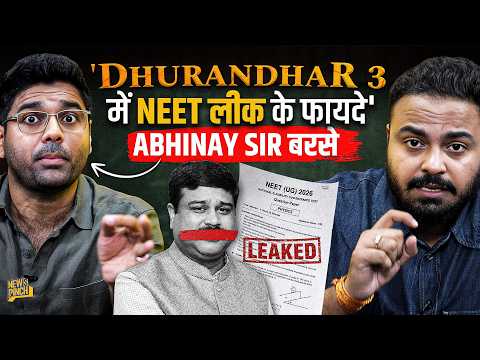
Abhinay Sir NEET Paper leak पर भयानक फटे, NTA, Education System पर क्या चैलेंज दे दिया?
The NTA's Profit Motive and Lack of Accountability
Abhinay Math argues that the NTA, responsible for conducting major exams, functions more like a business designed for profit than an educational body. He points to the substantial revenue generated from application fees, suggesting this financial incentive fuels a lack of accountability and potentially encourages malpractices. The speaker criticizes the NTA's initial denial of the leak and its subsequent actions, implying a pattern of evasion and a failure to take genuine responsibility. The final sentence underscores that this profit-driven model fundamentally corrupts the purpose of conducting examinations.
Political Distraction: Religion and Elections Over Education
The speaker criticizes politicians for focusing on religious symbolism and election campaigns instead of addressing the critical issue of education reform. He argues that leaders use religious visits and political rallies to garner votes, neglecting the fundamental need to strengthen the educational infrastructure and curriculum. The speaker implies that this diversionary tactic is a deliberate strategy to avoid accountability for failures in sectors like education and health. The final sentence concludes that this political theater ensures that substantive educational progress remains perpetually sidelined.
Abhinay Math: The Psychological Toll on Students
Abhinay Math emphasizes the severe psychological trauma inflicted upon students due to the repeated paper leaks and the perceived inaction of authorities. He describes the situation as a 'national trauma,' highlighting that students, especially those from vulnerable backgrounds, are struggling with anxiety, fear, and a loss of faith in the system. The speaker suggests that the pressure to succeed, coupled with the uncertainty of fair examination, is leading to immense distress and even suicidal thoughts among young aspirants. The final sentence stresses that this emotional burden significantly hinders their ability to prepare for future attempts.
Judicial Delays and Paper Leak Consequences
The judicial system's slow pace means that by the time a paper leak case reaches higher courts, it's often too late to cancel exams, leaving students with 'better luck next time' and failing to deter future culprits. The lack of swift follow-up on CBI investigations and the granting of bail to accused individuals further erode public trust and encourage crime.
Media's Role and the Erosion of Dissent
The media has become an 'enemy' of the opposition, primarily driven by government advertisements, leading to sycophantic reporting. Journalists are seen participating in political events rather than holding power accountable. This compromised media landscape, coupled with the IT Act, stifles criticism and prevents genuine questions from being asked, creating an environment where leaders are perceived as infallible 'gods'.
The Commercialization of Politics and Vote Buying
Politics has become a capitalist enterprise, focused on ' حساب किताब' (account keeping) rather than patriotism. Elections are influenced by vote-buying through freebies, and parties prioritize offering more benefits to win. This commercialization, where even tax money is used for populist schemes, distorts democratic processes and shifts focus away from essential public services like health and education.
The Coaching Culture as a Symptom, Not the Cause
The rise of coaching centers is a consequence of the failing public education system, not the primary cause of issues like paper leaks. Schools are not adequately preparing students for exams, making coaching a necessity. While not inherently corrupt, the coaching industry thrives because the basic educational infrastructure is weak, forcing students to seek supplementary education to compete.
The Need for Accountability and Fear of Law
To combat paper leaks and corruption, a culture of accountability and fear of the law must be instilled. This requires stringent punishments, publicizing arrests, and ensuring that even ministers involved are held accountable. Without such measures, the system will continue to collapse, as seen in the NTA's inability to prevent leaks despite its digital capabilities.
The 'One-Man Show' and Centralization of Power
The current political system operates as a 'one-man show,' with excessive centralization of power. Leaders are expected to constantly praise the Prime Minister, diminishing their own accountability and initiative. This model, unlike the decentralized leadership envisioned by the constitution, prevents effective governance and national progress, as individual leaders are reduced to mere figureheads.
Nepotism and the Lack of Merit in Leadership
Leadership selection is increasingly based on nepotism and political connections rather than merit or capability. Appointing individuals like Nitish Kumar's son or Amit Shah's son to key positions, despite lacking qualifications or experience, undermines the principle of competent governance. This trend, where leaders are chosen for their lineage rather than their ability to lead, is detrimental to national development.
Abhinay Pandey: Systemic Corruption in NEET
The NEET paper leak is not an isolated incident but a symptom of deep-seated corruption within the system, driven by financial motives and a desire to please superiors. The NTA is accused of failing to conduct exams properly, with internal actors being responsible for the leak, jeopardizing the future of millions of students.
Paper Leaks as Treason
The act of leaking examination papers is a crime of immense magnitude, comparable to treason, because it devastates the morale of millions of students. Unlike terrorism, where collaborators face severe consequences, those involved in paper leaks often escape serious punishment, leading to a cycle of corruption.