Cristina Mariani posits that hormonal fluctuations, particularly around a woman's period, can lead to increased testosterone and a surge of confidence, prompting significant decisions like getting bangs. This heightened emotional state, while sometimes leading to anger, also bypasses overthinking, enabling action. Theo Von agrees that anger often spurs action, even if it's not always positive.
Cristina Mariani: Childhood in Italy vs. Stockton
Cristina Mariani contrasts her childhood experiences in Italy, where children were physically aggressive, with her return to Stockton, California. She recalls Italian children being 'wild animals' who would physically chase and try to harm newcomers, unlike American children who are more psychologically manipulative. She also touches on a romanticization of the past, where direct human interaction was necessary to ascertain simple information.
The Italian Childhood and the Call of Ambition
Cristina Mariani recounts her childhood in Corfino, a tiny Italian village of 300 people, which offered a sense of freedom and community. Her father's ambition eventually led the family to move, seeking greater opportunities and escaping the close-knit, potentially stifling, environment of a small town. The house remained a time capsule, preserving her childhood memories.
The execution of serial killer John Wayne Gacy during a solar eclipse, coinciding with the baptism of Jeffrey Dahmer on the same day, presents a bizarre and potentially significant alignment of events. This confluence of a death ritual and a spiritual sacrament during a celestial phenomenon raises questions about cosmic synchronicity and the opening of spiritual realms.
The Perils of Pioneer Life
Life in pioneer times was incredibly harsh and dangerous, characterized by primitive technology like wooden wheels that were susceptible to termites, leading to frequent breakdowns and perilous journeys. Survival was a daily struggle against disease, violence, and the sheer lack of infrastructure, a stark contrast to modern conveniences.
Modern Conveniences vs. Historical Realities
Today's world offers unprecedented conveniences, such as instant light, sanitation, and advanced medical treatments, which are often taken for granted. These modern amenities stand in stark contrast to the primitive conditions of the past, where basic survival and hygiene were constant challenges.
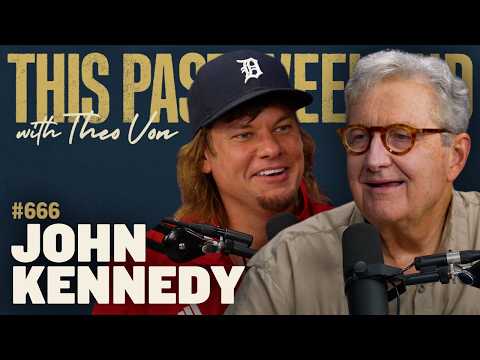
Senator John Kennedy and Theo Von discover a shared connection through their Louisiana upbringing, discussing the unique characteristics of towns like Zachary and Mandeville, and how these environments shaped their perspectives.
Reflections on Small-Town Life and Education
Kennedy and Von reminisce about their experiences growing up in small towns and attending high school, reflecting on the unique social dynamics, the sense of community, and the protective environment that such settings provided, contrasting it with the present day.
Tucker Carlson's Political Stance
Senator Kennedy discusses Tucker Carlson's decision not to support the Republican party, attributing it to Carlson's falling out with President Trump over the Iran conflict and his belief that the party has become 'Israel first' rather than 'America first.'
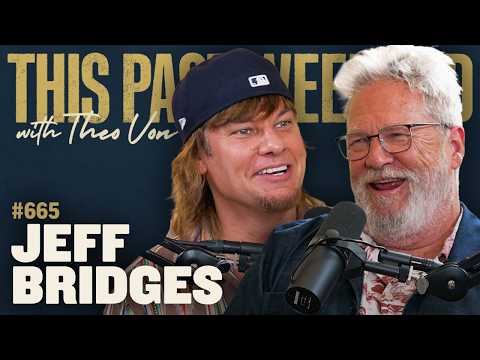
Jeff Bridges: The 'Trim Tab' of Spirituality and Creativity
Bridges reflects on how a higher power or a guiding force seems to influence actions, likening it to the 'trim tab' concept. He suggests that by making oneself vulnerable and present, individuals can tap into this energy, enabling them to create positive change and manifest their dreams, emphasizing the importance of trust and surrender.
Bernie Glassman: The Zen Master and the 'Heads' Project
Jeff Bridges recounts his collaboration with Zen Master Bernie Glassman, leading to the book 'The Dude and the Zen Master.' Bridges conceived a fundraising idea for Glassman's organization, Zen Peacemakers, involving renting out 108 'heads' for $10,000 a year, which would come with certificates and a website detailing their 'genealogy.' This project, akin to Cabbage Patch Kids, was disrupted by a flood that lost the heads, prompting a need to create more.
Jeff Bridges: The Creative Flow and Hobbies as Jobs
Jeff Bridges describes how creative energy flows into various outlets, like writing songs or painting, even when preparing for a role. He shares an anecdote about painting hotel rooms while preparing for the movie 'Fearless.' He also reflects on how his hobbies, like stand-up comedy and podcasting, evolved into jobs, leading to a feeling of having lost parts of himself. Robert Duvall's advice to 'hobbies, hobbies, hobbies' is recalled as crucial for maintaining a creative life.
Theo Von uses a humorous anecdote about ordering greasy al pastor meat at a Mexican restaurant to illustrate how life can sometimes be unexpectedly unpleasant or 'greasy.' He likens the experience to a vendor pointing out the grease on the food he just served, emphasizing the absurdity of complaining about something you created or delivered. This leads to a broader reflection on accepting life's less-than-ideal moments, comparing himself to 'second-class meat' that is still an 'entree.'
Relationship Jealousy and Unconditional Love
A caller named Michael expresses deep jealousy over his girlfriend's past relationships, struggling to accept and love her unconditionally. He asks for advice on how to move past his own insecurities and stop centering himself in the relationship. Theo Von acknowledges the difficulty of the situation, suggesting that 'loving, bro' should be a universal anthem, implying that unconditional love is the ideal but challenging path.
Theo Von's Vision for Ideal Partnership
Theo Von muses on the idea of being the ideal partner who actively supports their significant other, ensuring they never have to 'give themselves away' to undesirable situations or environments again. He suggests this proactive support could fulfill a deep need and prevent past hurts from resurfacing, contrasting it with his own past failures in this regard.
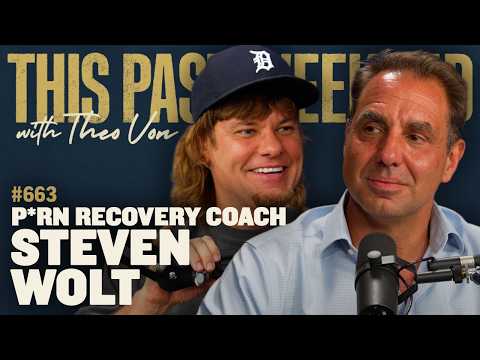
Steven Wolt recounts how pornography addiction began as an outlet for depression and loneliness but escalated into a compulsive behavior that led him down dark paths, including engaging in behaviors outside his sexual orientation and ultimately contributing to his life's collapse in 2008. He views pornography as a gateway drug that eroded his values and led to more destructive behaviors.
Wolt: Recovery is Building a Life, Not Just Abstinence
Steven Wolt argues that true recovery transcends mere abstinence from addictive behaviors; it's about actively building a life that is more enjoyable and purposeful than the one one is escaping from. This involves becoming emotionally regulated, socially connected, and living with honesty and integrity, thereby eliminating the need for maladaptive coping mechanisms.
Steven Wolt: The Dual Nature of Porn Use
Steven Wolt distinguishes between casual pornography use and addiction, explaining that while some men may stumble upon it without underlying issues, others actively seek it out due to existing emotional pain or a need for a 'fix.' He notes that statistics suggest 10-15% of men have an addiction or severe unhealthy relationship with pornography, indicating a significant portion of the male population is affected.
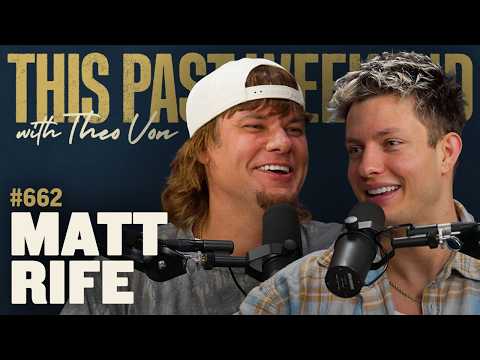
Theo Von humorously suggests that Matt Rife's attractiveness changed the comedy landscape, making it harder for 'regular-looking' comedians. Matt Rife acknowledges the perception but states it doesn't bother him, though it affects others. This point highlights the subjective nature of appeal in entertainment and the impact of perceived advantages.
Theo & Matt: Remembering Ralphie May
Both Theo and Matt share deep admiration and fond memories of the late comedian Ralphie May, highlighting his kindness, generosity, and unique comedic talent. They recall his early career, his impact on their own paths, and his ability to connect with diverse audiences through unapologetic humor.
The Stand-Up Grind and Burnout
Theo Von and Matt Rife delve into the relentless nature of stand-up comedy, with Rife detailing his grueling schedule of filming in Vancouver while simultaneously touring on weekends. Both comedians reflect on the physical and mental toll of constant performance, the fear of losing skills during breaks, and the existential questions that arise after achieving major career milestones like selling out Madison Square Garden. Rife expresses a desire for a new creative direction beyond just venue size.
Tulsi Gabbard is perceived as a genuine and independent political figure, which Theo Von believes is why the Democratic Party establishment attempted to undermine her during her presidential run by manipulating debate rules. This suggests a pattern of the party prioritizing insider control over popular sentiment.
Kiriakou's Unconventional CIA Recruitment
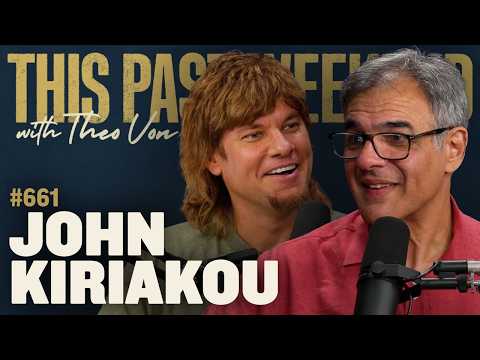
John Kiriakou's path into the CIA was unconventional, stemming from a graduate school assignment where he profiled his boss. His professor, Dr. Gerald Post, revealed himself to be an undercover CIA officer and offered Kiriakou a position, highlighting a recruitment method that is now illegal due to the Equal Employment Opportunity Act of 1993.
Kiriakou: Pre-9/11 Warnings and Saudi Connections
Kiriakou recounts receiving dire warnings of an imminent, large-scale attack from intelligence officials weeks before 9/11, yet the U.S. struggled to identify the perpetrators. He alleges that Saudi Arabia, despite being a key ally, was deeply involved, citing financial transfers from the Saudi ambassador's wife to the hijackers and the suspicious deaths of three Saudi princes who might have been interrogated. Kiriakou asserts that the U.S. should have pursued Saudi Arabia more aggressively.
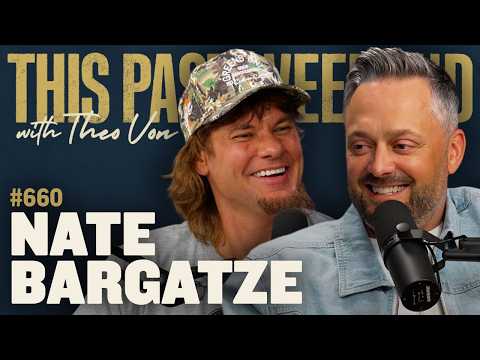
Nate Bargatze reveals a surprising personal shift towards being a morning person, a concept that challenges the typical comedian's nocturnal lifestyle. He finds structure in his movie-making process, contrasting it with the inherent lack of routine in comedy, and expresses a fantasy of adhering to an alarm clock.
Nate Bargatze's "The Breadwinner" Movie
Nate Bargatze discusses his first feature film, "The Breadwinner," which he wrote and stars in. The movie, co-written with Dan Lagana and directed by Erica Pel, was filmed in Atlanta and is designed as a PG-rated, family-friendly experience, a rarity in today's market dominated by horror and superhero films. The production cost was around $38 million.
The Journey to Headlining Bridgestone Arena
Nate Bargatze reflects on his 20-year journey to headline the Bridgestone Arena, selling over 19,000 tickets. This achievement marked a significant milestone, prompting him to consider his next steps and the purpose beyond personal success, leading to the inception of his company, Nate Land, and his broader creative ambitions.
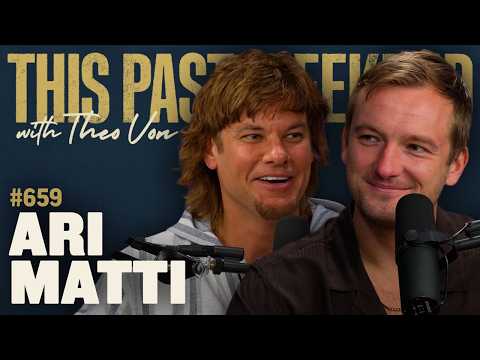
Ari Matti recounts an interaction with an old acquaintance in Iran, highlighting that despite global conflicts and hardships, many individuals worldwide are simply focused on finding happiness and peace in their daily lives.
The Perils of Aging
Theo Von and Ari Matti discuss how the body's resilience diminishes with age, turning minor incidents like getting a wet foot or a sudden movement into potential health crises. What was once easily shrugged off now requires caution and can lead to prolonged illness or injury, highlighting a universal experience of physical decline.
Estonian vs. American Culture
Estonia, while modernizing, still retains cultural nuances that differ significantly from American norms, particularly concerning personal expression and societal openness. The comedian's anecdote about a single Subway restaurant in Estonia highlights a past where global brands were novelties, reflecting a different stage of cultural integration compared to the ubiquitous presence of such establishments in the US.
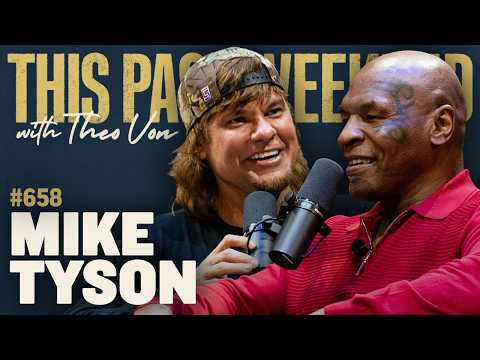
Mike Tyson's early life experiences, including being bullied and not knowing how to wash himself, led him to become a criminal who only bought nice clothes. This created a persona of a 'rogue that we love,' where even criminal behavior is somewhat admired if well-presented.
Fighting as a Magnet for Attention
Mike Tyson was drawn to fighting because he craved the crowd's roar and the recognition of his name, wanting to be seen and acknowledged. He felt Cus D'Amato's declaration at age 12 that he was the 'greatest fighter in the world' validated this desire, even though he initially suspected it was a trick.
The Paradox of Poverty and Resilience
Theo Von and Mike Tyson reflect on the 'beautiful' and 'hilarious' aspects of poverty, noting that it doesn't care about wealth or fame and still affects people. They recall childhood memories of making do with limited resources, like jumping through smoke from burning trash, finding humor and resilience in their shared experiences.
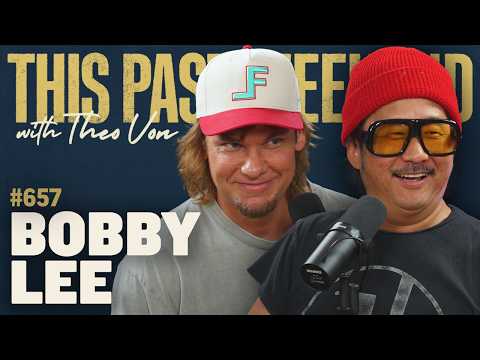
The conversation takes a bizarre turn discussing omakase dining, which Bobby Lee equates to an 'omakasa' or 'omocasa' experience where one eats whatever is served, even if it's unusual or unappealing, likening it to tasting different 'flavors' and leading to crude jokes about tasting penises and raver culture.
Bobby Lee's Political Leanings Revealed
Bobby Lee discloses his 'full-blown liberal' political stance, particularly regarding immigration, stating he 'doesn't give a [expletive]' about it, which surprises Theo Von. This marks a rare instance of Bobby Lee discussing politics on the show.
Theo Von: The Cracker Barrel Patriotism
Theo Von asserts his American identity by citing his fondness for Cracker Barrel as a quintessential American experience, particularly its breakfast offerings. He humorously interprets the reactions of people in the restaurant as moments of remembrance or surprise at his presence, rather than salutes. This point concludes by contrasting his perceived patriotism with the more complex, and perhaps less overtly nationalistic, experiences of veterans like his stepfather.
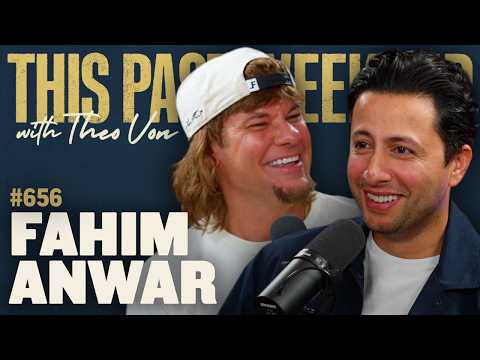
Fahim Anwar is promoting his new YouTube comedy special, 'Intrusive Thoughts,' and his ongoing weekly show at The Comedy Store, 'Fahim Works on Stuff,' where he tests new material. He describes the latter as a place for crafting jokes, with some material eventually making it into his larger sets.
Performing for Massive Audiences
Fahim Anwar shares his experience performing in extremely large venues (up to 18,000 people) during a tour with Theo Von, describing it as a daunting but exhilarating experience akin to 'big wave surfing.' He likens the initial feeling of seeing the vast empty venue to a scene from 'Interstellar,' but finds confidence once the performance begins.
The Mount Rushmore Visit
The duo visited Mount Rushmore, finding it smaller than expected but appreciating the 'big reveal' aspect of the monument. They also discussed the ongoing construction of the Crazy Horse Memorial, its history, and the sculptor's commitment to funding it independently, noting the slow progress and the symbolic significance of the project.
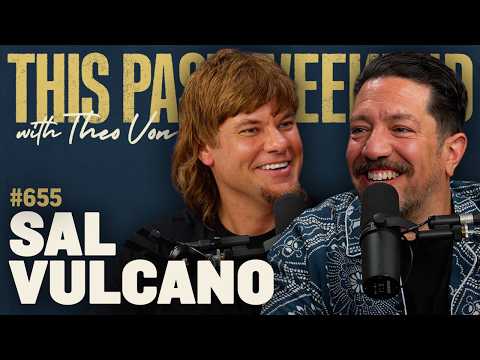
Theo Von and Sal Vulcano discuss the practicalities and anxieties surrounding testicular self-exams, referencing official guidelines. They humorously debate what constitutes a 'smooth bump' and the importance of establishing a baseline by performing the exam regularly, acknowledging that most people are likely behind on this monthly screening.
The Unpredictable Nature of Film Production
Theo Von and Sal Vulcano discuss the chaotic nature of film production, referencing the challenges of shooting during wildfires and high winds, and the need to adapt to unforeseen circumstances. They highlight the dedication of the crew and the inherent unpredictability of bringing a movie to life, even when facing external crises.
The 'Found Footage' Show Idea
Sal Vulcano shares an idea for a TV show based on finding old VHS tapes and creating content from them, inspired by his wedding video discovery. He also recounts a story about a comedian who sent Nigerian scammers scenes from Seinfeld to reenact, turning their scam into a source of unique online content.
Theo Von reflects on his childhood, where his mother's lack of connection led him to feel a deep sense of low self-worth and a need to become a people-pleaser. He explains that his sense of self was derived from external validation, making him fear rejection and driving him to constantly seek approval.
Theo Von: Showing Up for Oneself
Theo Von shares practical steps he's been taking, such as waking up early, doing yoga, working out, playing basketball, and attending AA meetings. He emphasizes the importance of doing what he says he will do, which builds a new sense of self and reliability.
Theo Von: Crows as City Cleaners and Humorous Inventions
Theo Von discusses the innovative Swedish program where crows trade trash for food, praising it as a positive societal advancement. He then pivots to humorous, hypothetical inventions like rubber cars, self-walking pants, and suggestive earrings, showcasing his imaginative and comedic approach to problem-solving and societal commentary.
Hannah Strickland describes her daily routine as eat, sleep, drink, watch TV, play, and shower, indicating a relatively normal life despite her condition. She also asserts her loudness and confidence, stating she knows she is loud and embraces it.
Family Dynamics & Sibling Rivalry
Hannah and her mother Dawn discuss family dynamics, including sibling roles and perceived laziness. Hannah claims her brother Jonah does nothing and should be sentenced to prison for a year, while Dawn notes that none of her children clean. Hannah also expresses a desire for her own room and criticizes the house's color.
The Nature of Cystinosis Explained
Dawn Strickland explains that Cystinosis is a lysosomal storage disorder where the amino acid cystine is not transported correctly, accumulating in major organs. This condition affects multiple organs, leading to severe health issues like kidney transplants for her son Joel.
Matt McCusker discusses Elon Musk's offer to pay TSA agents during a government shutdown, highlighting the potential for privatization of public services. He notes that while generous, such offers could lead to private entities like Tesla or X managing critical infrastructure like airport security. McCusker draws parallels to historical instances of private companies controlling public transit in Chicago, emphasizing the risks of corruption and the erosion of public control. He concludes that while private sector efficiency is appealing, it carries inherent risks of exploitation and loss of public oversight.
McCusker's Ruthless Gardening Philosophy
Matt McCusker describes his gardening approach as 'totalitarian' and 'ruthless,' believing plants must adapt to harsh conditions or perish, much like a stern father raising children. He contrasts this with a 'mother nature' approach and recounts his garden's destruction by hail and a rat infestation, leading to the use of potent, fiberglass-laced poison.
Matt: Early Internet & Websites
Early internet culture was characterized by unique, often niche websites like 'buffhomos.com' and 'totalcreeper.com,' which served as creative outlets for comedians and individuals. These sites, though sometimes controversial or bizarre, fostered a sense of community and provided platforms for humor and expression. The discussion concludes that these early digital spaces, while primitive by today's standards, offered a raw and uncurated form of online interaction.
Theo Von begins by reminding viewers about pre-sale tickets for his movie 'Bus Boys,' starring David Spade, which is set to release on April 17th. He encourages support to help expand theater showings.
Theo Von & Ella Langley: Lake Life and Alabama Roots
The conversation shifts to Lake Martin in Alabama, a place significant to both Theo Von and Ella Langley. Langley mentions her first gig was at a bar on Lake Martin. They reminisce about lake life, the unique characters found there, and the perception of places like Florida as aspirational destinations for those from smaller towns.
Theo Von: Reflecting on Family and Perseverance
Theo Von asks Ella Langley about her parents' enduring marriage, prompting her to share that they have been together through a "wild ride" and demonstrated "perseverance." This leads to a discussion about the challenges and eventual strength found in long-term relationships, contrasting with the common perception that relationships might falter.
Jake Paul discusses the challenges and creative freedom of self-funding and producing his movie 'Bus Boys' with David Spade, highlighting the lack of studio interference and the pressure of direct audience reception. He expresses nervousness about the film's box office performance but emphasizes the satisfaction of creative control.
Personal Struggles and Addiction
Jake Paul and Theo Von candidly discuss their past struggles with addiction, mental health issues, and difficult periods in their lives. Paul mentions dealing with suicidal thoughts and negative influences, while Von shares his experiences with sobriety and various forms of addiction. They emphasize the importance of healing and self-reflection.
Political Aspirations and Dangers
Jake Paul entertains the idea of a political career, citing Marcus Aurelius's emphasis on societal duty. He acknowledges the significant risks, including potential assassination, and the profound impact on personal life, but suggests he might enter politics if he's the best candidate and faces weak opposition.
Both Nate Diaz and Chris Avila strongly advocate for jiu-jitsu to be a mandatory part of school curricula, likening it to learning to swim. They believe it's essential for self-defense, personal stability, and developing common sense, equipping individuals to handle potential threats and navigate life more safely.
Stockton's Grit
Nate Diaz and Chris Avila assert that their hometown of Stockton, California, instills a unique grit and authenticity in its residents, which they carry into their fighting careers. They believe this origin is fundamental to their identity and approach to life.
MMA Fight Analysis: Fighter vs. Analyst
Nate Diaz expresses strong opinions against MMA analysts who have never fought, arguing that their criticism lacks practical grounding. He believes only fighters who have experienced the sport firsthand can offer legitimate analysis, contrasting this with his own career earnings and experience.
Vince Vaughn discusses his experience playing two characters in his new movie, 'Mike & Nick & Nick & Alice.' He found the process to be a unique and enjoyable challenge, appreciating how technology allows for such creative endeavors. Vaughn notes that the characters were distinct enough to avoid confusion, with one having lived longer and representing a past self. He concludes that he enjoys taking on different roles as it prevents boredom and keeps his work fresh and exciting.
Theo Von: The Rise of Authenticity in Podcasts
Theo Von attributes the growing popularity of podcasts to their authenticity, contrasting them with talk shows that have become overly agenda-driven and lost their humor. He argues that audiences reject content that feels inauthentic or preachy, preferring genuine conversations. Von believes that the appeal of podcasts lies in their less produced, more personal nature, allowing hosts and guests to engage in real dialogue. He concludes that this desire for authenticity is the driving force behind the shift in media consumption.
The Evolution of Sports and Athlete Durability
Vince Vaughn and Theo Von discuss the stark differences between past and present athletes, particularly in terms of durability and the sheer physical toll of sports. They highlight historical accounts of athletes enduring extreme conditions and injuries, like Ronnie Lott ripping off his finger, and compare this to modern athletes who might be sidelined by 'turf toe.' This evolution is attributed to changes in training, diet, safety awareness, and the commercialization of sports, making direct comparisons across eras nearly impossible.
Dr. McCullough references a World Economic Forum publication that described the COVID-19 pandemic as a 'test of social responsibility,' citing global compliance with restrictions. He argues this indicates a focus on control and compliance rather than genuine public health.
McCullough: Biolabs and Pandemic Potential
Dr. McCullough asserts that the next pandemic threat is likely to come from a biolab, citing numerous leaks and the dual-purpose nature of 'pathogens of pandemic potential.' He criticizes the minimal oversight and voluntary reporting for such labs, contrasting it with the strict regulations for nuclear materials.
McCullough: Persistent Spike Protein and Patient Case
Dr. McCullough presents a case study of a patient, Steve Kempen, who allegedly has Pfizer vaccine-derived spike protein circulating in his bloodstream 3.6 years post-vaccination, supported by skin biopsies and blood tests. He claims this is the first observation of its kind and that mainstream medicine is not investigating vaccine injuries.
St. Patrick, celebrated on St. Patrick's Day, was originally a British Christian missionary and bishop who was captured by Irish raiders at 16 and enslaved for six years before escaping. He later felt called to return to Ireland as a missionary, converting the populace from paganism to Christianity. The legend of him driving snakes out of Ireland is considered symbolic, as evidence suggests no native snakes existed post-ice age.
Theo Von: A Break from Dating and Spiritual Focus
Theo Von is taking a break from dating and social interactions with women to focus on himself and his relationship with his higher power. He explains this decision stems from a desire to 'check in on the magnet' and ensure it's working correctly, acknowledging past attachments to 'precious metals.' He admits to sometimes not wanting to do everything necessary for self-care and fears that positive changes might lead to unwanted shifts in his life.
Theo Von on Addressing Societal Issues
Theo Von explains his reluctance to comment on every societal issue, citing a need to protect his own mental well-being from absorbing too much negativity and the difficulty of finding clean information. He emphasizes prioritizing self-care and his responsibilities to family and work, while also acknowledging that he does speak up when compelled, though sometimes lacking sufficient information or the right platform.
Chris Robinson reflects on aging and existence, citing artist Jean Cocteau's philosophy that 'living is a horizontal fall.' He finds profound meaning in this concept, suggesting it encapsulates the essence of life's journey without fear of mortality.
Von: Nostalgia's Grip on Music Appreciation
Theo Von expresses a strong sense of nostalgia for the music of his youth, suggesting that the emotional imprint of songs heard during formative years is unparalleled. He wonders if this romanticization of past music stunts his appreciation for contemporary artists.
Robinson: The Engine of The Black Crowes
Chris Robinson asserts that his and his brother Rich's songwriting is the fundamental 'engine' of The Black Crowes, a dynamic that has existed since the band's inception. He expresses a newfound, clearer appreciation for Rich's unique musical talents, unclouded by past personal issues.