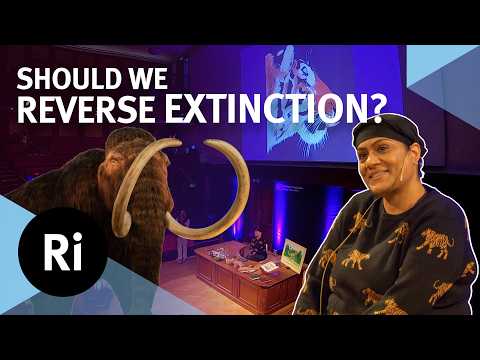
Should we bring extinct species back? | with Sadiah Qureshi
Neanderthals and the Dawn of Deep Human Time
The discovery of Neanderthal remains in the 1850s was pivotal, challenging the accepted timeline of human existence. Initially dismissed, these fossils, when recognized as human, forced a re-evaluation of human antiquity. This discovery, coupled with geological evidence, suggested humans had lived much further back in time than previously believed, a concept that profoundly influenced scientific and societal views, though it also became entangled with prejudicial stereotypes about colonized peoples being 'stone age'.
Passenger Pigeons: A Monumental Loss
The passenger pigeon, once numbering in the billions and darkening the skies, represents one of history's most astonishing extinctions. Driven to oblivion by commercial hunting within mere decades, its demise, culminating in the death of the last individual, Martha, in 1914, became a potent symbol of human exploitation. The sheer scale of this loss underscores the devastating impact unchecked human activity can have on even the most abundant species.
Cryopreservation and the Redefinition of Extinction
The advent of cryopreservation techniques, allowing biological tissues to be stored indefinitely in liquid nitrogen, has profoundly impacted our understanding of extinction. Projects like the 'frozen zoo' and the cloning attempt of the Pyrenean Ibex demonstrate that genetic material can persist long after the last individual dies. This raises the provocative question: are species with viable frozen cells truly extinct, or merely paused, challenging the IUCN's definition and opening the door to de-extinction possibilities.
Qureshi: De-Extinction's Ethical and Economic Quandaries
Critics of de-extinction voice concerns that it could divert crucial resources and funding away from established conservation efforts aimed at protecting currently threatened species and their habitats. The immense cost of de-extinction projects, potentially astronomical, raises questions about economic feasibility and whether such investments are justifiable when existing ecosystems are in peril. This perspective suggests that focusing on revival might be a costly distraction from addressing the root causes of biodiversity loss.
Sadiah Qureshi: De-Extinction as Policy and Future-Building
De-extinction has rapidly moved from a theoretical possibility to a matter of policy, as evidenced by the IUCN's establishment of guidelines for genetically modified organisms in conservation. This signifies a fundamental shift in how we approach ecological restoration and species management. The speaker argues that de-extinction is not merely about revival but about deliberately constructing radically different futures, reshaping our relationship with life and death, and potentially influencing the trajectory of life on Earth for generations to come.
Qureshi: Extinction as a Political Choice
Extinction is not merely a natural phenomenon but a human-constructed idea that carries political weight, particularly in the current era. The speaker argues that our current exploitative relationship with nature, underpinned by a sense of human supremacy, has led to widespread biodiversity loss. Transforming this relationship towards one of respect, reciprocity, and justice is essential for securing a future where extinction is radically reduced, necessitating a recalibration of how we share the planet with other species.