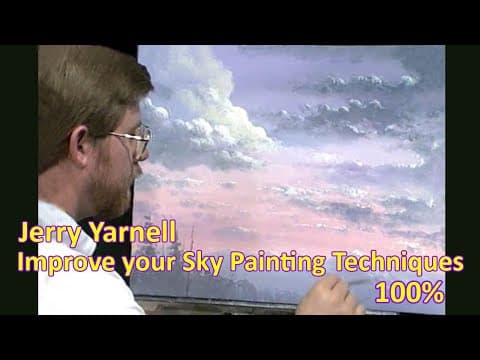
How to Paint Perfect Skies! | Jerry Yarnell Sky & Cloud FULL LESSON (Acrylic Tutorial)
Preparing the Canvas for Sky Painting
A wet canvas, achieved by misting with water and applying a generous layer of gesso, is essential for creating a smooth blending base for sky and cloud formations. This preparation prevents dry spots and allows for extended blending time.
Building Cloud Formations with Value Changes
Cloud formations are built by layering darker values of blue and gray onto the sky base, using a scumbling motion. This process involves changing values (intensity of color) rather than just color, creating depth and form without distinct shapes initially.
The Role of Canvas Texture and Brush Choice
The texture of the canvas and the wear on the brush significantly impact cloud painting. A textured canvas aids blending, and a worn, rounded brush creates softer edges, contributing to the natural appearance of clouds without excessive blending or color addition.
Layering for Depth and Composition
Effective sky painting relies on layering colors and values, allowing underlying layers to show through, which creates depth, distance, and character. Composition is key, ensuring cloud formations are pleasing and guide the viewer's eye gracefully across the sky.
Jerry Yarnell: Mastering Cloud Highlights
To create realistic clouds, Jerry Yarnell advises smudging highlights gently on the top right of each cloud, considering the sun's direction. He cautions against overpainting and emphasizes blending to achieve soft cloud formations, suggesting finger smudging for difficult areas. The goal is to create beautiful, soft cloud formations with a natural flow.
Jerry Yarnell: Adding Accent Colors
To enhance the sky's interest and avoid pure grays, Jerry Yarnell demonstrates adding accent colors like purple, burnt sienna, and blue, mixed with a muddy white. He uses a scumbling technique to soften these colors into the darker areas, creating a unified effect and adding subtle color variations that mimic natural sky hues.
Yarnell: Subtle Mountain Highlighting
Jerry Yarnell advises loose and free highlighting on mountain edges using a yellowish-white mix to suggest form without overworking. He emphasizes subtlety, ensuring the mountains remain secondary to the sky study. This technique creates texture and defines the mountains just enough to be recognizable.
Jerry Yarnell: Painting Distant Trees
For distant trees, Jerry Yarnell uses a mix of purple, green, and a touch of blue or white to create a muted color. He applies this loosely, suggesting the shape rather than detailing individual trees, and fades them out to create atmospheric perspective. This technique adds depth and context to the landscape.