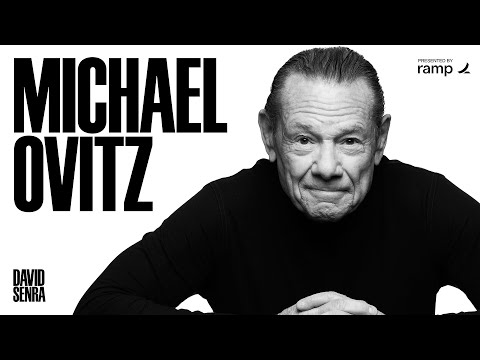
David Senra's CAA Co-founder Michael Ovitz: Failure Is Not an Option: skim's analysis identifies 16 key moments, with 2 potential conflicts of interest flagged. Creative Artists Agency co-founder Michael Ovitz joins David Senra to examine the operational tactics, work ethic, and pattern recognition behind his career.
Category: Business. Format: Interview. YouTube video analyzed by skim.
skim AI Analysis
Credibility assessment: Firsthand Executive Recall. Michael Ovitz shares detailed firsthand accounts of building Creative Artists Agency, brokering Sony's acquisition of Columbia Pictures, and managing Coca-Cola's advertising. Because the discussion relies entirely on personal memory and unchallenged self-reporting by a friendly host, it reflects a single subjective perspective.
Bias assessment: Founder Hero-Worship. David Senra openly admires Michael Ovitz and frames relentless, all-consuming work habits and market monopolization as heroic virtues. The conversation celebrates Ovitz's triumphs and personal loyalty while glossing over the specific controversies and mistakes of his career.
Originality: 84% — Rich Behind-the-Scenes Lore. The interview delivers specific, colorful stories from Hollywood and corporate history, including David Rockefeller's unspoken fundraising tactics, Wolfgang Puck's napkin contract with ABC, and the $30,000 Coca-Cola commercial invoice.
Depth: 74% — Tactical Pattern Matching. Ovitz and Senra connect specific anecdotes to broader business mechanics like information sharing, leverage across buyers and sellers, and demographic segmentation, though they occasionally lean on broad truisms about drive and curiosity.
Key Points (16)
1. Marc Andreessen's Rapid Recall and Adaptability
Timestamp: 00:00:02 to 00:05:38
Michael Ovitz says talking to Marc Andreessen feels like taking a college final because Andreessen simultaneously analyzes, recalls, and organizes everything he has read. Despite this intellectual edge, Ovitz notes that top tech leaders like Andreessen and Ben Horowitz adjust their conversational depth to match their audience rather than lording their intelligence over others.
Significance (Medium): Highlights how elite executives combine raw information recall with social calibration to sell complex new technologies before the market fully understands them.
Sources in support: Michael Ovitz (Co-founder of Creative Artists Agency (CAA)), David Senra (Host of the Founders podcast)
2. Why Most Co-Founder Partnerships Fail
Timestamp: 00:05:38 to 00:10:22
David Senra observes from reading nearly 400 biographies that most co-founder relationships are tenuous, though the Michelin brothers lasted 45 years by dividing manufacturing and sales. Michael Ovitz estimates off the top of his head that in 90% of co-founded businesses one founder gets pushed out, explaining that Marc Andreessen and Ben Horowitz succeed because Horowitz operates the business while Andreessen trusts him completely.
Significance (High): Pinpoints clear division of operating responsibility and complementary temperaments as the rare structural defenses against co-founder conflict.
Sources in support: Michael Ovitz (Co-founder of Creative Artists Agency (CAA)), David Senra (Host of the Founders podcast)
3. Ovitz Mistakes David Rockefeller for Bill Murray
Timestamp: 00:13:38 to 00:21:28
Michael Ovitz recounts visiting the Museum of Modern Art for the first time at age 18 when his family lacked the means to support him, an experience that sparked a lifelong art obsession. Roughly 15 years later at CAA, when his assistant announced a call from David Rockefeller, Ovitz assumed it was client Bill Murray playing a prank until Rockefeller personally invited him to join the MoMA board after noticing CAA's I. M. Pei building.
Significance (Medium): Illustrates how visible investments in high-end architecture and fine art signaled cultural seriousness beyond Hollywood and opened elite East Coast networks.
Sources in support: Michael Ovitz (Co-founder of Creative Artists Agency (CAA)), David Senra (Host of the Founders podcast)
4. David Rockefeller's Silent Fundraising Technique
Timestamp: 00:21:28 to 00:27:30
After joining the MoMA board, Michael Ovitz went to a three-hour dinner with David Rockefeller where they discussed politics, art, and Rockefeller's 10,000 alphabetized index cards without Rockefeller ever mentioning money. When Ovitz asked at the end of the night how fundraising for the new museum was going, Rockefeller simply said he was getting great support, prompting Ovitz to make a much larger donation than planned.
Significance (High): Demonstrates how extreme restraint and peer status can generate larger financial commitments than aggressive direct solicitation.
Sources in support: Michael Ovitz (Co-founder of Creative Artists Agency (CAA)), David Senra (Host of the Founders podcast)
5. Spotting Nobu Matsuhisa Early via Pattern Matching
Timestamp: 00:27:30 to 00:36:42
Michael Ovitz argues that longevity builds an extensive frame of reference that allows experienced operators to foresee outcomes and spot talent within 10 minutes. He illustrates this by recalling how he met chef Nobu Matsuhisa at a small La Cienega sushi bar and later introduced him to Robert De Niro, who convinced Matsuhisa to open the first Nobu in Tribeca. Ovitz compares this human pattern-matching to his daily habit of reviewing 200 art images to train his own mental database.
Significance (Medium): Shows how high-volume exposure to people and aesthetics builds an intuitive benchmark for identifying outlier talent before commercial scale.
Sources in support: Michael Ovitz (Co-founder of Creative Artists Agency (CAA)), David Senra (Host of the Founders podcast)
6. Wolfgang Puck's Napkin Contract With ABC
Timestamp: 00:36:42 to 00:42:46
Continuing his discussion of spotting culinary stars, Michael Ovitz explains that both Nobu Matsuhisa and a young Wolfgang Puck combined extraordinary technical skill with magnetic table-side charisma. To launch Puck on television, Ovitz brought the president of ABC to Spago for a 15-course dinner with off-list wines and got the heavily drinking executive to sign a napkin contract putting Puck on Good Morning America.
Significance (Medium): Captures the audacious theatricality and social leverage Ovitz used to turn informal hospitality into binding media opportunities for clients.
Sources in support: Michael Ovitz (Co-founder of Creative Artists Agency (CAA))
Neutral sources: David Senra (Host of the Founders podcast)
7. How Mailroom Secrecy Shaped CAA's Open Culture
Timestamp: 00:43:17 to 00:50:02
Joining the William Morris Agency mailroom in 1969 with no industry connections, Michael Ovitz arrived at 6:30 a.m. daily to study the agency's files in secret so he could outwork and eliminate the other 20 to 25 trainees. Seeing how easily his secrecy defeated his peers convinced Ovitz to mandate the exact opposite when running CAA, requiring total information sharing, constant meetings, and zero internal politics.
Significance (High): Explains the core organizational design of CAA: hoarding knowledge beats individual peers, but sharing all knowledge across a firm crushes competing agencies.
Sources in support: Michael Ovitz (Co-founder of Creative Artists Agency (CAA)), David Senra (Host of the Founders podcast)
8. Scanning 210 Magazines to Build Client Rapport
Timestamp: 00:50:02 to 00:57:35
To maintain an unbeatable edge through curiosity, Michael Ovitz explains that before computers he personally subscribed to 210 magazines, skimming automotive and women's fashion titles to spot trends six months ahead. This broad cultural intake allowed him to spend three hours talking exclusively about race cars during his first cold meeting with Paul Newman in Westport, Connecticut.
Significance (Medium): Shows how systematic cross-disciplinary reading creates instant personal common ground with high-status clients who resist standard sales pitches.
Sources in support: Michael Ovitz (Co-founder of Creative Artists Agency (CAA)), David Senra (Host of the Founders podcast)
9. Enforcing a No-Lying Rule and Relentless Follow-Up
Timestamp: 00:57:35 to 01:07:03
Michael Ovitz describes his binary, friend-or-foe view of loyalty and explains that because early CAA lacked lawyers and closed hundreds of deals on handshakes, integrity was essential in a dishonest movie and music industry. He instituted a strict no-lying rule at CAA, instructing agents to say they did not know and call back rather than fabricate answers, backed by scribes taking notes at every staff meeting. Ovitz illustrates this relentless follow-up by describing a 6:30 a.m.
Significance (High): Reframes radical transparency and rapid follow-up not merely as moral virtues, but as practical operational tools that build trust and prevent partners from feeling cut out.
Sources in support: Michael Ovitz (Co-founder of Creative Artists Agency (CAA)), David Senra (Host of the Founders podcast)
10. Defying Critics and Studying With Martin Scorsese
Timestamp: 01:08:01 to 01:20:01
Connecting Cornelius Vanderbilt's pivot from sail to steam with his own career, Michael Ovitz states that fear kills business and that critics warned him at age 26 he could never compete against 180 existing agencies or sign movie stars. While disclaiming artistic talent compared to director Martin Scorsese, Ovitz notes he spotted financial distress at Universal in the mid-1980s and looked to cash-rich Japan, where Akio Morita had built Sony and hired college critic Norio Ohga.
Significance (Medium): Demonstrates how deep domain education from masters like Scorsese enabled Ovitz to sign aloof auteurs like Stanley Kubrick while spotting macroeconomic shifts in studio valuation.
Sources in support: Michael Ovitz (Co-founder of Creative Artists Agency (CAA)), David Senra (Host of the Founders podcast)
11. Selling Studios to Japan for Dual-Sided Leverage
Timestamp: 01:22:05 to 01:28:25
Following a discussion of Akio Morita's ambition to elevate Japanese manufacturing, Michael Ovitz explains why he brokered the sales of CBS Records and Columbia Pictures to Sony, along with deals for Universal and MGM. Holding a 75% market share of top talent, including 46 of the top 50 grossing filmmakers, was not enough for Ovitz; he wanted leverage over the studio buyers too.
Significance (High): Reveals the strategic logic behind CAA's investment banking foray: brokering studio ownership created structural leverage over both talent supply and buyer financing.
Sources in support: Michael Ovitz (Co-founder of Creative Artists Agency (CAA)), David Senra (Host of the Founders podcast)
12. Returning Coca-Cola's $3M Check and Herb Allen
Timestamp: 01:28:25 to 01:32:35
Michael Ovitz recounts that when Coca-Cola mistakenly sent a $3 million check for a black-and-white commercial that Len Fink produced on an Apple IIe for $30,000, Ovitz voided and returned the check. Telling Coca-Cola that they should never overpay for production but should pay CAA for its ideas helped Ovitz secure a massive fee after delivering 350 commercials, including the polar bears.
Significance (High): Shows how refusing an accidental $3 million windfall established extreme pricing credibility and allowed CAA to charge a premium for intellectual value.
Sources in support: Michael Ovitz (Co-founder of Creative Artists Agency (CAA)), David Senra (Host of the Founders podcast)
13. Patrick Collison's Post-Mortem and Daily Rounds
Timestamp: 01:32:35 to 01:37:08
Admitting that he gave himself bad advice because he lacked a peer advisor, Michael Ovitz recalls a San Francisco lunch where Patrick Collison brought Ovitz's memoir marked with roughly 100 yellow Post-its and spent two and a half hours grilling him exclusively on his career mistakes. Pivoting to internal management, Ovitz explains he did 20-minute rounds through CAA's offices at 10:30 a.m. and 4:30 p.m.
Significance (High): Links proactive emotional monitoring and collective bargaining power to zero employee turnover and premium pricing for represented talent.
Sources in support: Michael Ovitz (Co-founder of Creative Artists Agency (CAA)), David Senra (Host of the Founders podcast)
14. Seasonal Coke Ads and Ninth-Grade Election Loss
Timestamp: 01:37:08 to 01:42:27
Expanding on Coca-Cola, Michael Ovitz explains that he pitched executives Roberto Goizueta and Donald Keough on replacing six generic annual ads with 35 commercials tailored to holidays, seasons, and specific television demographics. When David Senra asks where Ovitz developed the confidence to ignore critics, Ovitz traces it to losing his ninth-grade class president election at a 3,800-student high school.
Significance (Medium): Connects early political coalition-building in high school to the thick skin and demographic segmentation Ovitz later applied to global brand campaigns.
Sources in support: Michael Ovitz (Co-founder of Creative Artists Agency (CAA)), David Senra (Host of the Founders podcast)
15. San Fernando Valley Roots and Refusing to Quit
Timestamp: 01:42:27 to 01:54:27
Comparing Michael Ovitz's insatiable drive to Napoleon and General George Patton, David Senra and Ovitz discuss why every business relies on momentum, focus, and monopoly control, from Ovitz running three paper routes under aliases at age nine to Michael Dell mining Texas marriage records at 12. Ovitz recounts convincing a bankrupt London banker at dinner to abandon plans to hide in Gstaad and start a new business instead.
Significance (Medium): Illustrates how early economic scarcity leaves a permanent psychological imprint that fuels lifelong ambition long after financial security is achieved.
Sources in support: Michael Ovitz (Co-founder of Creative Artists Agency (CAA)), David Senra (Host of the Founders podcast)
16. Thirty-Year Friendship With Michael Crichton
Timestamp: 02:00:19 to 02:06:58
Reflecting on his 30-year friendship with client Michael Crichton, Michael Ovitz describes talking to the author seven days a week from anywhere in the world and marveling at Crichton's early adoption of Apple computers, art scholarship on Jasper Johns, and constant note-taking. Ovitz shares that Crichton stood by him through major career mistakes, telling him there is always another rodeo, and speculates that Crichton's death may have resulted from overdoing chemotherapy.
Significance (Medium): Offers an intimate portrait of Michael Crichton's polymathic curiosity, extreme deadline-driven writing habits, and unwavering personal loyalty.
Sources in support: Michael Ovitz (Co-founder of Creative Artists Agency (CAA)), David Senra (Host of the Founders podcast)
This analysis was generated by skim (skim.plus), an AI-powered content analysis platform by Credible AI. Scores and classifications represent the platform's AI-generated assessment and should be considered alongside other sources.