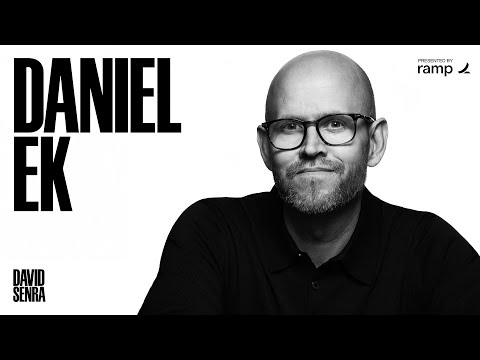
David Senra's Daniel Ek, Spotify | David Senra: skim's analysis identifies 17 key moments, with 2 potential conflicts of interest flagged. Spotify co-founder and CEO Daniel Ek joins David Senra to examine the philosophy of optimizing for impact over happiness and building a company authentic to one's personality.
Category: Business. Format: Interview. YouTube video analyzed by skim.
skim AI Analysis
Credibility assessment: Direct Founder Reflection. Daniel Ek speaks directly from two decades of first-hand experience building and leading Spotify, offering candid accounts of his personal struggles, management missteps, and executive transitions. Historical anecdotes from David Senra are clearly framed as biographical readings.
Bias assessment: Founder-Heroic Lens. The conversation strongly favors the perspective of ambitious company builders, framing relentless work, nonconformity, and lifelong problem-solving as the highest personal virtues. Host David Senra is openly admiring of his friend and guest.
Originality: 88% — Candid Executive Insights. Rather than repeating standard startup platitudes, Daniel Ek shares unvarnished stories about post-exit depression at age 22, shadowing Mark Zuckerberg for a week while taking notes, and stepping back from Spotify product reviews after honest critique from a subordinate.
Depth: 85% — Deep Philosophical Inquiry. The discussion moves past surface tactics to examine the psychological mechanics of trust, founder archetypes, energy versus time management, and how a company evolves through stages resembling parenthood.
Key Points (17)
1. Daniel Ek on Optimizing for Impact Over Happiness
Timestamp: 00:01:01 to 00:05:05
Daniel Ek argues that sustained happiness is a trailing indicator of personal impact rather than a direct goal. When advising his friend Dara on whether to leave Expedia to lead Uber, Ek pointed out that Dara had merely grown content in an easy gear. Overcoming major adversity to solve hard problems is what ultimately generates lasting fulfillment upon reflection.
Significance (High): Reframes career decision-making for ambitious leaders, replacing short-term comfort with high-stakes problem-solving as the primary driver of fulfillment.
Sources in support: Daniel Ek (Co-founder and CEO of Spotify), David Senra (Podcast Host, Founders Podcast)
2. Growing Up an Outsider and Shifting to Coach
Timestamp: 00:05:09 to 00:08:58
Growing up in the projects in Sweden without belonging to any social group left Ek feeling like a lifelong outsider, even later in Silicon Valley. Because American startup playbooks do not map cleanly onto European structures, he relied on first-principle thinking to motivate himself. Over the past five years, he realized he may be a stronger entrepreneurial coach than player.
Significance (Medium): Highlights how cultural and socioeconomic distance from Silicon Valley forces non-US founders to invent independent management frameworks.
Sources in support: Daniel Ek (Co-founder and CEO of Spotify)
Neutral sources: David Senra (Podcast Host, Founders Podcast)
3. Wealth at 22 Led to Ek's Deepest Depression
Timestamp: 00:10:55 to 00:14:59
After reading Rich Dad Poor Dad at 15, Ek set a retirement target of 10 million by age 40, but hit that figure at 22 after selling a company. Attempting to buy status in nightclubs left him feeling hollow and experiencing the deepest depression of his life. Walking away for over a year taught him that he needed to produce and build rather than consume.
Significance (High): Counters the startup exit myth by illustrating how sudden financial independence without a creative mission can trigger severe depression.
Sources in support: Daniel Ek (Co-founder and CEO of Spotify), David Senra (Podcast Host, Founders Podcast)
4. Why Spotify Turned Down Early Acquisition Offers
Timestamp: 00:15:00 to 00:21:40
While David Senra notes that great founders exhibit belief before ability, Ek explains that he simply believes relentless effort can make him great at solving decade-long problems. Because he already had personal wealth when starting Spotify, he evaluated early acquisition offers solely on whether an acquirer would advance Spotify's mission as passionately as its founders. Finding no such buyer, he spent the first 15 years wholly obsessed with Spotify.
Significance (High): Shows how financial security prior to founding Spotify insulated the company from early buyouts and enabled a 20-year compounding run.
Sources in support: Daniel Ek (Co-founder and CEO of Spotify), David Senra (Podcast Host, Founders Podcast)
5. Rejecting Imitation for Authentic Founder Archetypes
Timestamp: 00:21:40 to 00:29:30
Ek recalls trying early in his career to imitate famous leaders like Steve Jobs, Jeff Bezos, Bill Gates, and Howard Schultz, only to walk away disillusioned each time because their methods clashed with his personality. Senra and Ek agree that founders do their best work when they older because they finally understand themselves. Building an enduring organization requires matching company operations to the founder's authentic archetype.
Significance (High): Dismantles the one-size-fits-all Silicon Valley leadership template, encouraging founders to design management systems around their own temperament.
Sources in support: Daniel Ek (Co-founder and CEO of Spotify), David Senra (Podcast Host, Founders Podcast)
6. Candid Mirrors and Why Trust Struggles to Scale
Timestamp: 00:29:30 to 00:36:00
Senra shares how Sony founder Akio Morita hired vocal student Norio Ohga as a paid critic to expose product flaws, prompting Ek to identify the truth-tellers in his own life, including his mother, his wife, his friend Jack, and Spotify colleague Gustav. Ek argues that organizational bureaucracy exists primarily because trust does not scale easily. While trust compounds at 1% per positive interaction, a single breach destroys it completely.
Significance (Medium): Explains the structural root of corporate bureaucracy: processes are substitutes for interpersonal trust that cannot easily scale across large teams.
Sources in support: Daniel Ek (Co-founder and CEO of Spotify), David Senra (Podcast Host, Founders Podcast)
7. Unconditional Maternal Support Fuels Ek's Trust
Timestamp: 00:36:01 to 00:41:11
Although Ek grew up without a father, he credits his mother's unconditional love with giving him the security to trust others despite occasional betrayals. He estimates that only 1% or 2% of his experiences trusting people turned out negatively compared to overwhelming long-term benefits. Watching long-time Spotify colleagues grow over 15 years now brings him more pride than financial gain.
Significance (Low): Demonstrates how psychological safety in childhood shapes an executive's willingness to delegate and build deep decade-long partnerships.
Sources in support: Daniel Ek (Co-founder and CEO of Spotify), David Senra (Podcast Host, Founders Podcast)
8. Ek Shadowed Mark Zuckerberg and Took Meeting Notes
Timestamp: 00:41:12 to 00:46:52
Recognizing that he struggled to command meetings of 10 or more people, Ek asked Mark Zuckerberg if he could shadow him for a week at Facebook to see how Zuckerberg ran his 20-to-25-person weekly group meetings. To make himself useful during the week, Ek took meeting notes, offered to fetch coffee, and interviewed Facebook's entire executive team. Seeing the underlying culture firsthand allowed Ek to adopt practices that fit his own style.
Significance (High): Offers a striking example of executive humility: a billionaire founder acting as a note-taker at a peer's company to learn large-group management.
Sources in support: Daniel Ek (Co-founder and CEO of Spotify), David Senra (Podcast Host, Founders Podcast)
9. Balancing Product Intuition With Data and Curiosity
Timestamp: 00:46:53 to 00:51:43
Senra contrasts Google's testing of 200 shades of blue against Steve Jobs and Jony Ive picking iMac colors in 30 minutes. Ek argues that product decision-making is a spectrum rather than a binary choice, noting that even Jobs tested ideas by calling journalists to gauge their reactions. While Ek and Rasmus designed Spotify's first interface using personal taste, Ek defines taste as judgment plus curiosity fed by continuous user feedback.
Significance (Medium): Clarifies how scaling consumer platforms transition from pure founder intuition to structured feedback loops without losing product taste.
Sources in support: Daniel Ek (Co-founder and CEO of Spotify), David Senra (Podcast Host, Founders Podcast)
10. Why Ek Stopped Running Spotify Product Reviews
Timestamp: 00:52:14 to 00:57:47
Defying conventional startup wisdom that founders must always run product, Ek stepped back after Spotify product head Gustav privately told him that the team was merely appeasing him in product reviews and that he was not adding value. Although initially angry enough to consider firing Gustav, Ek tested stepping away for three months and saw the team perform better. He then shifted his focus to creator relationships until colleague Alex surpassed him there too.
Significance (High): Provides a rare blueprint for how a technical founder can ego-check himself, delegate core product control, and continually redefine his executive value.
Sources in support: Daniel Ek (Co-founder and CEO of Spotify), David Senra (Podcast Host, Founders Podcast)
11. Company Building Mirrors the Three Stages of Parenting
Timestamp: 00:57:48 to 01:03:13
Ek compares scaling a company over 20 years to three stages of parenthood: keeping an infant alive by making every decision, stepping in during adolescence only to prevent catastrophic mistakes, and finally being available for an adult child when needed. At 19-year-old Spotify, Ek spends his time supporting leaders when needed and protecting fragile zero-to-one ideas.
Significance (Medium): Gives long-tenured founders a clear mental model for letting go of mature operations while still protecting nascent zero-to-one bets.
Sources in support: Daniel Ek (Co-founder and CEO of Spotify), David Senra (Podcast Host, Founders Podcast)
12. Seeking Out High-Temperature Creative Thinkers
Timestamp: 01:03:15 to 01:10:29
Drawing an analogy to turning up the temperature parameter in large language models, Ek explains that higher settings produce hallucinations alongside bursts of creative brilliance. While public markets push large corporations to minimize mistakes and enforce conformity, doing so also eliminates breakthrough ideas. Freed from 90% internal management, Ek now seeks out erratic, high-variance thinkers and musicians who can deliver two minutes of life-changing insight inside an hour of conversation.
Significance (High): Explains why mature corporations struggle to innovate: optimizing away variance and human eccentricity also strips out outlier breakthroughs.
Sources in support: Daniel Ek (Co-founder and CEO of Spotify), David Senra (Podcast Host, Founders Podcast)
13. Why Ek Prioritizes Energy Management Over Schedules
Timestamp: 01:10:29 to 01:18:44
Ek keeps George Bernard Shaw's quote on the unreasonable man painted on his wall and admits to leaving dinners abruptly when struck by a rare idea. Rather than obsessing over 4:00 AM wake-up routines or 15-minute calendar blocks, he focuses on managing his personal energy and working out daily. He recounts a disastrous three-week experiment with polyphasic 15-minute naps that left him feeling suicidal after missing a single nap window.
Significance (Medium): Debunks rigid executive time-hacking and morning routine dogma in favor of aligning work intensity with personal energy cycles.
Sources in support: Daniel Ek (Co-founder and CEO of Spotify), David Senra (Podcast Host, Founders Podcast)
14. Self-Taught Investing and Value From Solving Problems
Timestamp: 01:22:01 to 01:30:40
Senra notes that Ek had no interest in investing until 2018, when he began listening to Patrick O'Shaughnessy's podcast and reading books to rapidly apply what he learned. Growing up playing strategy games like Civilization and SimCity, Ek views business through his co-founder Martin's maxim that a company's value is the sum of all problems solved. He defines innovation not as inventing from scratch, but as combining known ideas to tackle complex puzzles.
Significance (Medium): Frames entrepreneurship and capital allocation as an ongoing puzzle of combining existing technologies to solve high-value human problems.
Sources in support: Daniel Ek (Co-founder and CEO of Spotify), David Senra (Podcast Host, Founders Podcast)
15. Loving Technology and Exercising Eight-Year Patience
Timestamp: 01:32:50 to 01:40:00
Ek explains that loving technology for its own sake means pulling apart computers and understanding semiconductors so deeply that a founder can connect scientific breakthroughs with unarticulated consumer needs and a viable business model. Unlike large corporations that can test 200 colors, early startups face life-or-death stakes on every bet. He pairs daily urgency with multi-year patience, noting that his company Neko is eight years old and has barely begun.
Significance (Medium): Illustrates the trifecta required for deep-tech entrepreneurship: scientific curiosity, consumer empathy, and decade-scale capital patience.
Sources in support: Daniel Ek (Co-founder and CEO of Spotify), David Senra (Podcast Host, Founders Podcast)
16. Quality Through Focus, Concentration, and Mastery
Timestamp: 01:40:20 to 01:51:48
Reflecting on quality, Ek argues that maturity shifts a person from accumulating more toward distillation, simplicity, and focus. In investing, he and Senra note that the greatest fortunes come from concentrated ownership in one or two assets rather than Charlie Munger's 'diworsification.' Inspired by a Japanese tea master who spent 34 years perfecting tea, Ek predicts that as AI makes above-average output easy, multi-decade human obsession in the top 0.01% will become even more valuable.
Significance (High): Offers a sharp prediction on the AI era: automated competence will commoditize average work while elevating multi-decade human obsession.
Sources in support: Daniel Ek (Co-founder and CEO of Spotify), David Senra (Podcast Host, Founders Podcast)
17. Choosing Your Own Game and Ek's One-Word Epitaph
Timestamp: 01:53:48 to 02:04:43
Addressing Senra's guilt over taking vacations, Ek notes that stepping away often sparks unexpected creative breakthroughs and emphasizes listening to one's body after he once gained 40 pounds during stressful negotiations. Quoting Kwame Appiah, they agree that life's hardest challenge is figuring out which game you want to play rather than playing someone else's game. Looking back on visiting 130 countries and his relentless youth, Ek says the only phrase he wants on his tombstone is 'He lived.'
Significance (Medium): Synthesizes Ek's personal philosophy: success requires rejecting external scorecards, listening to physical signals, and living fully on one's own terms.
Sources in support: Daniel Ek (Co-founder and CEO of Spotify), David Senra (Podcast Host, Founders Podcast)
This analysis was generated by skim (skim.plus), an AI-powered content analysis platform by Credible AI. Scores and classifications represent the platform's AI-generated assessment and should be considered alongside other sources.