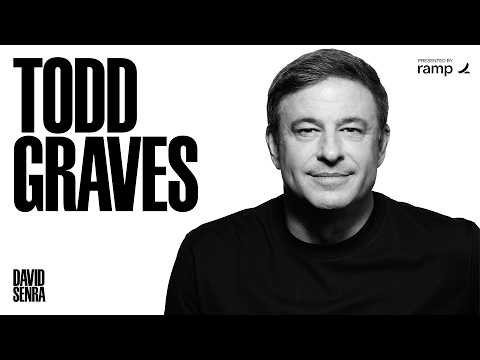
David Senra's How Todd Graves Built Raising Cane's: skim's analysis identifies 15 key moments, with 2 potential conflicts of interest flagged. Raising Cane's founder Todd Graves joins David Senra inside the chain's original Baton Rouge location to explain how a single-product chicken finger concept grew into a multi-billion-dollar enterprise.
Category: Business. Format: Interview. YouTube video analyzed by skim.
skim AI Analysis
Credibility assessment: Primary Founder Account. Todd Graves provides direct, firsthand accounts of building Raising Cane's, including specific loan amounts, operational metrics, and historical milestones. Because Raising Cane's is privately held, financial claims like the $20 billion valuation and $6 billion sales projection rely on his self-reported figures without independent audit in the show.
Bias assessment: Founder-Operator Evangelism. David Senra and Todd Graves strongly champion long-term founder control, relentless work hours, and single-product focus while criticizing private equity, venture exits, and corporate management conventions.
Originality: 84% — On-Site Origin Deep Dive. Recorded inside the original 1996 Baton Rouge restaurant, the conversation captures granular operational details, early financing mechanics, and Hurricane Katrina crisis response directly from the founder.
Depth: 81% — Granular Operational Breakdown. Rather than staying at platitudes, the discussion examines concrete restaurant mechanics: drive-through timing math, poultry rigor mortis and brining, subordinated debt structures, and EBITDA valuation multiples for company-owned stores versus franchises.
Key Points (15)
1. In-N-Out Validated Graves's Single-Item Menu
Timestamp: 00:02:35 to 00:06:13
Industry conventional wisdom in the 1990s pushed fast-food chains to expand menus to avoid the 'veto vote.' While working in Los Angeles refineries, Todd Graves visited In-N-Out Burger and saw that an unchanged 1948 menu could thrive, giving him a real-world precedent to pitch banks.
Significance (High): Pointing to In-N-Out Burger's 1948 track record gave Graves the concrete evidence needed to secure his initial SBA loan despite widespread skepticism in Louisiana.
Sources in support: Todd Graves (Founder and Co-CEO of Raising Cane's), David Senra (Host of Founders Podcast)
2. Culinary Supply Precision Creates Craveable Food
Timestamp: 00:07:14 to 00:11:15
Graves argues that Raising Cane's menu is focused rather than simple, detailing strict standards for chicken weight, 24-hour brining, removing black sugar tips from fries, pull-apart bread, and tea leaves from three countries. He warns that cutting ingredient quality for pennies destroys craveability.
Significance (High): Refusing CFO proposals to shave pennies off ingredients preserves repeat customer demand and prevents the brand from degrading into a cheap calorie option.
Sources in support: Todd Graves (Founder and Co-CEO of Raising Cane's), David Senra (Host of Founders Podcast)
3. Graves Rejects Work-Life Balance During Startup
Timestamp: 00:16:47 to 00:21:00
Asked how his current schedule compares to the beginning, Graves tells young founders that work-life balance does not exist when starting or scaling a business. Opening the first store required operating until 3:30 AM, sleeping three hours a night in a back apartment, and doing the plumbing and construction himself.
Significance (Medium): By doing his own demolition and plumbing on a $90,000 SBA loan and $60,000 in shareholder equity, Graves stretched limited capital and uncovered the historic wall mural that inspired the Raising Cane's logo.
Sources in support: Todd Graves (Founder and Co-CEO of Raising Cane's), David Senra (Host of Founders Podcast)
4. Refinery Shifts and Alaskan Fishing Funded Cane's
Timestamp: 00:23:37 to 00:32:37
After receiving a B-minus on his college business plan and getting rejected by banks for lacking capital and experience, Todd Graves worked 95-hour weeks as a refinery boilermaker. Following a tip from coworker Wild Bill Tolar, he hitchhiked to Naknek, Alaska, lived in a tent, and worked 20-hour days fishing for sockeye salmon.
Significance (High): Enduring hazardous industrial and maritime labor allowed Graves to self-fund his initial equity stake without surrendering control of his concept before opening.
Sources in support: Todd Graves (Founder and Co-CEO of Raising Cane's), David Senra (Host of Founders Podcast)
5. Fanaticism and Never Settling Drive Growth
Timestamp: 00:32:42 to 00:36:04
Graves recounts taking a campfire oath in North Carolina with his original partner never to quit, summarizing his philosophy that nothing happens unless someone pursues a vision fanatically. He observes that top athletes, actors, and entrepreneurs share a core trait of never being satisfied, which Raising Cane's frames as always raising the bar.
Significance (Medium): Reframing dissatisfaction as 'raising the bar' lets management celebrate store openings while immediately correcting staffing or speed flaws.
Sources in support: Todd Graves (Founder and Co-CEO of Raising Cane's), David Senra (Host of Founders Podcast)
6. Why Founders Must Refuse Private Equity Buyouts
Timestamp: 00:38:51 to 00:44:24
Graves urges restaurant founders not to sell majority control to private equity for $5 million or $10 million paydays. He explains that while Raising Cane's carries $3 billion in debt, keeping founder control protects its 75,000 crew members, food quality, and community giving from investor cost-cutting.
Significance (High): Retaining majority ownership prevents outside shareholders from forcing premature price hikes, wage cuts, or ingredient downgrades that erode brand equity.
Sources in support: Todd Graves (Founder and Co-CEO of Raising Cane's), David Senra (Host of Founders Podcast)
7. David Senra's Anti-Business Billionaire Maxim
Timestamp: 00:44:58 to 00:51:45
David Senra contrasts founders who regretted selling, like Trader Joe's founder Joe Coulombe and Kinko's founder Paul Orfalea, with 'anti-business billionaires' who keep control and obsess over product quality. Graves agrees, arguing that being sales-driven rather than profit-driven placed Raising Cane's second only to Chick-fil-A in quick-service average unit volume, and shares how Jollibee founder Tony Tan Caktiong refused to sell when McDonald's entered the Philippines.
Significance (High): Prioritizing top-line unit sales through generous staffing and quality ingredients generates higher repeat volume and flow-through profit than short-term labor trimming.
Sources in support: David Senra (Host of Founders Podcast), Todd Graves (Founder and Co-CEO of Raising Cane's)
8. Opening Store One and Discovering Mass Appeal
Timestamp: 00:51:52 to 00:58:53
Graves details how he combined credit cards at 18% to 22% interest, $60,000 from preferred shareholders, a $90,000 SBA loan, and broker Red Reynolds's help to open the first store in 1996, netting $30 in month one. Opening a second store 18 months later drew office workers, families, and church groups, proving the concept worked beyond college students.
Significance (High): Seeing families, T-ball teams, and professionals line up at the second Baton Rouge location shifted Graves's ambition from a campus hangout to a global chain.
Sources in support: Todd Graves (Founder and Co-CEO of Raising Cane's), David Senra (Host of Founders Podcast)
9. Daily Coaching and Hiring for Intrinsic Drive
Timestamp: 00:58:59 to 01:02:47
Rejecting the negative restaurant kitchens of his youth, Graves built a culture around positive motivational management, daily football-style coaching, and openly admitting mistakes. When hiring executives, he filters out title-seekers in favor of intrinsically motivated operators who care about teams and community.
Significance (Medium): Replacing six-month corporate evaluations with daily feedback and founder vulnerability prevents defensive bureaucracy as the company scales.
Sources in support: Todd Graves (Founder and Co-CEO of Raising Cane's), David Senra (Host of Founders Podcast)
10. Structuring Crew Recognition and Support Offices
Timestamp: 01:02:58 to 01:09:05
To prevent a divide between executives and store workers, Graves calls headquarters the 'restaurant support office,' streams live store feeds on office monitors, and wears jeans and a T-shirt. He also created a dedicated 'Cane's Love' department to systematize respect, recognition, and rewards, including closing on major holidays.
Significance (Medium): Institutionalizing crew recognition into a dedicated department ensures appreciation scales systematically across 75,000 employees rather than relying on ad-hoc gestures.
Sources in support: Todd Graves (Founder and Co-CEO of Raising Cane's), David Senra (Host of Founders Podcast)
11. Senra Rejects Shark Tank Gatekeeping
Timestamp: 01:09:41 to 01:16:21
After recalling how Thomas Edison's encouragement sustained Henry Ford, Todd Graves notes that appearing on 'Shark Tank' with Mark Cuban and Mr. Wonderful taught him to give tough love on bad ideas. David Senra pushes back strongly, arguing that nobody can predict an entrepreneur's determination, citing Sequoia's Michael Moritz passing on Elon Musk's Tesla and James Dyson building 5,127 prototypes.
Significance (Medium): Senra's critique highlights why investor gatekeeping often misses outlier founders whose primary asset is an abnormal capacity to endure years of failure.
Sources in support: David Senra (Host of Founders Podcast)
Neutral sources: Todd Graves (Founder and Co-CEO of Raising Cane's)
12. Supplementing Teams Instead of Blind Delegation
Timestamp: 01:17:58 to 01:22:17
Todd Graves rejects conventional advice to simply delegate and step out of the details. He explains that if he operates at a 95 out of 100 and a new hire operates at 85, he supplements their work until they reach 95 or 96, pointing to shipping magnate Gary Chouest tracking bottled water costs as proof that leaders must know the minutiae.
Significance (High): Treating leadership as active supplementation rather than hands-off delegation prevents operational standards from slipping when bringing in outside executives.
Sources in support: Todd Graves (Founder and Co-CEO of Raising Cane's), David Senra (Host of Founders Podcast)
13. Two Seconds of Drive-Through Speed Equals $60M
Timestamp: 01:22:47 to 01:30:58
Graves breaks down the operational economics of a single-product kitchen line with no heat lamps or hold times, achieving an average service time of two minutes and 35 seconds. He calculates that at a projected $6 billion in annual sales, shaving or adding just two seconds in the drive-through shifts revenue by 1%, or roughly $60 million, while avoiding Limited-Time Offerings lets managers focus on crew and guests.
Significance (High): Quantifying drive-through speed at $30 million per second demonstrates how menu complexity and Limited-Time Offerings silently tax both revenue and store-level management attention.
Sources in support: Todd Graves (Founder and Co-CEO of Raising Cane's), David Senra (Host of Founders Podcast)
14. Why Graves Bought Back Every Franchisee
Timestamp: 01:30:59 to 01:37:40
Although Graves initially used experienced franchisees to expand into states like Ohio, Minnesota, and Nevada, their stores operated at an 85 out of 100 compared to 95 at company stores and resisted new procedures. Around the 10-year mark, he bought all the franchises back, which raised store sales and wages and allowed Raising Cane's to be valued at over 20 times EBITDA—exceeding $20 billion—rather than the 4 to 7 multiple of franchise models.
Significance (High): Consolidating into 100% company-owned stores eliminated operational friction over system upgrades and multiplied the enterprise valuation to over $20 billion.
Sources in support: Todd Graves (Founder and Co-CEO of Raising Cane's), David Senra (Host of Founders Podcast)
15. Subordinated Debt, Katrina, and Financial Discipline
Timestamp: 01:44:42 to 01:55:31
To grow from 2 to 28 stores without giving up equity, Graves leased failing Fast Track burger buildings, built a Lafayette prototype, and used 15% subordinated debt from Dr. Hill as bank equity at community banks. When Hurricane Katrina knocked out 21 of his 28 highly leveraged stores, his team used generators and boil-water protocols to reopen within 30 days as the only operating restaurants in several New Orleans suburbs, prompting Graves to vow never to over-leverage the company again.
Significance (High): Near-insolvency during Hurricane Katrina permanently reformed Raising Cane's balance-sheet discipline while turning its rapid generator-powered reopenings into massive community goodwill and cash flow.
Sources in support: Todd Graves (Founder and Co-CEO of Raising Cane's), David Senra (Host of Founders Podcast)
This analysis was generated by skim (skim.plus), an AI-powered content analysis platform by Credible AI. Scores and classifications represent the platform's AI-generated assessment and should be considered alongside other sources.