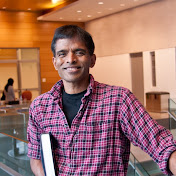
Dr Brian Keating's Engineering Chair: Most People Should Not Go To College: skim's analysis identifies 17 key moments. Darren Lipomi, an engineering chair, discusses the flaws in the academic system, the evolution of nanotechnology, and the future of materials science and engineering careers.
Category: Opinion. Format: Interview. YouTube video analyzed by skim.
skim AI Analysis
Credibility assessment: Generally Credible. The speaker, Darren Lipomi, is a Professor and Chair of Chemical and Sustainability Engineering at the University of Rochester, with a strong academic background and publications. The discussion is grounded in scientific principles and research, though it touches on speculative areas like the origin of life. The host, Brian Keating, is also a reputable science communicator.
Bias assessment: Slightly Academic. The video leans towards an academic and research-focused perspective, particularly regarding the value and structure of higher education and scientific careers. While aiming for objectivity, the discussion naturally reflects the experiences and viewpoints common within the academic research community.
Originality: 83% — Highly Original. The video explores unique intersections of science, engineering, and philosophy, such as the origin of homochirality, the practical applications of nanotechnology beyond the hype, and a critical look at the academic system. The discussion of personal mentorship styles and the 'humanist' approach to science adds a distinct flavor.
Depth: 77% — Deeply Analytical. The conversation delves into complex scientific concepts like chirality, organic chemistry, and nanotechnology, explaining them with a good degree of detail. It also critically examines the metrics and structures of academia, offering nuanced perspectives on career paths and the future of research.
Key Points (17)
1. Darren Lipomi: The Flawed Metrics of Academia
Timestamp: 00:00:31 to 00:03:07
The academic system relies on imperfect metrics like the H-index and citation counts for promotion and tenure, which are difficult to standardize across fields and can be lagging indicators of impact. This system, while leveraging competitive instincts, often leads to a difficult and financially burdensome path for PhD students, with only about 1 in 20 securing tenure-track positions.
Significance (High): This critique highlights the systemic issues within academia, questioning its efficiency in producing groundbreaking science and its fairness to aspiring researchers.
Sources in support: Darren Lipomi (Professor and Chair of Chemical and Sustainability Engineering, University of Rochester)
Neutral sources: Brian Keating (Host)
2. Lipomi's Vision: Rematerializing Work and Craftsmanship
Timestamp: 00:04:19 to 00:05:37
There's a need to rematerialize work, encouraging hands-on skills and craftsmanship informed by theory, as these physical jobs will be the hardest to replace by AI. The future requires innovation in material science and mechanical engineering to support AI's energy demands and to design critical infrastructure like advanced reactors and telescopes.
Significance (High): This perspective champions the enduring value of skilled manual labor and physical engineering in an increasingly digital world, suggesting a more resilient career path.
Sources in support: Darren Lipomi (Professor and Chair of Chemical and Sustainability Engineering, University of Rochester)
Neutral sources: Brian Keating (Host)
3. The Origin of Life: Chirality and Cosmic Influences
Timestamp: 00:08:36 to 00:11:28
The origin of biological homochirality, the preference for one 'handedness' in molecules like DNA, might be linked to polarized radiation in outer space, potentially influencing amino acids found in meteorites. This theory connects cosmic phenomena to the fundamental building blocks of life.
Significance (Medium): This exploration into the origins of life bridges astrophysics, chemistry, and biology, offering a speculative yet scientifically grounded hypothesis for a fundamental biological characteristic.
Sources in support: Darren Lipomi (Professor and Chair of Chemical and Sustainability Engineering, University of Rochester)
Neutral sources: Brian Keating (Host)
4. Darren Lipomi: An Organic Materials Chemist's Perspective
Timestamp: 00:12:13 to 00:14:01
As an organic materials chemist, Lipomi focuses on carbon-based materials, understanding how their properties influence human perception through touch and other senses. His work involves designing experiments to probe tactile sensations and material characteristics, leading to significant advancements in understanding psychophysics.
Significance (Medium): This highlights a less-discussed but crucial area of materials science, emphasizing the sensory experience of interacting with everyday objects and the scientific rigor behind it.
Sources in support: Darren Lipomi (Professor and Chair of Chemical and Sustainability Engineering, University of Rochester)
Neutral sources: Brian Keating (Host)
5. The Nanotechnology Revolution: Beyond the Hype
Timestamp: 00:15:14 to 00:17:32
While the 'nanobot' revolution envisioned by figures like Eric Drexler hasn't fully materialized in the way science fiction predicted, nanotechnology has already achieved significant successes in chemical catalysis and in targeted drug delivery for cancer therapeutics. These applications, often not explicitly labeled as 'nanotechnology,' represent major advancements.
Significance (High): This reframes the narrative around nanotechnology, separating the futuristic hype from its tangible, impactful, and ongoing contributions to science and medicine.
Sources in support: Darren Lipomi (Professor and Chair of Chemical and Sustainability Engineering, University of Rochester)
Neutral sources: Brian Keating (Host)
6. Organic LEDs: A $70 Billion Success Story
Timestamp: 00:19:07 to 00:20:16
The invention of the Organic Light-Emitting Diode (OLED) by Ching Tong at Kodak, now a $70 billion industry, exemplifies the immense commercial value derived from organic chemistry and nanotechnology. Despite Kodak's limited capture of this value, OLED technology is now ubiquitous in modern displays.
Significance (High): This case study underscores the transformative power of materials science and the often-unforeseen commercial potential of academic research, while also highlighting the challenges of intellectual property monetization.
Sources in support: Darren Lipomi (Professor and Chair of Chemical and Sustainability Engineering, University of Rochester)
Neutral sources: Brian Keating (Host)
7. Brian Keating: The Academic-Industrial Complex in Rochester
Timestamp: 00:22:11 to 00:25:08
Rochester, NY, has a strong history of academic-industrial partnerships, exemplified by companies like Kodak, Xerox, and Bausch + Lomb. While the focus has shifted from imaging to biomedical and advanced manufacturing, the University of Rochester maintains robust connections with industry, driving innovation in areas like medical devices and specialized equipment.
Significance (Medium): This provides insight into the regional economic landscape and the symbiotic relationship between universities and industry, showcasing how research translates into tangible economic activity and technological advancement.
Sources in support: Brian Keating (Host)
Neutral sources: Darren Lipomi (Professor and Chair of Chemical and Sustainability Engineering, University of Rochester)
8. Whitesides' Mentorship: A Crucible of Criticism
Timestamp: 00:26:06 to 00:29:59
Darren Lipomi describes his mentorship under George Whitesides as intense, characterized by sharp written critiques on outlines, such as 'This is illiterate.' Despite the harshness, Lipomi internalizes Whitesides' scientific strategy and direction, which has profoundly influenced his career.
Significance (High): This rigorous, albeit tough, mentorship style forged a strong scientific foundation and strategic thinking in Lipomi, demonstrating that critical feedback can be a powerful catalyst for growth in academia.
Sources in support: Darren Lipomi (Professor and Chair of Chemical and Sustainability Engineering, University of Rochester)
Neutral sources: Brian Keating (Host)
9. The Academic Gatekeeper: Navigating Research and Attrition
Timestamp: 00:28:03 to 00:29:04
Lipomi notes that getting into George Whitesides' lab at Harvard, despite his fame, was surprisingly accessible, partly due to high attrition rates. Whitesides trusted that those who couldn't meet the standard would naturally leave, making the lab a self-selecting environment.
Significance (Medium): This reveals a pragmatic, albeit potentially ruthless, approach to lab management in elite institutions, where the system itself acts as a filter, reducing the need for extensive personal vetting by the principal investigator.
Sources in support: Darren Lipomi (Professor and Chair of Chemical and Sustainability Engineering, University of Rochester)
Neutral sources: Brian Keating (Host)
10. Department Chair: Hostage Negotiator, Not Boss
Timestamp: 00:31:51 to 00:34:24
Lipomi describes the role of a department chair not as a boss, but as a negotiator dealing with 'hostage takers' (faculty demands) on behalf of the 'kidnapped' (students or university administration). This involves managing teaching assignments, lab space, and promotion/tenure decisions.
Significance (Medium): This highlights the complex, often thankless, administrative burden of academic leadership, requiring skills in diplomacy and conflict resolution rather than direct command, underscoring the unique challenges of managing academic departments.
Sources in support: Darren Lipomi (Professor and Chair of Chemical and Sustainability Engineering, University of Rochester)
Neutral sources: Brian Keating (Host)
11. Academia's Headwinds: Demographic Cliffs and Immigration
Timestamp: 00:35:08 to 00:36:32
Lipomi discusses the significant headwinds facing academia, including a demographic cliff leading to fewer high school students and a less welcoming immigration system for international students, necessitating differentiation in university offerings.
Significance (High): These external pressures force universities to re-evaluate their value proposition and adapt their programs, such as renaming departments to 'Chemical and Sustainability Engineering,' to remain competitive and relevant in a changing landscape.
Sources in support: Darren Lipomi (Professor and Chair of Chemical and Sustainability Engineering, University of Rochester)
Neutral sources: Brian Keating (Host)
12. The Purpose of Higher Education: Wisdom vs. Vocation
Timestamp: 00:37:30 to 00:39:38
Keating questions whether engineering students should study Plato, contrasting the traditional liberal arts education with vocational training. Lipomi suggests that while humanities are valuable, other countries streamline education towards specific professions, raising questions about the necessity of broad curricula for all students.
Significance (High): This debate probes the fundamental purpose of university education: is it to cultivate well-rounded citizens or to produce skilled workers? The answer has significant implications for curriculum design and student outcomes.
Sources in support: Brian Keating (Host)
Sources against: Darren Lipomi (Professor and Chair of Chemical and Sustainability Engineering, University of Rochester)
13. The Undischargeable Debt of Higher Education
Timestamp: 00:38:34 to 00:40:21
The conversation highlights the immense student debt that cannot be discharged in bankruptcy, with tuition costs rising faster than inflation. This raises concerns about the value proposition of a university degree when compared to alternatives like free online education.
Significance (High): This financial burden raises critical questions about the return on investment for higher education, potentially deterring students or forcing them into careers solely to repay loans, rather than pursuing their passions.
Sources in support: Brian Keating (Host)
Neutral sources: Darren Lipomi (Professor and Chair of Chemical and Sustainability Engineering, University of Rochester)
14. Baumol's Cost Disease: Why Education and Healthcare Aren't Scaling
Timestamp: 00:39:39 to 00:41:13
Lipomi introduces Baumol's cost disease, an economic theory suggesting that costs rise in sectors that don't scale, like education and healthcare. Unlike manufacturing, these fields rely on human labor that cannot be easily automated or made more productive over time.
Significance (Medium): This economic framework offers a potential explanation for the persistent rise in tuition and healthcare costs, suggesting systemic issues rather than mere inefficiency or greed, and challenging the notion that these sectors can achieve productivity gains like others.
Sources in support: Darren Lipomi (Professor and Chair of Chemical and Sustainability Engineering, University of Rochester)
Sources against: Brian Keating (Host)
15. The 'Kitchen Confidential' of Academia
Timestamp: 00:43:45 to 00:45:21
Inspired by Anthony Bourdain's 'Kitchen Confidential,' Lipomi wrote 'Science Nonfiction' to reveal the behind-the-scenes realities of university research, aiming to demystify the process for the public and offer an invitation to the academic career path.
Significance (Medium): This initiative seeks to bridge the gap between public perception and the actual practice of science, potentially inspiring future researchers by showing the human, often messy, side of academic discovery.
Sources in support: Darren Lipomi (Professor and Chair of Chemical and Sustainability Engineering, University of Rochester)
Neutral sources: Brian Keating (Host)
16. Darren Lipomi: The Case Against College
Timestamp: 00:50:40 to 00:52:18
Darren Lipomi argues that the traditional college system is fundamentally flawed and not the right path for most individuals. He highlights the immense debt incurred, the low probability of securing a tenure-track academic job (1 in 20 PhDs), and the potential for the system to filter out talent rather than cultivate it. This perspective challenges the conventional wisdom that a college degree is a universal prerequisite for success. The system, he implies, is not optimized for producing scientists but for managing an academic bureaucracy.
Significance (High): This challenges the societal norm of pursuing higher education, suggesting a need for alternative pathways and a re-evaluation of educational goals. It forces a consideration of whether the current system truly serves the best interests of students or the advancement of knowledge.
Sources in support: Brian Keating (Host)
Neutral sources: Darren Lipomi (Professor and Chair of Chemical and Sustainability Engineering, University of Rochester)
17. Lipomi's Research Philosophy: Interdisciplinary Synthesis
Timestamp: 00:52:04 to 00:53:13
Darren Lipomi advocates for a unique research strategy: find a skill at the intersection of three or more interests that no one else is working on. He illustrates this by suggesting that being a decent organic chemist (1 in 10 physical scientists), knowing something about mechanics (1 in 5), and having an interest in neuroscience, even without being an expert, can make one 'one in a hundred' at that intersection. This approach leverages existing skills and combines them with adjacent fields to create novel research opportunities, as demonstrated by his own work on the perception of mechanical forces in organic media.
Significance (High): This provides a concrete strategy for researchers, particularly early-career scientists, to carve out a niche and stand out in a competitive academic landscape. It encourages creative thinking and cross-disciplinary collaboration, potentially leading to groundbreaking discoveries.
Sources in support: Brian Keating (Host)
Neutral sources: Darren Lipomi (Professor and Chair of Chemical and Sustainability Engineering, University of Rochester)
This analysis was generated by skim (skim.plus), an AI-powered content analysis platform by Credible AI. Scores and classifications represent the platform's AI-generated assessment and should be considered alongside other sources.