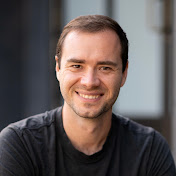
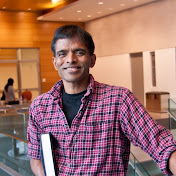
Indian Silicon Valley by Jivraj Singh Sachar's From McKinsey to India’s Top PE Firm | Manish Kejriwal on Kedaara Capital: skim's analysis identifies 12 key moments, with 2 potential conflicts of interest flagged. Kedaara Capital Founder and Managing Partner Manish Kejriwal traces thirty years of Indian private equity across three distinct market cycles and outlines how Kedaara scaled past $5 billion in assets.
Category: Business. Format: Interview. YouTube video analyzed by skim.
skim AI Analysis
Credibility assessment: Candid Industry Insider. Manish Kejriwal shares thirty years of direct operating experience across McKinsey, Temasek, and Kedaara Capital. While fund metrics and portfolio outcomes are self-reported without independent auditing during the interview, he openly acknowledges early operational missteps and credits competitors.
Bias assessment: Institutional PE Builder. The conversation naturally favors Kedaara Capital's operating model and long-term private equity value creation. Jivraj Singh Sachar conducts an admiring, celebratory interview rather than an adversarial one, giving Manish Kejriwal ample room to pitch Kedaara's culture to talent and founders.
Originality: 82% — Rare PE Playbook Access. First-hand accounts of how Indian private equity matured from minority growth capital to control deals with former CEOs as operating partners are uncommon. Details on distributing carried interest to junior analysts and administrative staff offer distinct institutional insight.
Depth: 80% — Structured Cycle Analysis. Manish Kejriwal breaks down three decades of Indian capital markets into clear structural phases, linking macroeconomic shifts to LP returns, promoter bargaining power, exit waterways, and multiple compression risks.
Key Points (12)
1. Manish Kejriwal Maps Three Decades of Indian PE
Timestamp: 00:02:00 to 00:08:31
Manish Kejriwal divides India's post-1995 private equity evolution into three decades: post-reform capital scarcity from 1995 to 2005, an exuberant boom from 2005 to 2015 that soured after the 2008 financial crisis, and a mature post-2014 era. During the middle phase, abundant capital gave promoters high valuations with few investor rights, burning foreign limited partners when exits failed to materialize. Since 2014, the market matured as firms began taking controlling stakes and deploying operating partners.
Significance (High): Frames why passive minority growth investing failed in India and why operational control became essential for generating cash exits.
Sources in support: Manish Kejriwal (Founder and Managing Partner, Kedaara Capital)
Neutral sources: Jivraj Singh Sachar (Host, Indian Silicon Valley Podcast)
2. Deeper Public Markets and China Plus One Aid Exits
Timestamp: 00:08:31 to 00:10:35
Manish Kejriwal explains that Indian private equity firms now achieve substantial distributions to paid-in capital because three exit channels function simultaneously: deeper domestic public markets, secondary sales to global private equity sponsors, and strategic buyouts. He notes that strategic interest began when Japanese firms sought alternatives to China and accelerated as US corporations shifted supply chains, exemplified by partial iPhone manufacturing moving to India. He cautions that China remains far ahead in most areas, so India cannot declare victory prematurely.
Significance (High): Highlights that reliable exit liquidity, once the Achilles heel of Indian private equity, now rests on three distinct buyer pools.
Sources in support: Manish Kejriwal (Founder and Managing Partner, Kedaara Capital)
Neutral sources: Jivraj Singh Sachar (Host, Indian Silicon Valley Podcast)
3. School Friendships Led to Temasek and CD&R Ties
Timestamp: 00:11:28 to 00:15:21
Tracing his education from Orissa and Bombay to United World Colleges, Dartmouth, and Harvard Business School, Manish Kejriwal argues that unplanned friendships shaped his career more than rigid planning. He recounts that a business school friend connected him to his role at Temasek, classmates anchored Kedaara Capital's first fund, and close HBS friend David Wasserman enabled Kedaara's partnership with Clayton, Dubilier & Rice. That partnership allowed Kedaara to adapt global operating-partner buyout practices while keeping investment committee decisions local in India.
Significance (Medium): Demonstrates how personal trust networks bridged global buyout expertise into an independent domestic Indian fund.
Sources in support: Manish Kejriwal (Founder and Managing Partner, Kedaara Capital)
Neutral sources: Jivraj Singh Sachar (Host, Indian Silicon Valley Podcast)
4. McKinsey Taught Kejriwal Intellectual Honesty
Timestamp: 00:15:21 to 00:19:22
Manish Kejriwal credits his years at McKinsey & Company, under mentors like India office founder Tinoo Puri, with instilling intellectual honesty and a family-like culture. He explains that Kedaara Capital adopted McKinsey's obligation to dissent so that junior analysts who spend the most time on a deal's facts regularly challenge senior partners in investment committee meetings. He compares this apprenticeship model to a liberal arts education that teaches young professionals how to think and invest rather than what to buy.
Significance (Medium): Shows how a flat, fact-driven debate culture prevents senior partner blind spots from dominating capital allocation.
Sources in support: Manish Kejriwal (Founder and Managing Partner, Kedaara Capital)
Neutral sources: Jivraj Singh Sachar (Host, Indian Silicon Valley Podcast)
5. Humility and Fairness from Ho Ching and Bajaj
Timestamp: 00:19:22 to 00:24:02
Reflecting on his leadership influences, Manish Kejriwal highlights Temasek head Ho Ching and his father-in-law Rahul Bajaj. From Ho Ching, he learned practical strategic execution and the negotiation advantage of humility, advising young professionals to start on the sell side so they do not confuse the power of their firm's capital with personal brilliance. From Rahul Bajaj, he learned kindness across hierarchies, openness to fact-based one-on-one pushback, and empowering the next generation while remaining a supportive critic.
Significance (Medium): Distills executive leadership lessons on separating capital custody from ego and managing generational transitions.
Sources in support: Manish Kejriwal (Founder and Managing Partner, Kedaara Capital)
Neutral sources: Jivraj Singh Sachar (Host, Indian Silicon Valley Podcast)
6. Universal Carried Interest Aligns Kedaara's Team
Timestamp: 00:24:02 to 00:26:47
Manish Kejriwal argues that long-term institutional excellence requires sharing financial rewards across the entire organization rather than concentrating wealth at the top. He reveals that Kedaara Capital grants carried interest not only to every investment professional down to the most junior level, but also to executive assistants and early office boys. Because deal leads act as true owners who intend to stay at the firm long-term, they filter out weak deals before reaching the investment committee rather than pitching volume to build a resume.
Significance (High): Illustrates how broad equity-like ownership changes analyst behavior from deal-pushing to rigorous self-censoring.
Sources in support: Manish Kejriwal (Founder and Managing Partner, Kedaara Capital), Jivraj Singh Sachar (Host, Indian Silicon Valley Podcast)
7. Scaling Kedaara from Fund I to a $1.8B Fund IV
Timestamp: 00:27:46 to 00:32:00
Manish Kejriwal contrasts the grueling two-and-a-half-year fundraising process for Kedaara Capital's $500 million first fund in 2011 with the rapid close of Fund IV in April 2024. While Fund I relied on favors from seven or eight large Indian business families alongside foreign backers, Fund IV attracted over $2.5 billion in demand and closed at $1.8 billion from foreign investors in less than four months. He attributes this investor confidence to top-decile returns across Funds I and II and a better-integrated operating partner team.
Significance (High): Quantifies how consistent cash returns transform an emerging domestic manager into an oversubscribed global institutional magnet.
Sources in support: Manish Kejriwal (Founder and Managing Partner, Kedaara Capital)
Neutral sources: Jivraj Singh Sachar (Host, Indian Silicon Valley Podcast)
8. Ex-CEOs Drive Kedaara's Operating Partner Model
Timestamp: 00:32:00 to 00:39:08
Manish Kejriwal details how Kedaara 2.0 deploys seasoned former CEOs—including ex-Wipro CEO Abidali Neemuchwala in tech services, ex-HDFC CEO Keki Mistry in financial services, and Nitin Paranjpe in consumer—to evaluate and run portfolio companies. Rather than relying solely on Excel projections, these operating partners assess whether existing management can scale a business tenfold, replace CEOs when necessary, and recruit top CXO talent prior to investment. In addition, Kedaara maps out an exit waterfall for every portfolio company from day one and reviews it quarterly.
Significance (High): Explains the operational mechanics behind Kedaara's control buyouts, from pre-deal leadership audits to quarterly exit planning.
Sources in support: Manish Kejriwal (Founder and Managing Partner, Kedaara Capital)
Neutral sources: Jivraj Singh Sachar (Host, Indian Silicon Valley Podcast)
9. Succession Planning and Zero Regrettable Attrition
Timestamp: 00:39:08 to 00:44:50
Manish Kejriwal explains how Kedaara Capital institutionalized its leadership across four core sectors—financial services, consumer, tech services, and healthcare—by appointing two co-heads per sector. He notes that aside from losing one person to Warburg Pincus years ago, Kedaara has experienced zero regrettable attrition while hiring senior talent from EQT, Goldman Sachs, Apax, and Temasek. By combining generous carried interest with real autonomy to source deals, sit on boards, and drive exits, Kedaara aims to build an institution that outlives its founders.
Significance (High): Addresses the classic founder-succession trap in private equity by empowering sector co-heads to run 90% of deal execution.
Sources in support: Manish Kejriwal (Founder and Managing Partner, Kedaara Capital), Jivraj Singh Sachar (Host, Indian Silicon Valley Podcast)
10. Junior Team Pushed Kedaara into Tech Growth Deals
Timestamp: 00:45:44 to 00:49:29
Asked how private equity intersects with India's startup ecosystem, Manish Kejriwal explains that Kedaara avoids early-stage venture risk and waits until unit economics are proven, even if a company is not yet EBITDA positive. He admits senior partners initially resisted backing Lenskart, Juspay, and Porter, but younger team members exercised their obligation to dissent and fought for the deals. Once invested, Kedaara applies its standard operating playbook, such as evaluating Lenskart's acquisition of Japanese eyewear chain Owndays and supporting Perfios and Juspay.
Significance (Medium): Shows how empowering younger investors allowed a traditional buyout firm to capture high-growth consumer tech and fintech winners.
Sources in support: Manish Kejriwal (Founder and Managing Partner, Kedaara Capital)
Neutral sources: Jivraj Singh Sachar (Host, Indian Silicon Valley Podcast)
11. Avoiding High Entry Multiples in Frothy Markets
Timestamp: 00:49:29 to 00:53:08
Manish Kejriwal warns that the single biggest mistake an investor can make in a buoyant market is overpaying on entry EBITDA multiples. While Kedaara bought brick-and-mortar retailer Vishal Mega Mart at roughly 17 times EBITDA—watching it grow from around 6,000-7,000 crores to 70,000 crores in market cap and 48 times EBITDA—he stresses that entering deals at 30 to 35 times EBITDA leaves no defense against multiple compression when public markets inevitably correct. Consequently, Kedaara focused heavily on harvesting exits and raising the conviction bar for new deployments.
Significance (High): Provides a clear valuation rule for navigating market peaks: operational EBITDA growth cannot rescue an overleveraged entry multiple.
Sources in support: Manish Kejriwal (Founder and Managing Partner, Kedaara Capital), Jivraj Singh Sachar (Host, Indian Silicon Valley Podcast)
12. Build Sell-Side Skills Before Launching a Startup
Timestamp: 00:53:35 to 00:56:58
Offering advice to his younger self and today's graduates, Manish Kejriwal urges young professionals not to overplan their careers or rush immediately into entrepreneurship out of peer pressure. Noting that Harvard Business School alumni have founded more startups twenty years post-graduation than Stanford alumni despite starting out in consulting or banking, he argues that spending early years in sell-side banking or consulting builds vital character, patience, and resilience. Taking entrepreneurial risk fifteen to twenty years later after absorbing early career lessons yields stronger founders.
Significance (Medium): Challenges Silicon Valley's immediate-founder orthodoxy by advocating for foundational consulting or sell-side training first.
Sources in support: Manish Kejriwal (Founder and Managing Partner, Kedaara Capital), Jivraj Singh Sachar (Host, Indian Silicon Valley Podcast)
This analysis was generated by skim (skim.plus), an AI-powered content analysis platform by Credible AI. Scores and classifications represent the platform's AI-generated assessment and should be considered alongside other sources.