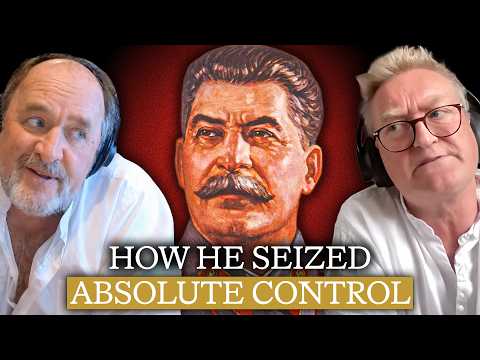
Empire • World History's How Stalin Went From Nobody To Ruthless Dictator: skim's analysis identifies 21 key moments, with 10 potential conflicts of interest flagged. This video traces Joseph Stalin's ruthless ascent from a revolutionary operative to the Soviet Union's dictator, detailing his role in the brutal Russian Civil War, his complex rivalry with Leon Trotsky, and his manipulative political strategies.
Category: Politics. Format: Commentary. YouTube video analyzed by skim.
Key Points (21)
1. Stalin's Unremarkable Beginnings
Timestamp: 00:00:54 to 00:02:42
Before 1917, Joseph Stalin was an unremarkable figure in the Russian revolutionary movement, largely unknown to the public due to his thick Georgian accent and aversion to public speaking. His future trajectory was entirely unpredictable at this stage.
Significance (Medium): This sets the stage for Stalin's dramatic and unexpected rise, highlighting the contrast between his early obscurity and his later absolute power. It underscores the idea that leadership can emerge from unlikely origins.
Sources in support: Giles Milton (Guest, Author of 'The Stalin Affair')
Neutral sources: Anita Anand (Host), William Dalrymple (Host)
2. The Brutality of the Russian Civil War
Timestamp: 00:04:21 to 00:09:40
The Russian Civil War (1918-1924) was an incredibly bloody conflict across the entire former Russian Empire, involving famine, disease, and widespread political repression. Stalin, as a political commissar, demonstrated extreme brutality, executing and torturing those who did not comply with revolutionary tenets, even burning villages. This period laid the groundwork for decades of Soviet violence and secrecy.
Significance (High): This establishes the violent foundation of the Soviet state and showcases Stalin's early ruthlessness, demonstrating his willingness to use extreme measures to achieve his ends. It foreshadows the scale of terror he would later unleash.
Sources in support: Giles Milton (Guest, Author of 'The Stalin Affair')
Neutral sources: Anita Anand (Host), William Dalrymple (Host)
3. Stalin vs. Trotsky: A Power Struggle
Timestamp: 00:07:56 to 00:12:24
A significant power struggle emerged between Joseph Stalin and Leon Trotsky, fueled by their contrasting roles and personalities. While Trotsky commanded the victorious Red Army and was politically shrewd, Stalin, as a political commissar, wielded the brutal power of the Cheka. Lenin strategically played them against each other to maintain his own authority, mistrusting both men.
Significance (High): This rivalry was central to the Bolshevik power dynamics after Lenin. It demonstrates Stalin's early political maneuvering and his ability to build power bases, setting the stage for his eventual triumph over Trotsky.
Sources in support: Giles Milton (Guest, Author of 'The Stalin Affair')
Neutral sources: Anita Anand (Host), William Dalrymple (Host)
4. Lenin's Architecture of Repression
Timestamp: 00:09:06 to 00:11:56
Contrary to the common belief that Stalin solely created the repressive Soviet regime, Vladimir Lenin established its fundamental architecture, including the Cheka (secret police) and the one-party state. Stalin, however, masterfully exploited this existing framework for his own political advancement and consolidation of power.
Significance (High): This re-frames the historical understanding of the Soviet regime's origins, shifting some responsibility for its brutal foundations from Stalin to Lenin. It highlights Stalin's skill in leveraging existing systems rather than solely creating them.
Sources in support: Giles Milton (Guest, Author of 'The Stalin Affair')
Neutral sources: Anita Anand (Host), William Dalrymple (Host)
5. Stalin's Strategic Ascent as General Secretary
Timestamp: 00:25:26 to 00:28:27
Stalin's appointment as General Secretary in 1922, initially a functional role, was recognized by him as a powerful position to control the party apparatus. He strategically maneuvered his supporters into key positions, effectively sidelining rivals like Trotsky and laying the groundwork for his future dominance.
Significance (High): This move was instrumental in Stalin's rise, allowing him to build a power base independent of Lenin's direct oversight and ensuring his influence would persist after Lenin's decline.
Sources in support: Giles Milton (Guest, Author of 'The Stalin Affair'), Stalin (Soviet Dictator)
Neutral sources: Anita Anand (Host), William Dalrymple (Host), Lenin (Former Leader of Soviet Union), Trotsky (Revolutionary Leader)
6. Lenin's Growing Distrust of Stalin
Timestamp: 00:28:01 to 00:32:07
Lenin's relationship with Stalin deteriorated significantly after Stalin's offensive behavior towards Lenin's wife, Nadia Krupskaya. This personal insult, coupled with Lenin's observation of Stalin's 'crude' nature and ambition, led Lenin to write a letter in 1923 suggesting Stalin be removed from his position as General Secretary.
Significance (High): This marked a critical turning point, revealing Lenin's deep misgivings about Stalin's character and fitness for leadership, though Stalin's entrenched power prevented immediate action.
Sources in support: Lenin (Former Leader of Soviet Union), Nadia Krupskaya (Lenin's Wife)
Sources against: Stalin (Soviet Dictator)
Neutral sources: Anita Anand (Host), William Dalrymple (Host), Giles Milton (Guest, Author of 'The Stalin Affair'), Trotsky (Revolutionary Leader)
7. Lenin's Post-Mortem Exploitation
Timestamp: 00:32:07 to 00:35:53
Following Lenin's death, Stalin orchestrated the embalming and public display of his body, a move influenced by Orthodox traditions of venerating relics. This act, deeply upsetting to Lenin's widow, transformed Lenin into a political symbol, serving Stalin's agenda and demonstrating his willingness to manipulate even death for power.
Significance (High): This controversial decision cemented Lenin's image as a martyr and a sacred figure, which Stalin then leveraged to legitimize his own rule and consolidate control over the Soviet Union.
Sources in support: Giles Milton (Guest, Author of 'The Stalin Affair'), Stalin (Soviet Dictator)
Sources against: Nadia Krupskaya (Lenin's Wife)
Neutral sources: Anita Anand (Host), William Dalrymple (Host), Lenin (Former Leader of Soviet Union), Trotsky (Revolutionary Leader)
8. Contrasting Personalities: Stalin vs. Trotsky
Timestamp: 00:36:02 to 00:44:20
Stalin, a Georgian with a thick accent, was perceived as crude and a 'thug,' while Trotsky, born Lev Bronstein, was an intellectual, elegant, and fastidious individual with strong oratory skills. Despite their different backgrounds, both were seen as uncongenial by some, including Lenin's wife, highlighting their complex and often unlikable public personas.
Significance (Medium): Their starkly different personalities and public images played a significant role in their rivalry, influencing how they were perceived by party members and the public.
Sources in support: Trotsky (Revolutionary Leader), Alexander Bogdanov (Revolutionary)
Neutral sources: Anita Anand (Host), William Dalrymple (Host), Giles Milton (Guest, Author of 'The Stalin Affair'), Stalin (Soviet Dictator), Nadia Krupskaya (Lenin's Wife)
9. Trotsky's Prominence vs. Stalin's Absence in the October Revolution
Timestamp: 00:47:32 to 00:50:15
While Joseph Stalin was present in Petrograd and involved in propaganda, Leon Trotsky was the central figure orchestrating the October Revolution, chairing key committees and directing the seizure of the Winter Palace. Trotsky later used this to his advantage, downplaying Stalin's role, though historical accounts suggest Stalin was more active than Trotsky's narrative allowed. This period also saw Trotsky's courage in confronting angry sailors, though it was followed by brutal suppression, revealing his capacity for ruthlessness.
Significance (High): This contrast in roles during the revolution set the stage for their future rivalry, with Trotsky's public prominence and Stalin's behind-the-scenes maneuvering shaping their respective images and power bases.
Sources in support: Giles Milton (Guest, Author of 'The Stalin Affair')
Neutral sources: Anita Anand (Host), William Dalrymple (Host)
10. The Soviet-Polish War and Stalin's Strategic Divergence
Timestamp: 00:51:13 to 00:52:26
During the Soviet-Polish War in 1920, Leon Trotsky's Red Army was on the verge of capturing Warsaw but was defeated after Stalin, commanding crucial troops, prioritized capturing the city of Lviv instead. This strategic divergence led to Trotsky's humiliation and fueled his resentment towards Stalin, whom he blamed for the defeat.
Significance (High): This military confrontation was a pivotal moment in their rivalry, demonstrating Stalin's willingness to undermine Trotsky for his own strategic gains, a pattern that would define their future power struggle.
Sources in support: Giles Milton (Guest, Author of 'The Stalin Affair')
Neutral sources: Anita Anand (Host), William Dalrymple (Host)
11. Stalin's Masterful Manipulation at Lenin's Funeral
Timestamp: 00:53:43 to 00:55:34
Joseph Stalin masterfully orchestrated Vladimir Lenin's funeral to present himself as the natural successor, deliberately providing Leon Trotsky with the wrong date. This prevented Trotsky from attending the crucial event, allowing Stalin to seize the narrative and public perception as Lenin's heir, while Trotsky was sidelined and his absence fueled whispers of his indifference.
Significance (High): This act of political theater was a critical step in Stalin's consolidation of power, demonstrating his cunning and ruthlessness in using personal and public events to eliminate rivals.
Sources in support: Giles Milton (Guest, Author of 'The Stalin Affair')
Neutral sources: Anita Anand (Host), William Dalrymple (Host)
12. Trotsky's Systematic Ousting from Power
Timestamp: 00:55:43 to 00:57:15
Following Lenin's death, Stalin, with his allies Zinoviev and Kamenev, systematically maneuvered Leon Trotsky out of power. Within three years, Trotsky was removed from his military post, voted off the Politburo, expelled from the party, and finally exiled in 1928, effectively neutralizing him as a political threat.
Significance (High): This rapid and decisive dismantling of Trotsky's influence showcases Stalin's strategic control over the party apparatus and his relentless pursuit of absolute authority.
Sources in support: Giles Milton (Guest, Author of 'The Stalin Affair')
Neutral sources: Anita Anand (Host), William Dalrymple (Host)
13. Jaz: Trotsky's Fortified Life and Continued Opposition
Timestamp: 01:10:26 to 01:13:43
In Mexico, Leon Trotsky lived in a fortified compound, complete with guards and a watchtower, due to his constant fear of Stalin's assassins. Despite this isolation and the surveillance of his mail by Soviet intelligence, Trotsky continued to publish his 'Bulletin of the Opposition,' overtly attacking Stalin and his policies, effectively making himself a continued target.
Significance (High): Trotsky's persistent defiance from exile underscores the ideological and personal battle between him and Stalin, demonstrating that even stripped of power, Trotsky remained a potent symbol and critic that Stalin could not ignore.
Sources in support: Lenin (Former Leader of Soviet Union)
Neutral sources: Anita Anand (Host), William Dalrymple (Host), Giles Milton (Guest, Author of 'The Stalin Affair')
14. Giles Milton: The First Failed Assassination Attempt on Trotsky
Timestamp: 01:12:54 to 01:14:50
In May 1940, an artist named David Siqueiros, aided by 20 armed men and facilitated by Robert Sheldon Hart (a Soviet agent posing as a Trotsky volunteer), launched a machine-gun attack on Trotsky's villa. Miraculously, Trotsky and his wife Natalia survived by rolling off their bed, though a grandchild was hit by a stray bullet. The assassin Hart was later killed, presumably by Soviet intelligence.
Significance (High): This dramatic assassination attempt highlights the lengths to which Stalin would go to eliminate Trotsky and the sophisticated, albeit ultimately unsuccessful, methods employed by Soviet intelligence. It also reveals the treacherous nature of loyalty within Trotsky's circle.
Sources in support: Giles Milton (Guest, Author of 'The Stalin Affair')
Neutral sources: Anita Anand (Host), William Dalrymple (Host), Lenin (Former Leader of Soviet Union)
15. Jaz: The Ice Axe Murder of Leon Trotsky
Timestamp: 01:14:54 to 01:19:02
Following the failed machine-gun attack, a second assassination attempt was made on Trotsky in August 1940 by Ramon Mercader, a Spanish communist. Mercader gained access to Trotsky's study through Sylvia Ageloff, a maid he befriended, and struck Trotsky in the head with an ice axe. Despite the severe wound, Trotsky fought back, biting Mercader's arm, but ultimately succumbed to his injuries the next day. Mercader was arrested and served 20 years in a Mexican prison, later receiving honors in the Soviet Union.
Significance (High): This successful assassination, carried out with a brutal and unconventional weapon, marked the definitive end of Trotsky's life and silenced Stalin's most prominent critic. Mercader's subsequent treatment underscores the state-sanctioned nature of the operation.
Sources in support: Lenin (Former Leader of Soviet Union)
Neutral sources: Anita Anand (Host), William Dalrymple (Host), Giles Milton (Guest, Author of 'The Stalin Affair')
16. Giles Milton: Why Trotsky Remained a Threat to Stalin
Timestamp: 01:19:40 to 01:20:33
Even after losing all political power and living in exile, Trotsky remained a significant threat to Stalin because he was the only one capable of contesting Stalin's narrative of how he came to power and ruled the Soviet Union. Trotsky's firsthand knowledge of the revolution and Stalin's actions made him a dangerous counter-narrator that Stalin felt compelled to eliminate.
Significance (High): This explains the enduring obsession Stalin had with Trotsky, revealing that the elimination of rivals was not just about power, but about controlling historical memory and ensuring Stalin's version of events prevailed.
Sources in support: Giles Milton (Guest, Author of 'The Stalin Affair')
Neutral sources: Anita Anand (Host), William Dalrymple (Host), Lenin (Former Leader of Soviet Union)
17. The Show Trials: A Theater of Lies
Timestamp: 01:30:58 to 01:32:44
The show trials of the 1930s were a systematic fabrication of justice, where defendants were coerced through torture into confessing to fabricated crimes. Promises of leniency were lies, with most promptly executed. This was a hallmark of Stalin's regime, devoid of any genuine legal process.
Significance (High): These trials served to eliminate political opposition and instill widespread fear, solidifying Stalin's absolute control through manufactured guilt and public spectacle.
Sources in support: Giles Milton (Guest, Author of 'The Stalin Affair')
Neutral sources: Anita Anand (Host), William Dalrymple (Host)
18. The Great Terror: Quotas and Mass Executions
Timestamp: 01:34:10 to 01:35:51
The Great Terror escalated dramatically, with the Politburo setting quotas for arrests and executions, assigning specific percentages to be shot. Stalin personally reviewed and signed off on these lists, micromanaging the extermination of his own people. This systematic approach turned the state into an instrument of mass murder.
Significance (High): This chilling level of bureaucratic control over death reveals the monstrous scale of Stalin's paranoia and his absolute disregard for human life, turning the state into a killing machine.
Sources in support: Giles Milton (Guest, Author of 'The Stalin Affair')
Neutral sources: Anita Anand (Host), William Dalrymple (Host)
19. Purging the Red Army: A Strategic Disaster
Timestamp: 01:35:52 to 01:37:07
Stalin's purges extended to the military, leading to the arrest and execution of a vast majority of senior army and navy commanders. This drastic reduction in experienced leadership, particularly marshals and generals, critically weakened the Soviet Union's defense capabilities just years before the German invasion.
Significance (High): By eliminating its most capable military leaders, Stalin's regime directly compromised the Soviet Union's ability to resist Operation Barbarossa, a catastrophic error that would cost millions of lives.
Sources in support: Giles Milton (Guest, Author of 'The Stalin Affair')
Neutral sources: Anita Anand (Host), William Dalrymple (Host)
20. Stalin's Ruthless Ideological Models
Timestamp: 01:37:54 to 01:38:22
Stalin drew inspiration from figures like Genghis Khan and Ivan the Terrible, even criticizing the latter for being too soft. His endorsement of the idea that 'the deaths of the vanquished are necessary for the tranquility of the victors' underscores his brutal philosophy of power and control.
Significance (High): This reveals the deep-seated brutality in Stalin's worldview, showing he saw himself as a successor to historical tyrants and believed mass violence was essential for maintaining power.
Sources in support: Giles Milton (Guest, Author of 'The Stalin Affair')
Neutral sources: Anita Anand (Host), William Dalrymple (Host)
21. Stalin's Ruthless Purges
Timestamp: 01:54:58 to 01:55:43
Stalin's paranoia and ruthlessness were so extreme that he ordered the execution of his own son for dishonorably surrendering to the Vermacht, and similarly eliminated General Pavlov for correctly warning of the impending Nazi invasion. This systematic removal of competent commanders left the Soviet army critically weakened and vulnerable.
Significance (High): This ruthless elimination of leadership created a vacuum of command, severely compromising the Soviet Union's ability to mount an effective defense against the German onslaught. It highlights Stalin's absolute, albeit self-destructive, control.
Sources in support: Giles Milton (Guest, Author of 'The Stalin Affair')
Neutral sources: Anita Anand (Host), William Dalrymple (Host)
Potential Conflicts of Interest (10)
Stalin's Personal Insult and Political Maneuvering (High severity)
Type: Personal
Stalin's insult to Lenin's wife, Nadia Krupskaya, and his subsequent failure to offer a sincere apology, deeply angered Lenin and contributed to Lenin's decision to seek Stalin's removal as General Secretary.
Significance: This personal slight, escalating into a political rift, reveals Stalin's potential for ruthlessness and poor judgment, directly impacting Lenin's succession plans and highlighting the volatile nature of Soviet leadership.
Stalin's Manipulation of Lenin's Legacy (High severity)
Type: Reputational
Stalin's decision to embalm Lenin and put his body on display, against the wishes of Lenin's wife, transformed Lenin into a political relic, serving Stalin's consolidation of power and ideological control.
Significance: This act demonstrates Stalin's willingness to exploit even death for political gain, turning a national mourning into a tool for propaganda and solidifying his image as Lenin's successor, while disregarding the personal grief of Lenin's family.
Churchill's Cousin's Relationship with Trotsky (Low severity)
Type: Personal
Clare Sheridan, Winston Churchill's cousin, had a close friendship, possibly a sexual relationship, with Leon Trotsky while Churchill was actively opposing the Bolshevik regime.
Significance: This raises questions about potential divided loyalties and intelligence vulnerabilities during a critical geopolitical period. Did Churchill's government have knowledge of this connection, and could it have influenced their actions or perceptions of Trotsky?
Kamenev's Marriage to Trotsky's Sister (Medium severity)
Type: Personal
Lev Kamenev, a key supporter of Stalin in the post-Lenin power struggle, was married to Trotsky's sister, Olga.
Significance: This familial tie within the core Bolshevik leadership adds a layer of personal betrayal and complex loyalties to the political machinations. It highlights how personal relationships were intertwined with, and potentially compromised by, the ruthless pursuit of power.
Stalin's Personal Vendetta Against Trotsky (High severity)
Type: Personal
Stalin's long-standing personal animosity and rivalry with Leon Trotsky directly motivated the prolonged efforts to assassinate Trotsky, even when Trotsky held no significant political power.
Significance: This personal vendetta demonstrates how Stalin's deep-seated insecurities and desire for absolute control overrode rational political considerations, leading to extreme violence and the expenditure of significant resources to eliminate a distant rival.
Stalin's Use of Kirov's Murder as a Pretext (High severity)
Type: Political Activist
The murder of Sergei Kirov, whether directly ordered by Stalin or not, was used as the primary justification to launch the Great Terror, targeting perceived enemies and consolidating Stalin's absolute power.
Significance: This event highlights Stalin's opportunistic use of tragedy to purge political opponents and solidify his dictatorship, demonstrating a willingness to exploit any situation to further his own power, regardless of the truth or justice.
Vyshinsky's Role in Show Trials (High severity)
Type: Professional
Andrei Vyshinsky, as chief prosecutor, employed tactics of forced confessions and torture, demonstrating a disregard for evidence and due process in the show trials of Old Bolsheviks like Zinoviev and Kamenev.
Significance: Vyshinsky's methods exemplify the perversion of justice under Stalin, where the legal system was weaponized to eliminate political opposition, setting a dangerous precedent that influenced even Nazi Germany's judicial practices.
Stalin's Paranoia and the Purge of His Own Military (High severity)
Type: Political Activist
Stalin's extreme paranoia led him to purge the Soviet military, executing experienced generals and commanders, thereby crippling the army's effectiveness just before a major invasion.
Significance: This self-inflicted wound critically weakened the Soviet Union's defense against Operation Barbarossa, raising questions about Stalin's judgment and his ability to lead effectively under pressure. His paranoia directly endangered the nation he ruled.
The Molotov-Ribbentrop Pact: A Pact Between Dictators (High severity)
Type: Political Activist
The non-aggression pact between Stalin's Soviet Union and Hitler's Nazi Germany, sworn enemies, facilitated the invasion and division of Poland, effectively starting World War II.
Significance: This cynical alliance highlights the duplicity of both dictators, who saw it as a temporary strategic advantage. It enabled Hitler's initial aggression and provided the Soviet Union with territorial gains, but ultimately led to a devastating war between them.
Stalin's Personal Involvement in Executions (High severity)
Type: Personal
Stalin personally oversaw and micromanaged the execution quotas and lists of victims during the Great Terror, even signing off on individual fates.
Significance: This reveals the depth of Stalin's sadism and control, demonstrating that the terror was not merely a bureaucratic process but a deeply personal project of extermination, raising profound questions about his psychological state and capacity for empathy.
This analysis was generated by skim (skim.plus), an AI-powered content analysis platform by Credible AI. Scores and classifications represent the platform's AI-generated assessment and should be considered alongside other sources.