The radical fringe of mid-century Cairo and the torture cells of Egyptian prisons forged the ideas that would ultimately inspire the deadliest terrorist attack in human history. Sayyid Qutb, born in 1906 in a nondescript village, was not from the elite but had a secular nationalist upbringing. His early life was marked by literary interests and a complex relationship with women, influenced by the vibrant cultural scene of interwar Egypt. His journey took a pivotal turn when he was sent to the US in 1948, where his exposure to American society, particularly a dance at a church, deeply disgusted him, catalyzing his anti-American and morally critical views. This experience, coupled with his later imprisonment and witnessing of torture, profoundly shaped his extremist ideology. The narrative concludes by emphasizing that Qutb's transformation was a critical, albeit dark, genesis for modern militant extremism.
Jason Burke: Qutb's Martyrdom and its Aftermath
Sayyid Qutb was convicted of conspiracy and executed by hanging in August 1966. This act, rather than suppressing his ideas, significantly revitalized the flagging Islamist movement, transforming Qutb into a martyr. His execution became a potent symbol for those who opposed the 'repressive, decadent, hypocritical, unislamic' regimes and rulers. Among those deeply affected by Qutb's martyrdom was Ayman al-Zawahiri, a teenager from a privileged background who, inspired by Qutb's writings and influenced by his uncle's connection to Qutb, formed his own teenage group dedicated to overthrowing the Egyptian regime. This highlights how Qutb's legacy continued to inspire future generations of extremists.
Zawahiri's Imprisonment and Public Radicalization
Following Sadat's assassination, Ayman al-Zawahiri, though not directly involved in the plot, was imprisoned and subjected to brutal torture. His subsequent public denunciation of the regime in English, broadcast globally, marked a pivotal moment where extremist rhetoric moved from private spaces into the public sphere, defining a new era of Sunni jihadi extremism.
Peshawar: The Crucible of the Arab-Afghan Jihad
Peshawar, in the 1980s, became a chaotic frontier city and a central hub for the Soviet-Afghan War, attracting Arab volunteers like Zawahiri and Osama bin Laden, alongside refugees and various international actors, fostering an environment ripe for the growth of extremist ideologies amidst the conflict.
The Myth of Direct CIA Funding for Extremists
The notion that the CIA directly funded extremists like Osama bin Laden to fight the Soviets is a persistent myth; while the US supported the Afghan mujahideen through Pakistan, direct funding or training for individuals like bin Laden and his small contingent of Arab fighters was non-existent.
Abdullah Azzam: The Ideologue of Global Jihad
Abdullah Azzam, a Palestinian preacher and scholar, was a pivotal figure who transformed the Afghan jihad into a global Islamic cause, emphasizing faith as the primary motivator and framing the conflict as a religious duty for all Muslims, thereby attracting foreign fighters and solidifying the ideological underpinnings of global jihad.
Azzam's Globalizing Fatwa
Abdullah Azzam's 1985 book, 'In Defense of Muslim Lands,' was revolutionary. It declared jihad an individual obligation for all Muslims, regardless of location, whenever a defensive war against 'unbelief' was underway. This concept effectively globalized the call to jihad, extending it beyond the immediate conflict in Afghanistan. This was a powerful rhetorical tool, amplified by Azzam's propaganda network, particularly his influential audio cassettes.
The Maktab al-Khidamat: A Global Franchise
The Maktab al-Khidamat (MAK), established around 1985 in Peshawar, served as a vital reception and logistics center for Arab volunteers. Funded by donations channeled through Osama bin Laden, it was not initially conceived as a precursor to al-Qaeda or a vehicle for global jihad beyond Afghanistan. However, its extensive network, including guest houses and administrative records, inadvertently created a prototype for future militant organizations and facilitated the burgeoning global jihad movement.
Bin Laden's Transformation at Jaji
Osama bin Laden's decision to build a military post at Jaji in eastern Afghanistan in 1987, and his subsequent participation in its defense against a Soviet attack, was a pivotal moment. While militarily insignificant, this event, amplified by media coverage including an interview by Jamal Khashoggi, launched Bin Laden's legend as a fighter for Islam. It was here he discovered a talent for self-promotion and communication, orchestrating publicity to cultivate an image of leadership and bravery.
The Bureaucratic Birth of Al-Qaeda
The founding of al-Qaeda in August 1988 stemmed from a bureaucratic meeting at Osama bin Laden's house in Peshawar. Fifteen senior Arab figures, seeking to continue their 'jihad' beyond Afghanistan, discussed forming an organized group with a leader and directive committee. The name 'al-Qaeda' itself, meaning 'the base,' signifies its intended role as a foundational element for future militant activities, potentially drawing from Bin Laden's Jaji base or a Leninist-style vanguard concept.
The Mysterious Assassination of Azzam
Abdullah Azzam's assassination in a bomb blast in November 1989, just as the Soviet Union was withdrawing from Afghanistan, created a leadership vacuum. The perpetrator remains unknown, with suspicions ranging from Soviet or Pakistani intelligence to internal rivals within the fragmented jihadi movement. This event left the globalizing jihadi movement leaderless and rudderless, clearing the path for more extreme actors and actions in the subsequent decade.
Dalrymple & Burke: Tracing Extremism's Roots
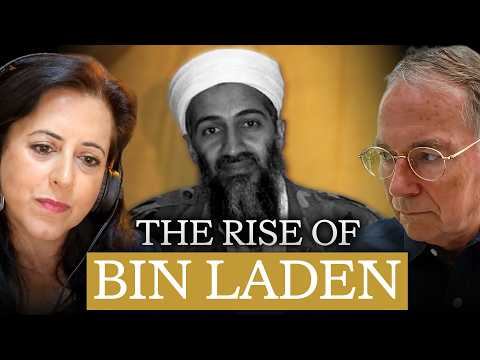
William Dalrymple and Jason Burke delve into the historical origins of Islamic extremism, tracing its evolution from the ideological foundations laid by figures like Sayyid Qutb and Ayman al-Zawahiri in Egyptian prisons to its global spread. They discuss how these ideas, coupled with geopolitical events such as the Soviet-Afghan War, paved the way for organizations like al-Qaeda. The discussion highlights the complex interplay of ideology, political context, and conflict in the rise of modern extremist movements. The conversation concludes by emphasizing the deep historical roots that inform contemporary challenges.