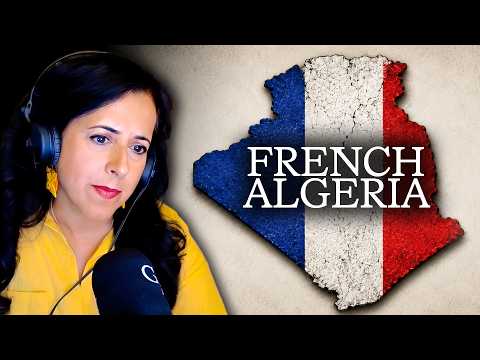
Empire • World History's The Colony France Pretended Wasn’t a Colony: skim's analysis identifies 11 key moments, with 1 potential conflict of interest flagged. A co-host and a co-host trace how France's 1848 incorporation of Algeria created a two-tier system privileging one million European settlers over nine million disenfranchised Muslim subjects.
Category: Education. Format: Commentary. YouTube video analyzed by skim.
skim AI Analysis
Credibility assessment: Historically Grounded. The hosts draw on established historical scholarship, including historian Jennifer Sessions, contemporary observers like Alexis de Tocqueville, and primary speeches from Jules Ferry and Ferhat Abbas, while transparently presenting the wide range of contested casualty estimates for the Sétif massacre.
Bias assessment: Anti-Colonial Critique. The analysis sharply critiques French colonial hypocrisy, racial ideology, and settler privilege, drawing explicit parallels to South African apartheid and the post-1967 West Bank while framing Algerian nationalism as an inevitable response to systemic oppression.
Originality: 76% — Rich Comparative Synthesis. While covering well-documented historical events, the hosts weave together legal, literary, and ideological threads, connecting Ernest Renan's racial theories, Albert Camus's blind spots, British India, and French Indochina into a cohesive narrative.
Depth: 85% — Structural & Ideological Depth. Rather than merely recounting dates, the discussion examines the legal mechanics of the Code de l'indigénat, the dismantling of Ottoman communal land laws, the settler lobby's political veto power, and how World War II and Dien Bien Phu shattered French prestige.
Key Points (11)
1. France Incorporates Algeria in 1848, Says William
Timestamp: 00:00:21 to 00:03:07
After 18 years of brutal fighting with no clear master plan, France's Second Republic declared in 1848 that Algeria's three fertile coastal provinces were part of metropolitan France rather than a colony. Governed directly by the Interior Ministry in Paris, this incorporation created what historian Jennifer Sessions calls a self-made trap that tormented France for the next 114 years.
Significance (High): By legally defining coastal Algeria as metropolitan territory rather than an overseas possession, Paris made future decolonization a constitutional and existential crisis for the French Republic.
Sources in support: YouTube: Empire • World History
2. Pied-Noir Settlers Seize Algeria's Richest Land
Timestamp: 00:03:07 to 00:05:36
Roughly one million European settlers known as Pied-Noirs arrived between the 1830s and 1900, encompassing wealthy Grands Colons wine and land magnates alongside working-class Spanish, Italian, Maltese, and Corsican laborers. United by their non-Arab status, these settlers built new fortunes by seizing coastal farmland and exploiting indigenous Algerians.
Significance (High): The multi-ethnic European working class forged a fierce settler identity whose economic survival depended entirely on maintaining racial hierarchy over indigenous Algerians.
Sources in support: YouTube: Empire • World History
3. A Co-Host Critiques Albert Camus's Silence
Timestamp: 00:05:36 to 00:07:54
Born in 1913 to a working-class Pied-Noir family in Mondovi, philosopher Albert Camus wrote eloquently about injustice yet sat on the fence regarding Algerian colonial rule. Both hosts note that despite his intellectual curiosity about Greek and European thought, Camus spoke no Arabic and showed little curiosity toward the Islamic civilization beneath him.
Significance (Low): Camus's blind spot illustrates how deeply colonial detachment penetrated even the most celebrated liberal and literary minds of the Pied-Noir community.
Sources in support: YouTube: Empire • World History
4. Dual Legal System Rules Nine Million Muslims
Timestamp: 00:07:54 to 00:10:54
Although France declared Algeria part of the Republic, full citizenship applied only to the one million European settlers, while nine million Muslim Algerians were classified as subjects under the separate Code de l'indigénat. Stripped of voting rights, free expression, and protection from police brutality, Muslim society was left, in Alexis de Tocqueville's 1841 words, more miserable and barbarous than before France arrived.
Significance (High): Maintaining a racialized police state inside territory legally defined as metropolitan France exposed a fatal contradiction in French republican universalism.
Sources in support: YouTube: Empire • World History
5. Settlers Crush Napoleon III's Arab Kingdom Plan
Timestamp: 00:10:54 to 00:14:12
Under the indigenous code, Muslims faced pass laws, collective punishment, forced labor, and a requirement to renounce Islamic civil law to gain citizenship, according to a co-host. When Napoleon III tried in 1863 to protect Arab communal land rights under an Arab Kingdom vision, the settler lobby subverted his edicts and seized full authority over indigenous affairs after his 1870 fall.
Significance (Medium): The defeat of Napoleon III's 1863 land protections and the Third Republic's 1870 handover of power to settlers closed off top-down imperial reform.
Sources in support: YouTube: Empire • World History
6. Land Laws and Racial Theory Back Dispossession
Timestamp: 00:14:12 to 00:18:11
In the 1860s and 1870s, France dismantled traditional Ottoman communal landholding, pushing Muslim Algerians into marginal scrub while Europeans claimed the fertile valleys, says a co-host. Thinkers like Ernest Renan and Prime Minister Jules Ferry in 1885 justified this dispossession by contrasting Aryan and Semitic races and asserting that superior races had a duty to rule inferior ones.
Significance (Medium): Codifying racial hierarchy and anti-Islamic rhetoric in 19th-century Algeria provided the ideological template for France's wider imperial expansion across Africa.
Sources in support: YouTube: Empire • World History
7. Settler Veto Radicalizes Moderate Ferhat Abbas
Timestamp: 00:18:11 to 00:23:43
With Europeans comprising 10% of the population but owning a quarter of cultivated land by 1954, early nationalists split between moderate assimilationist Ferhat Abbas and radical working-class orator Messali Hadj. When the Pied-Noir settler lobby and resigning mayors killed the 1936 Blum-Viollette bill, which would have granted citizenship to just 22,000 educated Muslims, Abbas abandoned moderation.
Significance (High): By crushing a token concession for 22,000 educated elites in 1936, the Pied-Noir lobby destroyed the credibility of peaceful assimilationist politics.
Sources in support: YouTube: Empire • World History
8. World War II Shatters the Myth of French Might
Timestamp: 00:23:43 to 00:27:59
France's six-week collapse in 1940 shattered its aura of invincibility among Algerians, while the 1942 Anglo-American Operation Torch landings brought Allied leaflets promising self-determination. Seizing the moment in February 1943, Ferhat Abbas published the Manifesto of the Algerian People demanding an autonomous state, only to be placed under house arrest while Algerian troops bled for France's liberation as second-class soldiers.
Significance (High): Fighting to liberate Europe from Nazi occupation while being denied equal pay, pensions, and self-determination at home created an explosive grievance among Algerian veterans.
Sources in support: YouTube: Empire • World History
9. VE Day March Sparks the 1945 Sétif Massacre
Timestamp: 00:27:59 to 00:32:45
On May 8, 1945, French police shot Bouzid Saâl for carrying an Algerian flag during a VE Day march of 8,000 people in Sétif, sparking rural attacks that killed 102 European settlers. France responded with naval bombardments, dive bombers, and Guelma settler militias that killed roughly 1,500 Muslims locally and an estimated 6,000 to 20,000 overall, prompting a French general to warn Paris of inevitable revenge.
Significance (High): The disproportionate slaughter at Sétif and Guelma on the very day Europe celebrated Nazi Germany's defeat became the point of no return for Franco-Algerian relations.
Sources in support: YouTube: Empire • World History
10. Sétif and Rigged 1948 Elections Close Peace Path
Timestamp: 00:32:45 to 00:35:27
Decorated World War II veteran Ahmed Ben Bella returned from Monte Cassino amid the May 1945 massacres, refused an officer commission, and concluded that Algeria for the Algerians was the only path. When French authorities blatantly rigged the 1948 Algerian elections by seizing and stuffing ballot boxes in plain sight of the United Nations, nationalists concluded that armed struggle was their only remaining option.
Significance (High): By combining military terror in 1945 with blatant electoral fraud in 1948, French authorities pushed combat-trained Algerian veterans directly into armed insurgency.
Sources in support: YouTube: Empire • World History
11. Dien Bien Phu Inspires the Founding of the FLN
Timestamp: 00:35:30 to 00:38:37
In May 1954, the Viet Minh's 55-day siege and capture of 12,000 French troops at Dien Bien Phu electrified Algerians with proof that an anti-colonial guerrilla force could defeat France's regular army. Veteran militants from the earlier Organisation Spéciale met secretly in Algiers as the Committee of the 22 and by October 1954 constituted the National Liberation Front (FLN), dividing Algeria into five military zones to fight for independence.
Significance (High): The formation of the FLN in October 1954 unified radicalized veterans under a single revolutionary command, setting the stage for a war that would topple France's Fourth Republic.
Sources in support: YouTube: Empire • World History
This analysis was generated by skim (skim.plus), an AI-powered content analysis platform by Credible AI. Scores and classifications represent the platform's AI-generated assessment and should be considered alongside other sources.