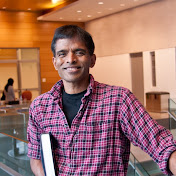
Lenny's Podcast's This CPO regrets that product management exists | Tom Verrilli (CPO of Whatnot): skim's analysis identifies 21 key moments, with 2 potential conflicts of interest flagged. Tom Verrilli, CPO of Whatnot, argues for a reduced role of product managers, advocating for engineers and designers to take on more decision-making.
Category: Business. Format: Interview. YouTube video analyzed by skim.
Key Points (21)
1. The 'Regrettable' PM Role
Timestamp: 00:00:00 to 00:05:00
Tom Verrilli, CPO of Whatnot, posits that the traditional product management role, born out of scaling needs, can infantilize engineers and designers by preventing them from developing their own decision-making muscles. He argues it's better to hire PMs only when a specific, critical need arises, rather than assuming their necessity in every team structure. This perspective challenges the conventional wisdom of product management's indispensable nature.
Significance (High): This challenges the established norms of tech org structures, suggesting a leaner, more empowered engineering and design function.
Sources in support: Tom Verrilli (Chief Product Officer at Whatnot)
Neutral sources: Lenny Rachitsky (Host)
2. PM Specialization: A Trade, Not a Qualification
Timestamp: 00:04:45 to 00:07:45
Verrilli defines product management as a trade honed through practice, akin to developing a muscle, rather than an inherent qualification. He contends that abstracting engineers and designers from this decision-making process leads to underdeveloped skills within those functions. The ideal scenario, he suggests, is for engineering and design to possess sufficient context to make informed decisions independently, minimizing the need for a dedicated PM layer.
Significance (Medium): This reframes PM skills as practical, learned abilities rather than innate talents, implying that these skills can and should be distributed.
Sources in support: Tom Verrilli (Chief Product Officer at Whatnot)
3. AI's Role in Empowering Individual Contributors
Timestamp: 00:12:40 to 00:15:40
Verrilli believes AI significantly enhances the leverage of individual contributors (ICs), enabling them to perform tasks that previously required extensive data science or PM effort. This acceleration, coupled with well-honed judgment, allows for faster decision-making and execution. He posits that AI, alongside cultural shifts towards empowering senior ICs and embracing top-down strategic direction, makes leaner organizational structures more viable and efficient.
Significance (High): AI is presented not just as a tool for automation, but as a catalyst for fundamental changes in team structure and individual capability.
Sources in support: Tom Verrilli (Chief Product Officer at Whatnot)
Neutral sources: Lenny Rachitsky (Host)
4. Whatnot's Lean PM Structure
Timestamp: 00:15:28 to 00:18:28
Whatnot employs a relatively small product team (around 21-22 PMs) for its scale, loosely organized into buyer, seller, and trust/risk groups. PMs are frequently reassigned to specific problems or projects rather than being permanently attached to engineering teams. This dynamic allocation, driven by bi-annual strategic planning, ensures PMs are deployed where they are most critically needed, aligning with the company's philosophy of purposeful PM engagement.
Significance (Medium): This demonstrates a practical application of Verrilli's philosophy, showcasing how a company can operate effectively with a lean, adaptable product team.
Sources in support: Tom Verrilli (Chief Product Officer at Whatnot)
5. The Decline of 'Alignment' as a PM Skill
Timestamp: 00:18:02 to 00:22:02
In hiring, Verrilli notes a downward trend for candidates who emphasize 'driving alignment' and 'stakeholder management.' He identifies this as a potential indicator of PMs whose expertise lies more in politics than in technical or customer-centric problem-solving. The focus is shifting towards PMs who demonstrate both macro-level strategic thinking and micro-level execution, capable of making decisive actions and driving novel solutions.
Significance (High): This signals a shift in desired PM competencies, prioritizing decisive action and innovation over interpersonal navigation.
Sources in support: Tom Verrilli (Chief Product Officer at Whatnot)
Neutral sources: Lenny Rachitsky (Host)
6. The 'Know Then Go' Mindset
Timestamp: 00:20:23 to 00:21:45
Product managers should proactively engage in mental exercises to anticipate potential issues, scale challenges, and unexpected consequences before committing to experiments or development. This 'know then go' approach, by thinking through risks and scale, helps preempt problems and unblocks faster progress.
Significance (High): This proactive risk assessment allows teams to move faster by addressing potential roadblocks early, fostering a more efficient development cycle.
Sources in support: Tom Verrilli (Chief Product Officer at Whatnot)
Neutral sources: Lenny Rachitsky (Host)
7. Senior ICs Driving Product
Timestamp: 00:22:10 to 00:26:52
Instead of promoting top product talent into management roles where they become detached from execution, organizations should encourage senior Individual Contributors (ICs) to remain hands-on. This allows experienced individuals to leverage their honed instincts for faster decision-making and greater organizational impact, cutting through layers of review and politics.
Significance (High): Empowering senior ICs leads to quicker, more intuitive decisions, reduces organizational friction, and ensures leadership stays connected to ground-level realities.
Sources in support: Tom Verrilli (Chief Product Officer at Whatnot)
Neutral sources: Lenny Rachitsky (Host)
8. Compensation for Senior ICs
Timestamp: 00:29:02 to 00:29:31
There's a potential for highly impactful senior ICs to earn compensation comparable to VPs, by reallocating the cost of multiple layers of management. This model allows top talent to remain hands-on while receiving significant financial rewards, challenging the traditional VP compensation structure.
Significance (Medium): This perspective suggests a viable alternative compensation model that rewards deep individual contribution at senior levels, potentially attracting and retaining top talent.
Sources in support: Tom Verrilli (Chief Product Officer at Whatnot)
Neutral sources: Lenny Rachitsky (Host)
9. The 'Whole Ass Few Things' Philosophy
Timestamp: 00:30:48 to 00:31:45
Focusing on executing a few critical initiatives exceptionally well ('whole ass few things') is more efficient than spreading resources thinly. This approach, coupled with pushing best people into the weeds, leads to better decisions, fewer trade-offs, and avoids the pitfalls of scaling mediocrity or relying solely on averages.
Significance (High): This philosophy drives higher quality execution and more effective decision-making by concentrating effort and expertise on core priorities.
Sources in support: Tom Verrilli (Chief Product Officer at Whatnot)
Neutral sources: Lenny Rachitsky (Host)
10. AI's Transformative Impact on PMs
Timestamp: 00:35:22 to 00:38:40
AI tools are significantly boosting PM productivity by revolutionizing data science, enabling direct code base understanding, and accelerating the identification of regressions and bugs. This allows PMs to spend less time with data scientists and engineers, and more time analyzing product performance and user behavior in real-time.
Significance (High): AI empowers PMs with unprecedented speed and depth in data analysis and system understanding, streamlining development and improving product quality.
Sources in support: Tom Verrilli (Chief Product Officer at Whatnot)
Neutral sources: Lenny Rachitsky (Host)
11. The Paradox of Product Management
Timestamp: 00:41:15 to 00:44:47
Tom Verrilli, CPO of Whatnot, provocatively suggests that product management as a function is something to be regretted. This stems from a belief that the core skills of product management—understanding customer needs, business strategy, and technology—are becoming more critical, while the traditional execution-focused aspects are increasingly handled by AI and empowered engineers. The goal is to shift focus back to these fundamental, durable skills.
Significance (High): This perspective challenges the established role of PMs, pushing for a re-evaluation of what truly adds value in product development. It suggests a future where PMs act more as strategic navigators and less as task managers.
Sources in support: Tom Verrilli (Chief Product Officer at Whatnot)
Neutral sources: Lenny Rachitsky (Host)
12. AI's Reshaping of Tech Roles
Timestamp: 00:42:48 to 00:46:27
The rise of AI is creating a dual effect on tech roles: it's automating some tasks, leading to a potential decrease in demand for certain specialists like PMs and data scientists, while simultaneously elevating the importance of hybrid roles, such as engineering managers or tech leads who can bridge technical execution with strategic oversight. This shift means that core, durable skills are becoming paramount.
Significance (High): This indicates a significant restructuring of tech teams, where adaptability and a focus on fundamental problem-solving skills will be key differentiators for individuals and organizations alike.
Sources in support: Tom Verrilli (Chief Product Officer at Whatnot)
Neutral sources: Lenny Rachitsky (Host)
13. The Enduring Value of PM-Centric Skills
Timestamp: 00:46:28 to 00:49:22
Despite the provocative stance on the PM role, Verrilli agrees that the core skills associated with product management—identifying what to build, distilling requirements, prioritizing for ROI, providing feedback on designs, and understanding business strategy—are the most durable and valuable in an AI-driven world. These skills are crucial for translating vision into reality, even as AI handles more of the building process.
Significance (High): This highlights that while the *execution* of product development may change, the *strategic* and *analytical* aspects of product management remain indispensable, requiring PMs to hone these core competencies.
Sources in support: Tom Verrilli (Chief Product Officer at Whatnot), Lenny Rachitsky (Host)
14. Leadership in the Trenches
Timestamp: 00:49:45 to 00:53:31
Verrilli critiques the common advice to 'hire great people and get out of their way,' arguing that effective leadership, especially in founder-led companies, requires deep, hands-on involvement. Leaders must actively engage with the details ('be in the weeds') to verify understanding, provide nuanced feedback, and make sound macro decisions, fostering a culture of truth-seeking rather than mere delegation.
Significance (High): This emphasizes that true leadership isn't about abdication but about active, informed participation, ensuring that strategic direction is grounded in micro-level realities and fostering a more effective and aligned team.
Sources in support: Tom Verrilli (Chief Product Officer at Whatnot)
Neutral sources: Lenny Rachitsky (Host)
15. Navigating Founder-Led Companies
Timestamp: 00:53:32 to 00:59:17
For CPOs or product leaders working with opinionated founders, the key is to find a balance of collaboration and strategic alignment. This involves understanding the founder's vision, knowing when to step back if the founder is leading a specific initiative, and developing the art of pushing back constructively by seeking truth and understanding context, rather than competing for vision.
Significance (Medium): This provides a practical framework for product leaders to thrive in dynamic, founder-driven environments, ensuring their role adds value without creating unnecessary friction or hierarchy.
Sources in support: Tom Verrilli (Chief Product Officer at Whatnot)
Neutral sources: Lenny Rachitsky (Host)
16. The 'Play the Accordion' Framework
Timestamp: 01:01:48 to 01:04:38
Product management requires a dynamic 'play the accordion' approach, where teams stretch out to explore possibilities and gather insights, then compress to build and iterate based on learnings. This constant motion of zooming out to understand the broader implications and zooming back in to execute is crucial for effective product development, preventing both aimless iteration and rigid, outdated roadmaps.
Significance (High): This framework offers a compelling metaphor for balancing strategic planning with agile execution, encouraging PMs to embrace learning cycles.
Sources in support: Tom Verrilli (Chief Product Officer at Whatnot)
Neutral sources: Lenny Rachitsky (Host)
17. Agentic Commerce vs. Human-Centric Live Commerce
Timestamp: 01:06:35 to 01:09:45
While agentic commerce will handle high-intent and routine purchases, human-centric live commerce, like Whatnot's model, thrives on low-intent, social, and discovery-driven shopping experiences. This human element, with its curated selections and social interaction, fills a gap that purely automated commerce cannot, suggesting a future where both coexist to serve different consumer needs.
Significance (Medium): This distinction clarifies the unique value proposition of live commerce in a world increasingly dominated by AI-driven transactions, highlighting the enduring appeal of human connection in retail.
Sources in support: Tom Verrilli (Chief Product Officer at Whatnot)
Neutral sources: Lenny Rachitsky (Host)
18. Product-Market Fit: The Ultimate Litmus Test
Timestamp: 01:10:46 to 01:11:15
When a product achieves true product-market fit, it possesses an almost magical resilience that can withstand organizational chaos and execution errors. The fervent emotional connection users have with such products serves as a powerful indicator, demonstrating that genuine PMF is more than just positive metrics; it's a palpable sense of user devotion.
Significance (High): This highlights the foundational importance of product-market fit, suggesting it's the bedrock upon which even poorly managed organizations can still achieve significant scale.
Sources in support: Tom Verrilli (Chief Product Officer at Whatnot)
Neutral sources: Lenny Rachitsky (Host)
19. The Perils of Weak Leadership
Timestamp: 01:11:17 to 01:12:26
Complex organizational problems are often not inherently difficult but are exacerbated by weak leadership that avoids making necessary decisions. The prolonged delay in expanding Twitter's character limit, despite clear data and consensus on its inevitability, exemplifies how indecision can stall progress for years, highlighting the critical role of decisive leadership in driving product evolution.
Significance (High): This point underscores the importance of strong leadership in overcoming inertia and making impactful, albeit sometimes difficult, strategic choices.
Sources in support: Tom Verrilli (Chief Product Officer at Whatnot)
Neutral sources: Lenny Rachitsky (Host)
20. The Nuance of Averages vs. Individual Use Cases
Timestamp: 01:14:11 to 01:15:35
Relying solely on average metrics can be dangerously misleading, as it obscures the critical needs of specific user segments for whom a feature might be essential. Deprecating a feature based on low average usage can devastate a small but dedicated group of users whose entire use case depends on it, leading to significant downstream impacts on their businesses and overall network effects.
Significance (High): This cautionary tale emphasizes the need for deep, nuanced data analysis that considers individual user impact over broad averages to avoid unintended consequences.
Sources in support: Tom Verrilli (Chief Product Officer at Whatnot)
Neutral sources: Lenny Rachitsky (Host)
21. Tom Verrilli: The 'Regret' of Product Management
Timestamp: 01:21:08 to 01:23:08
Tom Verrilli expresses a provocative stance, stating that Whatnot's product team was founded on the premise of 'regretting that product management exists.' This doesn't mean eliminating PMs, but rather restructuring the function to empower senior individual contributors (ICs) to own product strategy and execution more directly, minimizing traditional PM bureaucracy. The goal is to foster a culture where great people are hired and then given the autonomy to drive product forward, rather than being managed by a separate PM layer. This approach aims to streamline decision-making and increase ownership. The final thought is that the ideal state is one where the product team operates with maximum impact and minimal friction, even if it means questioning the necessity of the PM title itself.
Significance (High): This radical framing challenges conventional wisdom in product development. It suggests a future where PMs might evolve into facilitators or strategic advisors rather than direct managers of product roadmaps. The impact is a potential shift in organizational design for tech companies seeking greater agility and ownership.
Sources in support: Tom Verrilli (Chief Product Officer at Whatnot)
Neutral sources: Lenny Rachitsky (Host)
This analysis was generated by skim (skim.plus), an AI-powered content analysis platform by Credible AI. Scores and classifications represent the platform's AI-generated assessment and should be considered alongside other sources.