AI is enabling a fluidity where roles like Product Managers can ship code, designers can write PRDs, and engineers can handle product tasks. This blurs traditional job lines, leading to confusion about responsibilities. Stone acknowledges this 'storming phase' but emphasizes not putting AI back in the box, instead focusing on managing the benefits and costs.
AI Accelerates Prototyping and Insight Generation
AI tools significantly accelerate the product development lifecycle by enabling faster prototyping, hypothesis generation, and distillation of vast amounts of data into actionable insights. This allows functions like product, design, and data science to move further ahead before engineering's deep involvement.
The Necessity of Platforms and Guardrails
With increased velocity and more people using AI tools, robust platforms, paved paths, and clear guardrails are essential. These systems encode best practices for quality, security, and data interpretation, preventing the need for every individual to rediscover these principles, especially in a large organization.
Design Mindset Remains Core, Though Work Evolves
While AI accelerates many tasks, the core design mindset—making complexity invisible and ensuring a seamless customer experience—remains critical for Netflix. Designers now have more tools to iterate faster, but deep design expertise and strategic thinking are not being squeezed out; rather, the work evolves.
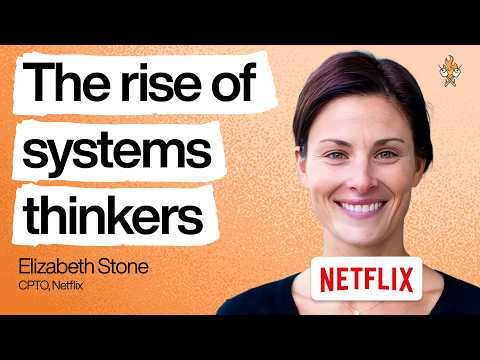
Elizabeth Stone: The Rise of Systems Thinkers
In the AI era, the mindset must shift towards rapid learning and adaptability, favoring systems thinking over narrow specialization. Specialists can more easily broaden their toolsets, suggesting a need for fewer, more versatile individuals. The core idea is to encourage exploration and a willingness to adopt new problem-solving approaches rather than adhering rigidly to past methods.
Elizabeth Stone: AI Fluency Overlay
Netflix addresses AI integration not by redefining specific level expectations, but by applying an 'AI fluency' overlay across all talent. This aspiration varies by function and career stage, encompassing an experimentation mindset, understanding AI's utility, and practical application. The rapid evolution of AI necessitates a flexible approach, encouraging open-minded exploration rather than rigid definitions.
AI's Impact Beyond Coding at Netflix
Beyond coding and prototyping, AI significantly impacts Netflix through data analysis, information distillation, and modeling, enabling higher velocity and quality insights from experiments and consumer research. It also plays a crucial role in content production, from pre-visualization and post-production enhancements (like relighting and reframing) to scaling promotional assets, localization (dubs/subtitles), and creating high-quality trailers and artwork.
Netflix's Early AI/ML Adoption: The Netflix Prize
Netflix has a long history with AI and ML, exemplified by the 'Netflix Prize' contest, which aimed to optimize the ranking algorithm. This early engagement, dating back to machine learning efforts for personalization, provided a significant head start in understanding how to leverage technology for delivering a great member experience, especially in navigating the increasing breadth of content.
Elizabeth Stone: Excellence as an Operating System
Netflix's culture, characterized by high agency, autonomy, talent density, bottom-up thinking, rapid experimentation, and top-market pay, functions as 'excellence as an operating system.' These elements aren't ends in themselves but drivers of excellence, empowering exceptional talent with accountability and trust to make decisions, take risks, and drive outcomes for consumers and the company.
Pillars of Excellence: Talent, Risk, and Selflessness
The pillars of Netflix's 'excellence as an operating system' include non-negotiable talent density, comfort with risk-taking and quick recovery from failures, strong judgment, and a selfless focus on consumer and company outcomes over personal success. This approach encourages individuals to fight for the best business outcomes and learn from decisions, even imperfect ones, fostering a culture of continuous improvement and resilience.
Resisting Process: Embracing Discomfort for Innovation
A key aspect of Netflix's culture is resisting the natural inclination to add process when things are difficult or mistakes occur. Instead of implementing rigid checklists, the focus is on blameless retrospectives where individuals take personal responsibility for learning and improving. This discomfort with standard corporate practices allows for more creative planning, decision-making, and prioritization, ultimately leading to better outcomes and a stronger team.
Elizabeth Stone: The 'Keepers Test' Evolves
The 'keepers test' at Netflix is not just about letting people go, but equally about recognizing and retaining extraordinary talent. It serves as a positive entry point for conversations about performance, strengths, and areas for growth, with the core question being 'Would I fight hard to keep this person?' This dual application ensures high standards and employee recognition.
Future of Entertainment: Beyond Film & TV
Entertainment is rapidly diversifying beyond traditional film and TV, with Netflix expanding into mobile and TV cloud games, live content, and podcasts. This evolution caters to consumer expectations for greater variety across formats and devices, requiring a more personalized, immersive, and interactive experience.
Elizabeth Stone: The Rise of the Systems Thinker
Netflix is actively shifting its hiring strategy in the AI era to prioritize 'systems thinkers'—individuals who can understand complex interdependencies and adapt to evolving challenges—over narrow specialists. This approach is crucial for navigating the rapid advancements and uncertainties of AI development.
Stone's Vacation: A Tour de France Challenge
Elizabeth Stone is training for a personal challenge: riding alongside the Tour de France for its final week. This involves significant physical and mental preparation to comfortably navigate the mountain stages and enjoy the experience as a vacation, not just a race.
Netflix's Call to Action: Engage and Feedback
Stone encourages listeners to actively engage with Netflix's new features, such as live events, games, and the 'Clips' vertical video feed. This direct user interaction is vital for Netflix's 'zero-to-one' efforts, providing essential feedback to refine and improve new offerings rapidly.