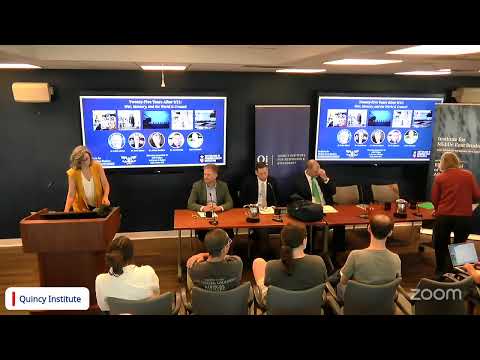
Sultan Ahmed outlines five key dimensions of US policy responses post-9/11: military (Iraq War, AUMF), security (counter-terrorism laws, intelligence sharing), cultural (promoting US media, educational reform), finance (tracking and freezing terrorist funds), and political (promoting democracy in the Arab world). He argues these were often ad hoc and contradictory, focusing on the military and security aspects as having the most lasting legacies.
The Shifting Regional Balance of Power
The toppling of Saddam Hussein created a power vacuum, allowing Iran to expand its influence in Iraq and strengthen its alliances with Hezbollah in Lebanon and Syria. This shift generated significant anxiety among Gulf states, particularly Saudi Arabia, which adopted increasingly interventionist and confrontational policies, leading to regional proxy conflicts.
Ahmed: The Counterproductive 'Global War on Terror'
The 'Global War on Terror' paradoxically led to a proliferation of non-state insurgent actors, increased financial incentives for regimes to maintain these movements for aid, and upgraded authoritarianism through counter-insurgency measures. This created a new bargain where security cooperation granted regimes immunity from demands for democratization.
Kieran on Memory and the Enduring Impact of 9/11
David Kieran reflects on the enduring impact of 9/11, noting that 25 years later, its consequences continue to shape US foreign policy, military institutions, and public memory, as well as life in the Middle East and Central Asia. He emphasizes the need to examine how the event and subsequent wars transformed societies and individual lives.
The Human Cost: Multiple Deployments and Health
The prolonged nature of the wars, marked by multiple deployments and exposure to asymmetric warfare, led to significant physical and mental health challenges for service members. The military grappled with understanding and treating issues like PTSD and TBI, as medical research lagged considerably behind the pace of combat operations.
Israel's Post-9/11 Strategic Pivot
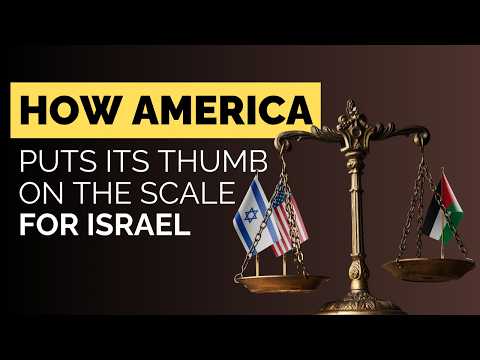
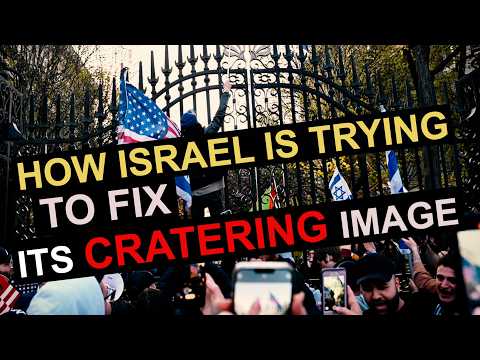
Following 9/11, Israel found a renewed strategic relevance in its relationship with the United States. The attacks provided a 'glue' to solidify bilateral ties, shifting the focus from shared values to a shared fight against terrorism, positioning Israel as a crucial partner in regional intelligence and security efforts.
The Evolving US-Israel Relationship Under Stress
The strategic and special relationship between the US and Israel is currently under significant stress due to major shifts in both countries. These include Israel's judicial overhaul, the war in Gaza, potential conflict with Iran, and significant domestic political changes in the US, eroding the traditional willingness for American 'blood and treasure' investment in the Middle East.
Adam's Critique: The Normalization of Long-Term Occupations
The post-9/11 invasion of Afghanistan normalized the assumption that long-term military occupations are standard US foreign policy. This led to a subtle shift where the burden of proof moved from 'why invade?' to 'why leave?', making withdrawal seem riskier than continued presence, regardless of the distortions created.
The Creation of a War-Dependent Policy Ecosystem
The prolonged wars following 9/11 fostered a self-sustaining policy ecosystem in Washington, comprising new government offices, contractors, NGOs, and think tanks. This ecosystem's existence and funding became dependent on the continuation of specific military missions, potentially hindering objective assessments of their effectiveness or legitimacy.
Democracy Promotion and Stability: An Unfulfilled Promise
A key post-9/11 assumption was that democracy and human rights promotion would automatically lead to political stability. However, this overlooked critical questions about local legitimacy, cultural norms, and the potential for elections to reinforce existing power structures, leading to outcomes like increased chaos in Iraq after Saddam Hussein's fall.
Adam: The Illusion of Afghan Progress
The perception in Washington that the US occupation of Afghanistan led to widespread education and equality for girls was largely a fantasy. While real gains were made for a privileged urban demographic, the majority of Afghans remained illiterate and engaged in manual labor. The laws on the books did not reflect the lived reality for most, and the US departure devastated those who had benefited. This highlights a disconnect between policy goals and ground truth, often driven by an obsession with legal frameworks over actual conditions. The reality was that most Afghans were illiterate, and the focus on legal equality for girls masked the broader illiteracy and rural poverty.
Sultan: The Fluidity of 'Terrorism' as a Political Tool
The term 'terrorism' is highly mobile and fluid, often used as a political tool rather than a fixed definition. While targeting civilians is morally reprehensible, negotiating with groups labeled as terrorists is historically common, as seen with the IRA and PLO. The political and strategic logic dictates engagement, often requiring a rebranding of the adversary for negotiation. Examples like Ahmed al-Shara (HTS leader) working with US envoys, or Israeli negotiations with the PLO, demonstrate that 'terrorism' is a label applied based on political context and strategic incentives, not an inherent quality that precludes dialogue or pragmatic alliances.
Max Lopez: 'Crazy Glue' Bonds and the Quest for Coherence
The term 'crazy glue' aptly describes the shifting, often unglued, bonds between various actors in the post-9/11 era, who are constantly trying to remake coherence out of incoherence. This reflects a broader theme of actors seeking stability or presenting themselves as creators of stability, even when their actions might sow chaos. The Israeli perspective on 9/11, for instance, was partly a 'gift from the gods' that validated their long-held views on confronting perceived threats and leveraging US power, solidifying a cohesive, albeit rhetorically framed, Judeo-Christian alliance against an 'Islamic' other.
Juan: Lessons from Spain's Anti-Terrorism Efforts
Juan shares Spain's experience combating ETA, emphasizing the importance of distinguishing between understanding the causes of terrorism and justifying it. He also highlights the need to foster empathy by recognizing that victims of terrorist attacks, including jihadist ones, are often from the same communities targeted by extremists. This approach, he suggests, can help counter harmful stereotypes and build broader understanding.
Adam: The Pragmatic Calculus of US Military Presence
Adam argues that the question of US military presence in the Middle East should be framed by US national interests, not by the desires of foreign governments or populations. He notes that while some regional actors may publicly call for US withdrawal, they often privately desire the presence as a counterbalance to Iranian influence or to avoid sanctions. Ultimately, he contends, the US military cannot function as an 'armed peace corps' and interventions, even those with humanitarian intentions, often have destabilizing net effects, as evidenced by the rise of groups following the Iraq invasion. The focus must remain on what serves American interests.
Unidentified Speaker 4: The Shifting Role of US Military Infrastructure
This speaker highlights that US military bases in the Gulf predated 9/11, initially established to protect the regional status quo after Iraq's invasion of Kuwait. Following 9/11 and the invasion of Iraq, the US shifted from preserver to disruptor. More recently, these established military infrastructures have become liabilities, used as leverage by Iran against Gulf countries. This dynamic necessitates a rethinking of the US-Iran partnership and the definition of US interests, emphasizing that while countries protect their interests, abrupt withdrawals without accountability, as seen in Afghanistan, are irresponsible.