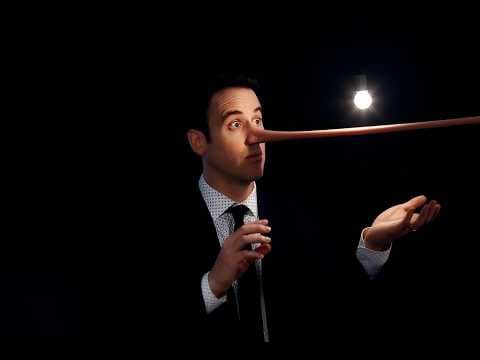
metadeception: the truth about oz pearlman
Darren Brown's Subliminal Messaging
Darren Brown's 'taxidermy ad' trick, presented as a documentary, reveals the power of subliminal messaging and camera editing in creating illusions. The presenter argues that Brown orchestrated the scenario, using an artist to spy on participants and employing an envelope switch to make his prediction seem accurate. This metad deception aims to convince viewers of the power of subliminal influence, rather than the magic trick itself.
The Audience as Accomplice
The strongest lie, as Teller suggests, is the one the audience tells itself. Metadeception thrives when the audience becomes complicit in the illusion, actively constructing their own belief in the impossible. This self-deception, fueled by the performer's skillful manipulation of assumptions, is the ultimate goal, making the audience an unwitting participant in their own deception.
Sleight of Hand: The Page Peel
The analyst details a specific sleight-of-hand move where Pearlman subtly peels back the corner of a page with his left hand to gain a line of sight to the first few words on the opposite page, allowing him to read them without fully opening the book.
The Power of Self-Cancelling Methods
Pearlman utilizes the principle of repeating a trick with different methods. By demonstrating the book trick in two distinct ways (one quick, one more involved), he makes the audience perceive the core feat as impossible, as the weaknesses of each method cancel each other out, leaving only the inexplicable result.
The 'Weather' and 'Tourists' Revelations
Pearlman executes a complex trick involving a participant choosing a word, 'Weather,' and then another, 'Tourists.' The analysis points out how Pearlman uses subtle cues and psychological framing, such as asking about drawing concepts versus objects, to guide the participant and create the illusion of mind-reading, demonstrating his mastery over audience perception.
Deconstructing the Book Trick
Andrew Schultz, acting as the skeptic, attempts to deconstruct Oz Pearlman's book trick, questioning the availability of the books and whether Pearlman had prior access. Schultz's persistent questioning highlights the 'taboo' of breaking down a magic trick and forces Pearlman into a corner, revealing layers of meta-commentary and potential deception within the performance itself.
The 'Metadaptive' Performer
Oz Pearlman distinguishes his mentalism from traditional magic by emphasizing that he, not props, is the performance. This 'metadaptive' layer means the audience cannot rely on literal interpretations, positioning the performer's skill as the core of the illusion.
Dual Reality: Pre-Show vs. Live Illusion
Pearlman employs a 'dual reality' effect, often by performing incomplete tricks pre-show and then referencing them during the live performance. This creates the illusion of spontaneous insight, while in reality, the audience is recalling a pre-arranged scenario, making them complicit in the deception without realizing it.
Oz's Dominance and Control
Oz Pearlman exhibits a remarkable level of dominance and control over the situations he creates. The presenter observes that Oz can 'grease the wheels' or simply use bravado to ensure compliance. Even when participants question or try to clarify, Oz quickly shuts them down to maintain the illusion. This control extends to editing the footage, further shaping the narrative and obscuring his methods.
The Phone Contact Trick: Masterful Sleight-of-Hand
The presenter details how Oz performs a phone contact trick, emphasizing it's not reliant on pre-show work but rather 'verbal misdirection and slide of hand.' Oz gets the participant's phone, subtly glances at contacts, and then 'forces' a choice by turning the screen off. This prevents further scrolling, locking in the memorized contact. The presenter notes Oz's masterful ability to dominate the context and execute these subtle moves.
The Power of 'Failure' in Mentalism
Oz Pearlman argues that apparent mistakes or 'failures' in mentalism are not flaws but deliberate tools for meta-deception. Unlike magic tricks that must work perfectly, mentalism can incorporate errors to convince the audience that it's not a trick, thereby increasing its perceived authenticity. This strategy makes the successful predictions even more impactful.
Sleight of Hand and Paper Tricks
Beyond psychological tactics, Oz Pearlman also employs classic sleight of hand, such as the paper-ripping trick. This involves precise folding, tearing, and misdirection to create the illusion that a written name has vanished and reappeared. The 'hard eye contact' tactic is used to distract the audience while the manipulation occurs, making the reveal seem impossible.
Dual Reality and the 'Random' Contact
Oz uses dual reality by having Sarah believe she's randomly picking a contact, while he already knows it due to pre-show work. His language, like 'random person of the day,' is designed to mean one thing to the audience and another to the participant, further layering the deception.
The Phone Number and Serial Number Connection
Oz connects a chosen phone number to the serial number on a dollar bill, a trick likely involving a deck switch and pre-arranged contacts. The analyst suggests Oz ensures the chosen contact's initials match the bill's serial number prefix.
The Gimmicked Notepad and Justification
Alex uses a gimmick notepad to write down a page number, which Oz later uses. The analyst explains that Oz needs to justify this prop conspicuously, asking Alex to write the page number to create an 'innocent' reason for its use, masking its true purpose.
Andrew: The Notepad's Deceptive Power
Oz Pearlman's primary gimmick, the notepad, is used to gather information under the guise of a normal activity, creating a false sense of security and allowing him to 'predict' outcomes that were secretly fed to him. This method is particularly effective because writing in a notepad doesn't appear to be a magic trick.
Taylor: The Dog's Name Reveal
Taylor, a participant, intentionally reveals the dog's name, 'Flower,' written on a piece of paper, directly contradicting Pearlman's attempts to hide any pre-show setup and shattering the illusion of spontaneous mind-reading. This act exposes the reliance on hidden information.
The Notebook's Limitation and Inject's Solution
Oz Pearlman's traditional notebook method for mentalism is limited by the need for physical proximity to the spectator. The 'Inject' app, particularly its earlier versions, was designed to overcome this by allowing magicians to spy on spectator searches through fake Google pages, even when the spectator is far away. This technological leap enables remote information gathering, expanding the scope of mentalist tricks.
The Power of Meta-Deception and Audience Resistance
The video argues that the true power of mentalism lies in 'meta-deception,' where audiences are resistant to the truth even when evidence of trickery is presented. Participants like Will, despite witnessing the mechanics, often remain captivated by the perceived extraordinary skill, creating a 'dual reality' where they prefer the mystery over the explanation. This psychological phenomenon makes mentalism highly effective, as people's minds actively protect their beliefs.
Gimmicked Decks: The Card Trick Illusion
The video explains that Oz Pearlman's card tricks often rely on gimmicked decks, where the magician doesn't touch the cards after shuffling. This allows him to appear to divine a chosen card without resorting to traditional sleight of hand, making the trick seem more powerful and inexplicable.
The 'Chalkboard' Gimmick: A High-Tech Deception
Oz Pearlman utilizes an expensive, gimmicked chalkboard connected to an assistant's device to reveal chosen words. This allows for a seemingly instantaneous revelation, but the presenter notes its limitations and the need for sparse use to maintain the illusion of mentalism.
Thumb Pen Deception: The 'False Start' Technique
The presenter details Oz Pearlman's use of a thumb pen gimmick, often employed after a 'false start' where an initial prediction is made and then crossed out. This allows him to secretly write the correct answer after the participant reveals their choice, creating the illusion of knowing it beforehand.
Meta-Deception and TED Talk Authenticity
The video critiques Oz Pearlman's use of 'meta-deception,' including camera edits and misdirection, even in contexts like TED talks where truth and ideas are supposedly paramount. The presenter argues that Pearlman's claims of not using gimmicks are part of his performance strategy, designed to enhance his notoriety.
The 'Grass is Greener' Technique: A Two-Choice Illusion
Oz Pearlman frequently employs the 'grass is greener' technique, where a participant is led to believe they are choosing from many options, but are actually being funneled into selecting one of two pre-determined choices. This is often revealed through subtle cues like asking if they are 'on the fence' or observing eye movements, allowing Oz to guess correctly by having a backup for either outcome.
Oz's Performance Prowess
Beyond the specific tricks, Oz Pearlman's talent lies in his exceptional speaking ability, which is on par with his magic and misdirection skills. He executes his deceptions with such confidence and flair that even when the methods are exposed, the performance itself remains impressive and highly entertaining.
Brett's Trick: Bone Conduction and Camera Jumps
In the trick involving Brett, Oz Pearlman appears to use a bone conduction device to secretly communicate instructions. The analysis points to a significant camera edit and a change in Brett's demeanor (from neutral to a wide grin) after Oz makes a specific movement, suggesting the gimmick was used and then hidden by a jump in the footage. The device vibrates against the skull, allowing the participant to 'hear' the information.
The Calculator App Exploit
Oz Pearlman leverages a specific 'glitch' or feature in the iPhone calculator app, where pressing '+ 0 * 0' and then turning the phone sideways allows any subsequent calculations to always return to the original number, effectively creating a mind-bending reveal.
Ordering the Deck Under Misdirection
While participants are focused on calculator calculations, Oz Pearlman performs a series of 'false shuffles' to order the deck so that the top cards match the serial number he previously obtained, all while making it appear as though the deck is being genuinely mixed.
The Pre-Show 'Soft Stooge' Tactic
Oz Pearlman employs a 'pre-show' tactic, meeting participants beforehand to subtly extract information like birthdays or PINs under the guise of a game or practice, which he then uses later in the main performance, creating a 'dual reality' illusion.
The Economics of Spying on Joe Rogan
Oz Pearlman's alleged use of a private investigator to obtain Joe Rogan's PIN code, while seemingly expensive at $20,000, is economically justifiable when considering the immense value of a viral moment. Companies pay tens of thousands for ad reads that people skip, making a viral clip potentially worth hundreds of thousands, if not more, thus justifying the investment in obtaining such a moment.
Mixed Methods: The Globe Trick vs. Direct Questions
Oz Pearlman employs mixed methods, contrasting direct, detailed questions with more abstract prompts like spinning a globe. The globe prompt, which leads to Bri choosing 'Amsterdam,' is a psychological trigger, recalling a pre-show conversation about favorite destinations, rather than a free choice made in the moment, unlike the earlier, more detailed question-and-answer segments.
The 'Pre-Show' Method: Forcing Choices with Cards
When Oz Pearlman needs to force a specific choice, such as a company name or a word, he utilizes a deck of cards. By writing potential choices on these cards, he can subtly manipulate the selection process, making it appear as a random choice when, in reality, the outcome has been predetermined through card control techniques honed over years of practice.
Audience Synchronization: The Will Smith & Oprah Effect
The video examines Oz Pearlman's ability to have entire audiences seemingly choose the same person, like Will Smith or Oprah Winfrey. While some suggest a simple instruction to the crowd, the analyst argues this would diminish the audience's genuine amazement. Instead, a more sophisticated method involving a gimmicked notepad is proposed, where the notepad's design subtly forces a choice, preserving the illusion of spontaneity and genuine surprise for the participants. This technique aims to create a shared, astonishing experience.
Oz Pearlman's Book: The 'Guessing' Dilemma
Oz Pearlman's book promotion creates a dilemma by framing his skills as 'guessing' to maintain the mystique of mentalism, yet simultaneously claiming these skills are useful for everyday life, such as asking for a raise or discerning lies. This creates a potential misrepresentation because the 'guessing' involved in his performances often relies on methods like impression pads or fake searches, not genuine mind-reading or cold reading.
FTC Deception Standards: The Objective Test
The video explains that under FTC guidelines, deception is judged by an objective test: whether a representation is likely to mislead a reasonable consumer, regardless of the seller's intent or the consumer's actual belief. This standard is applied to Pearlman's marketing, suggesting that even if he doesn't intend to deceive, the way he presents his skills could lead a reasonable person to believe they are learning practical applications of mentalism, rather than just performance tricks.