Gil Durán: The 'Nerd Reich' and Silicon Valley's Fascist Turn
Gil Durán argues that a faction within Silicon Valley, which he dubs the 'Nerd Reich,' has moved from libertarian ideals to embracing fascism. This shift is fueled by a belief that technology should overthrow democracy and that wealthy technologists should rule. The term 'Nerd Reich' itself, originating from within the crypto community, highlights the perceived extremist nature of these ideologies. This transformation is evident in their increasing alignment with and funding of figures like Donald Trump, a stark contrast to their opposition during the first Trump administration. The core of their ideology, Durán contends, is not anti-government but a desire to control the government, revealing their true authoritarian and fascist leanings now that they are gaining political power. The final sentence concludes that this ideological evolution poses a direct threat to democratic governance.
Peter Thiel: The Architect of 'Tech Fascism' and 'The Sovereign Individual'
Peter Thiel, a long-time right-wing ideologue, is presented as a central figure in the development of 'tech fascism.' His ideology is deeply rooted in the book 'The Sovereign Individual,' which predicted technology's overthrow of democracy through cybercurrency and automation. Thiel's venture, PayPal, was an early attempt to capitalize on these ideas, making him a billionaire. He has since used his wealth to cultivate a 'cult of right-wing ideas' in Silicon Valley, influencing figures like JD Vance. Durán argues that Thiel and his associates were never true libertarians but rather authoritarians who sought control, and now that they are gaining power, their fascist and authoritarian nature is revealed. This ideological foundation underpins their current political ambitions and influence. The final sentence emphasizes that Thiel's influence is a driving force behind the anti-democratic movement in tech.
The 'Freedom City' Project and Global Authoritarian Ambitions
Tech billionaires are not only influencing U.S. politics but also pursuing global authoritarian projects, such as 'Prospera' in Honduras and similar initiatives in Kazakhstan. These 'freedom cities' or 'network states' are designed as independent territories where billionaires can make their own rules, offering escape routes from the prophesied collapse of democratic nations. Donald Trump has also promised to build 10 'freedom cities' on federal land in the U.S. as part of his platform. Durán explains that these concepts stem from radical Silicon Valley network state ideas, allowing corporations to build private cities and bypass democratic governance. This pursuit of autonomous zones reflects a desire for control and an escape from accountability, demonstrating a global ambition to reshape governance in their favor. The final sentence highlights that these 'freedom cities' are a direct manifestation of the network state ideology.
Gaza's hospitals are overwhelmed and deliberately targeted by the Israeli military, leading to a severe healthcare crisis. This has resulted in the deaths of thousands of Palestinians, including many healthcare workers, and has prevented urgent medical evacuations. The lack of basic medical supplies and the destruction of infrastructure make treating even minor injuries a life-threatening ordeal.
Dr. Sidwa: Bearing Witness and US Complicity
As an American citizen with no ethnic ties to the region, Dr. Sidwa felt compelled to volunteer in Gaza due to the United States' significant involvement in arming and funding the conflict. He aimed to provide medical care while also 'bearing witness' to the events, believing that informing Americans about the reality on the ground is crucial to changing US policy and ending the violence.
Dr. Sidwa: A Patient's Tragic Death Amidst Chaos
A young woman, a mother of three, died from severe injuries due to shrapnel because Gaza lacked the necessary medical resources, such as blood products and sterile environments, to treat her. This highlights how treatable conditions become fatal in Gaza due to the collapse of the healthcare system and the scarcity of basic medical supplies, a stark contrast to care available in Western countries.
Jeremy Corbyn argues that Prime Minister Andy Burnham's apology for the Labour Party's initial stance on Gaza is insufficient, as it merely acknowledges past errors without committing to concrete policy changes. He emphasizes that continued arms sales to Israel, including components for F-35 jets, and support for companies operating in settlements, contradict any genuine shift in policy. Corbyn insists that a true change would involve ceasing all arms trade with Israel and imposing meaningful sanctions, not just on settlers but on companies involved in the conflict.
Neve Gordon explains that the criminalization of Palestine Action activists, who engage in direct action to halt arms transfers to Israel, is a severe overreach. By labeling them terrorists and imposing harsh sentences for acts like graffiti, the government suppresses legitimate protest. Gordon points out that defense lawyers, like Rajie Menan KC, are prevented from presenting the activists' motivations in court, effectively denying them a fair trial. This suppression, she argues, is part of a broader pattern of silencing dissent against UK complicity in what she terms 'genocide'.
Dr. Rose: Devastating Impact on Gaza's Children
Dr. Victoria Rose, a plastic surgeon who has undertaken multiple humanitarian missions in Gaza, shares harrowing accounts of operating on severely injured children. She describes treating infants with extensive burns and children who have lost limbs, conditions that in the UK would require highly specialized care and have uncertain survival rates. The testimony includes operating on a five-year-old girl who lost an arm, her sister who suffered severe facial and shoulder injuries, and others with blown-off knees and ankles, painting a grim picture of the daily reality for Gaza's youngest victims.
President Trump has criticized museums and educational curricula for focusing too much on the negative aspects of US history, such as slavery and racism, and not enough on national success and the future. He advocates for a 'fair' and 'accurate' representation, contrasting with what he calls a 'woke' or 'racist' approach.
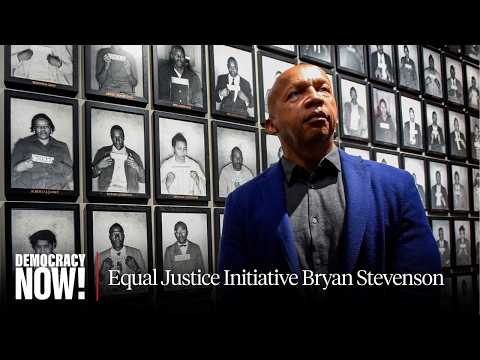
Stevenson: The Global Scope of Slavery
Bryan Stevenson emphasizes that the institution of slavery was a global enterprise, with European powers primarily responsible for trafficking millions of Africans across the Atlantic. He argues that Europe has not sufficiently acknowledged its role in this history, which created an unprecedented legacy of suffering and injustice that continues to impact the Americas.
Stevenson's Personal Identity and American History
Bryan Stevenson reflects on his own American identity, noting that his ancestors came to the US in chains, not seeking opportunity, and were subjected to generations of enslavement, betrayal after emancipation, and systemic racism. He contrasts this with the narrative of American exceptionalism, finding his identity through the resilience and commitment to justice shown by formerly enslaved people and civil rights activists.
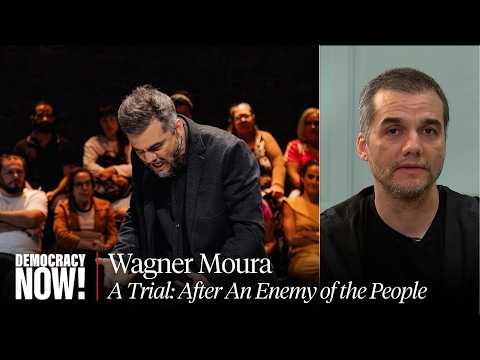
Wagner Moura explains that his current play, 'A Trial — after An Enemy of the People,' is not a direct staging of Ibsen's original work but a modern sequel focusing on the aftermath for Thomas Stockman. The play brings the audience into the courtroom to decide Stockman's fate, reflecting contemporary issues of public judgment and authoritarianism, particularly relevant in Brazil.
Moura on Bolsonaro and Dictatorship's Scars
Moura draws a direct line from Brazil's military dictatorship (1964-1985) to the rise of figures like Jair Bolsonaro, arguing that the amnesty law, which forgave past torturers and killers, allowed such figures to emerge. He believes Brazil's collective memory of the dictatorship's horrors made its institutions act swiftly against Bolsonaro's coup attempt, unlike in the US.
Moura on 'Elite Squad' and Police Brutality
Moura contrasts the criticism of 'Marighella' for depicting revolutionary violence with the embrace of 'Elite Squad,' a film about police brutality, by the right. He argues that Brazilian police historically protect the state and its interests, often targeting marginalized communities, a legacy deeply connected to the dictatorship's authoritarianism.
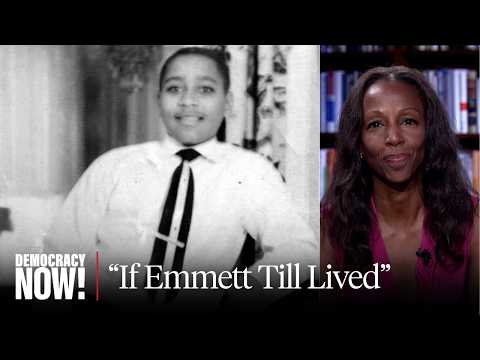
The exhibition 'If Emmett Till Lived' and its companion book aim to reckon with the past by imagining the decades Emmett Till was denied, using art and photography to explore his humanity and the ongoing work needed for American democracy. This approach moves beyond the tragedy to consider what could have been and what it signifies about present-day challenges.
Sarah Lewis: The Resistance to Honoring Emmett Till
Despite the historical significance of Emmett Till's murder, resistance to honoring his memory persists, as evidenced by the repeated vandalism of the bulletproof marker at the Talahatchee River site. This ongoing defacement underscores the urgent need for bravery and new ways to confront and understand American history.
Sarah Lewis: The Emblematic Cover Photograph
The cover photograph by Stephen Mark, depicting a father tossing his child in the air, serves as an emblem for the 'If Emmett Till Lived' project. It prompts reflection on Till's potential as both the child ascending in joy and the father figure, symbolizing the life denied and the work needed to 'straighten our ground' for all Americans.