David J. Malan introduces the purpose of the video series: to address the common question of what math is needed for introductory computer science and to assure those who don't consider themselves 'math people' that they can still succeed in programming. This behind-the-scenes look aims to provide a sneak peek into the creation of a new course on math fundamentals for CS, featuring Tom Crawford. The final, post-produced version will be the definitive educational resource, but this offers an early look at the process and content. The goal is to cover just enough math to enable students to dive into fields like computer science, programming, and AI. This initial segment sets the stage for the educational content to follow.
Crawford: Numbers - A Deep Dive
Tom Crawford outlines the scope of the 'Numbers' module, promising a comprehensive exploration beyond basic counting. He details the progression from familiar counting numbers (natural numbers) to integers, rationals (fractions), and irrationals, culminating in the real numbers. The discussion will also cover decimal expansions, fraction properties, significant digits, and conversions between decimals and fractions. He teases the introduction of less common number types like algebraic, transcendental, and computable numbers, emphasizing that there's 'a lot more to it than you might think.' This sets the expectation for a thorough and perhaps surprising look at numerical concepts.
Crawford: Defining Number Sets
Tom Crawford meticulously defines the foundational number sets. He starts with the natural numbers (counting numbers, including zero by his definition, denoted by 'N'). He then introduces integers ('Z' or 'z') by adding negative counterparts to the natural numbers. Next, he defines rational numbers ('Q') as fractions formed by integers (numerator and denominator), emphasizing that the denominator cannot be zero. He illustrates these with examples like 1/2, -3/2, and 22/7, explaining the relationship where integers can be represented as rationals by dividing by one. This establishes a hierarchy and interconnectedness between these sets.
David J. Malan: The Shift to Web Development with Flask
This lecture marks a significant transition in CS50, moving from foundational programming concepts to building complete web applications. The focus is on synthesizing previous knowledge to create dynamic web experiences using Python and Flask, a micro-framework designed to simplify server-side development. This approach allows students to build projects that mirror real-world web applications.
From Static Files to Dynamic Routes
Previously, web servers primarily served static files directly referenced by URLs. Now, with Flask, URLs are treated as routes that can be analyzed to trigger specific server-side logic. This allows for dynamic content generation based on URL parameters, moving beyond simple file serving to interactive applications.
Separating Logic with Templates
Hardcoding HTML directly within Python strings is inefficient. Flask's `render_template` function, combined with a `templates` directory, allows developers to keep HTML files separate from Python logic. This separation improves code organization and maintainability, enabling cleaner development workflows.
David J. Malan introduces SQL as a declarative programming language, contrasting it with procedural languages like C and Python. He emphasizes that SQL allows users to declare what problem they want to solve or what question they have, and the language itself figures out how to retrieve the answer, making it potentially easier for certain tasks.
Malan: Practical Data Handling with CSV
David J. Malan demonstrates how to collect real-world data using Google Forms and export it as a CSV file. He explains that CSV (Comma Separated Values) is a common, flat-file format that stores tabular data, making it easy to download and load into code for analysis. This practical example underscores the importance of data accessibility in programming.
Malan: Python's CSV Reader and DictReader
David J. Malan walks through writing a Python script to read a CSV file, initially using `csv.reader` which treats each row as a list. He then introduces `csv.DictReader`, explaining its advantage in using column headers as dictionary keys, making the code more robust and readable by avoiding fragile index-based access.
The Internet's Foundation: From ARPANET to Global Connectivity
The internet, originating from the ARPANET project in 1969, is fundamentally an interconnection of networks designed to facilitate communication and data access across geographically dispersed locations. This evolution has led to a complex global infrastructure of routers and devices that enable data to travel via packets through various paths.
TCP/IP: The Language of the Internet
All devices on the internet communicate using the TCP/IP protocol suite. IP (Internet Protocol) assigns unique numerical addresses (IP addresses) to devices, enabling them to be located and routed to. TCP (Transmission Control Protocol) ensures reliable data delivery by managing packet sequencing, error checking, and retransmission, and it uses port numbers to distinguish between different services running on the same device.
DNS and DHCP: Navigating and Configuring the Network
The Domain Name System (DNS) acts as the internet's phonebook, translating human-friendly domain names (like google.com) into their corresponding IP addresses. Dynamic Host Configuration Protocol (DHCP) automates the process of assigning IP addresses and network configuration details to devices when they connect to a network, simplifying connectivity for users.
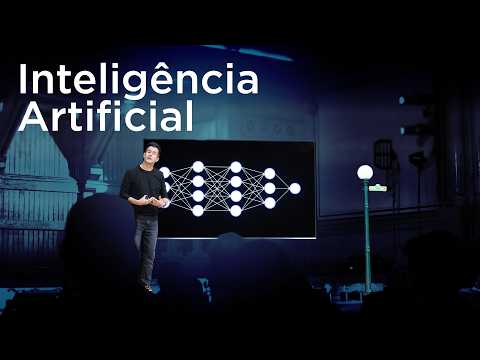
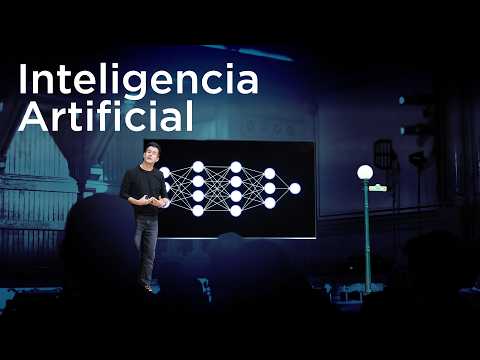
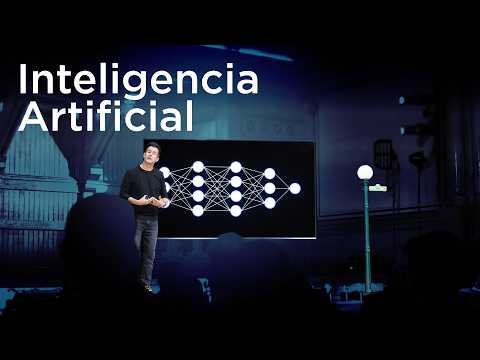
The CS50 'duck' assistant has evolved from a simple rubber duck for debugging to an AI-powered chatbot, mirroring the advancements in AI like ChatGPT, demonstrating AI's growing role in education. Initially, it responded with quacks, but now it provides guidance, reflecting the pedagogical approach of assisting rather than directly solving problems.
Prompt Engineering: The Art of Asking
Effective interaction with AI, particularly generative AI, relies on 'prompt engineering,' which involves crafting precise and contextual questions. This includes 'system prompts' to define the AI's persona and behavior, and 'user prompts' for specific queries. The CS50 'duck' utilizes these principles to maintain its role as an educational assistant.
AI as a Programming Accelerator
AI tools like GitHub Copilot can significantly accelerate the coding process by suggesting code snippets and even entire functions based on context and comments. While not replacing the need for fundamental understanding, AI amplifies a programmer's capabilities, automating tedious tasks and allowing focus on higher-level problem-solving.
Web development, encompassing both front-end (HTML, JavaScript) and back-end (server-side logic), is crucial for modern applications, and this class synthesizes previous concepts to build full-stack applications.
From Static Files to Dynamic Routes
Unlike previous methods of serving static files via HTTP-server, Flask allows for dynamic routing where URLs are interpreted as commands to execute specific server-side logic, not just fetch files.
Introducing Flask: The Microframework
Flask is a Python microframework that simplifies web development by providing pre-built solutions for common tasks like handling HTTP requests and parsing URLs, allowing developers to focus on application-specific logic.
The internet, evolving from ARPANET, is a global network of interconnected computers and devices. It functions through protocols like TCP/IP, which manage data transmission, addressing (IP), and reliable delivery (TCP), enabling communication across vast distances.
IP and TCP: The Internet's Language
IP (Internet Protocol) assigns unique addresses to devices, enabling routing, while TCP (Transmission Control Protocol) ensures reliable data delivery by breaking messages into packets, managing their order, and handling retransmissions. This duo forms the backbone of internet communication.
DNS: The Internet's Phonebook
The Domain Name System (DNS) acts as the internet's phonebook, translating human-friendly domain names (like google.com) into machine-readable IP addresses. This service is hierarchical and distributed, making navigation significantly easier for users.
David J. Malan emphasizes that the true measure of success in CS50 is not relative to classmates but personal progress from the start of the course to the end. He reassures students that feeling overwhelmed is normal and that improvement is the ultimate goal, even referencing his own initial struggles with the 'hello world' program.
Presley: Audience Programming a Stick Figure
In a role reversal, student volunteer Presley attempts to draw a stick figure based on verbal instructions from the audience. This exercise further illustrates the challenges of precise, step-by-step communication, with the audience providing a mix of abstract ('draw a circle') and detailed commands, leading to a somewhat abstract final drawing.
Team Salsa's Game Show Challenge
The 'Team Salsa' participants engaged in a fast-paced review game, attempting to guess programming terms acted out by Leah within a 60-second time limit. They scored 5 points, setting a benchmark for subsequent teams.
Algorithms are fundamental step-by-step instructions used to solve problems, such as organizing information (sorting) or finding specific data (searching). These concepts, while abstract, translate directly into practical computer operations.
Malan: Visualizing Memory and Arrays
Computer memory is conceptualized as a series of contiguous blocks (arrays), each addressable by an index. Unlike human perception, a computer accesses data sequentially, one location at a time, necessitating algorithms that account for this limitation.
Malan & Caitlyn Cao: Binary Search Demonstration
Caitlyn Cao uses binary search on pre-sorted 'doors' to find the $50 bill. By checking the middle, then narrowing the search to the left or right half, she finds the item much faster than linear search, showcasing the power of 'divide and conquer' on sorted data.
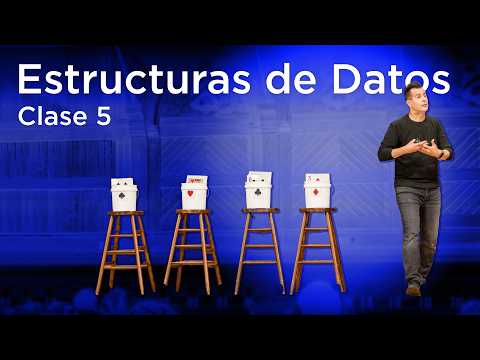
Stacks operate on a Last-In, First-Out (LIFO) principle, like Jack's messy closet, while queues follow a First-In, First-Out (FIFO) principle, akin to a waiting line. Both are abstract data types, focusing on functionality over specific implementation details.
Dictionaries: Key-Value Pairs
Dictionaries, or key-value stores, are abstract data types that associate unique keys with corresponding values, analogous to a word-definition dictionary or a phone book. This structure is fundamental for mapping data efficiently.
Memory Allocation and Reallocation in C
Dynamic memory allocation in C, using `malloc` and `realloc`, allows programs to request memory as needed, overcoming the fixed-size limitations of static arrays. This process requires careful management, including checking for null return values and freeing memory when it's no longer needed to prevent leaks and segmentation faults. The instructor demonstrates how to copy data from an old memory block to a new, larger one when reallocating.
SQL, or Structured Query Language, is introduced as a declarative programming language, distinct from procedural languages like C and Python. This means SQL focuses on *what* problem to solve or *what* question to ask, leaving the 'how' to the language's underlying implementation, unlike procedural languages where developers must explicitly define step-by-step instructions.
Data Collection and CSV Export
The process of collecting real-world data is demonstrated using Google Forms, followed by exporting the raw data into a Comma Separated Values (CSV) file. This CSV file, a plain text database, serves as the input for subsequent programming tasks, highlighting the ease of accessing tabular data for analysis.
Reading CSV Files with Python's CSV Library
Python's built-in `csv` library is utilized to read the downloaded CSV file. The code iterates through each row, demonstrating how to access specific columns using either numerical indices (with a standard reader) or dictionary keys (with a dictionary reader), the latter being more robust against changes in column order.
David J. Malan explains that Python is a high-level language, which means its syntax is significantly simplified compared to C. This simplification is evident in basic tasks like printing 'Hello, World!', where Python requires a single line of code without includes, main functions, or explicit semicolons, making it more human-readable and easier to write.
Malan: Implementing Spell Checker in Python
David J. Malan demonstrates the implementation of a spell checker, a problem previously tackled in C, using Python. He highlights how Python's built-in data structures, like sets, and its simplified syntax for defining functions and handling file I/O, drastically reduce the amount of code required, making the development process significantly faster and easier.
Malan: Python vs. C Execution
David J. Malan contrasts the execution of C and Python. While C is compiled into machine code for faster execution, Python is typically interpreted, meaning the code is read and executed line by line by an interpreter. This interpretation process introduces overhead, making Python code generally run slower than equivalent C code, as demonstrated with the spell checker problem.
CS50 has integrated a virtual rubber duck into its programming environment, which initially responded with quacks but now uses AI to guide students, acting as a less direct version of tools like ChatGPT to help them solve problems without giving away answers.
Human vs. AI: A Turing Test
The video challenges the audience to distinguish between AI-generated content and human-created content through interactive polls, showcasing how AI has become sophisticated enough to create realistic images and text that are difficult to discern from reality.
Prompt Engineering: The Art of Asking
Effective AI interaction relies on 'prompt engineering,' which involves crafting detailed and contextual instructions (system prompts and user prompts) to guide AI models toward desired outputs, influencing their personality and domain specificity.
David J. Malan introduces SQL as a declarative programming language, contrasting it with procedural languages like C and Python. He explains that declarative languages focus on specifying *what* problem needs to be solved or *what* question needs to be answered, leaving the 'how' to the language's underlying implementation, which often involves loops and conditionals.
Malan: From Google Forms to CSV Data
David J. Malan demonstrates how to collect data using Google Forms and then export it as a CSV (Comma Separated Values) file. He emphasizes that CSV is a common, plain-text format for tabular data, making it easy to download and load into code for further analysis, highlighting its utility for raw data access.
Malan: Enhancing Robustness with `csv.DictReader`
David J. Malan introduces `csv.DictReader` as a more robust alternative to `csv.reader`. By treating each row as a dictionary, `DictReader` allows access to data using column headers (e.g., `row['language']`) instead of numerical indices. This makes the code resilient to changes in column order within the CSV file.
The CS50 virtual rubber duck, initially designed to help students debug by simply quacking, has evolved into an AI-powered assistant. This transformation reflects the broader integration of AI into educational tools, moving from basic interaction to sophisticated conversational support.
Prompt Engineering: The Art of Asking AI
Effective interaction with AI, particularly generative models, relies on 'prompt engineering' – the skill of crafting detailed and contextual instructions (prompts) to guide the AI towards desired outputs. This involves both system prompts (setting AI personality/domain) and user prompts (specific queries).
AI as a Programming Co-Pilot
Tools like GitHub Copilot, integrated into development environments like VS Code, can significantly augment a programmer's productivity by suggesting code completions, entire functions, and even solutions to problems, thereby reducing development time and tedium.
Data travels across the internet in 'packets,' akin to envelopes, routed by devices called routers. These packets contain source and destination IP addresses, and potentially port numbers and sequence numbers, all governed by protocols like TCP/IP to ensure unique addressing and reliable delivery.
Malan on DNS and DHCP: Making the Internet Human-Friendly
DNS (Domain Name System) translates human-readable domain names (like google.com) into IP addresses, while DHCP (Dynamic Host Configuration Protocol) automatically assigns IP addresses and network configurations to devices, simplifying internet access and management.
Malan Introduces Web Fundamentals: HTML, CSS, JavaScript
The video transitions to web development, introducing HTML for structuring web pages, CSS for styling them, and JavaScript as the programming language for adding interactivity, forming the core building blocks for modern web applications.
Web development involves complex server-side logic, but frameworks like Flask abstract away much of this complexity, allowing developers to focus on application-specific features rather than reinventing basic web server functionalities. This approach streamlines the creation of dynamic web applications.
Separating Logic with Templates
Instead of embedding HTML directly in Python strings, Flask utilizes `render_template` to serve HTML files from a 'templates' directory. This separation of concerns keeps Python logic distinct from HTML presentation, improving code organization and maintainability.
Handling User Input with `request.args`
Flask's `request.args` object allows access to URL parameters (e.g., `?name=David`). This data can be retrieved and used within Python functions to dynamically generate personalized responses, such as greeting a user by name.
David J. Malan emphasizes that the true measure of success in CS50 is not comparison with peers, but the individual growth achieved from the start of the course to its end. This 'delta' is the educational core, reflected in final projects and grades, highlighting personal progress over relative standing.
Malan: The CS50 Trajectory
David J. Malan recaps the course's progression from Scratch to C, Python, and web development, emphasizing how foundational concepts like algorithms and data structures are built upon. He notes that modern languages abstract away complexities like memory management, allowing programmers to focus on higher-level problem-solving, and highlights the increasing importance of AI.
CS50 Charades: A Fun Knowledge Check
To test retention, six volunteers participated in 'CS50 Charades,' acting out CS50-related terms within a 60-second time limit. This game, divided into two teams, served as a lighthearted yet effective way to review course material before the final showcase.