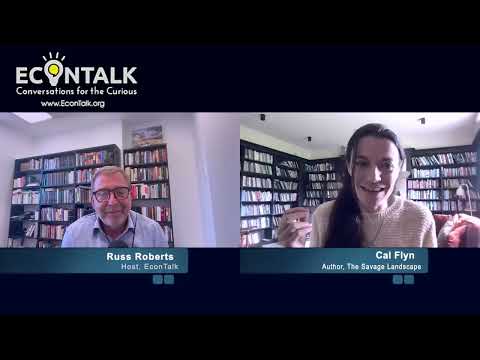
The very concept of 'pristine' wilderness is a modern construct, as historically, even the most remote landscapes were shaped by human presence, whether through indigenous stewardship, spiritual practices, or resource use. Flyn argues that this myth of untouched nature is problematic and that acknowledging human influence is key to understanding wilderness.
Cal Flyn: Embracing Discomfort for Growth
Flyn posits that true engagement with wilderness, and indeed with life, often involves confronting discomfort, fear, and intellectual challenges. This process of pushing boundaries, even when physically or psychologically taxing, is essential for personal growth and a deeper understanding of oneself and the world.
Wilderness as a Spiritual Quest
Historically, humans have sought wilderness for spiritual enlightenment and transcendence, viewing it as a place to commune with the divine or gain profound insights. Flyn explores this through examples like Mount Sinai, where the search for epiphany is complicated by its status as a tourist site, highlighting the paradox of seeking solitude in crowded, sacred spaces.
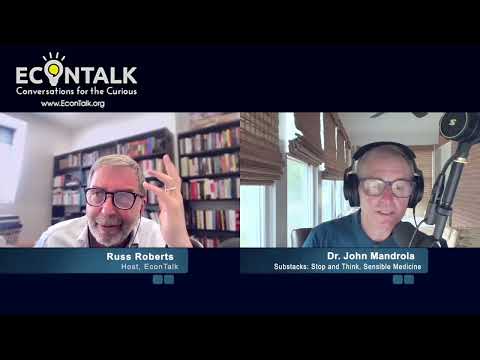
Many patients experiencing chronic knee pain, often diagnosed with meniscus tears, are recommended for arthroscopic surgery. However, a significant study revealed that patients undergoing sham surgery (a real incision but no actual repair) experienced outcomes identical to those receiving the actual surgical procedure, questioning the efficacy of the intervention itself.
John Mandrola: Surgery's Downstream Risks
Beyond the lack of efficacy, surgical procedures carry inherent risks like infection, bleeding, and anesthesia complications. In cases where surgery offers no benefit over placebo, these risks become unacceptable, and the procedure may even lead to downstream problems, such as requiring more invasive interventions like knee replacement.
The Power of Expectation: Placebo and Nocebo Effects
The placebo effect, where expectation of improvement leads to healing, and its opposite, the nocebo effect, where expectation of harm causes illness, are powerful forces in medicine. Studies on statins, for instance, show that reported side effects largely disappear when patients are unaware they are taking the drug, demonstrating the profound impact of psychological factors on physical health.
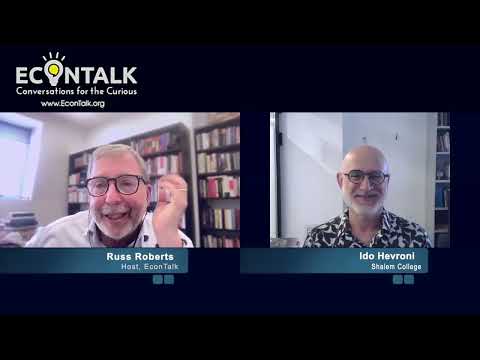
Ido Hevroni argues that the Iliad, despite its age and focus on war, remains profoundly relevant today because it delves into fundamental aspects of the human condition, such as ego, pride, and the search for meaning, making it a foundational text for understanding Western culture and ourselves.
Roberts & Hevroni: War as a Crucible for Understanding Humanity
Both Roberts and Hevroni agree that war, as depicted in the Iliad, acts as a crucible, forcing an examination of fundamental human values and conditions. They argue that literature, by exploring these extreme scenarios, offers a unique laboratory for understanding the human spirit in ways that direct experience or other media cannot.
Hevroni: The Gods as Psychological Powers
Ido Hevroni explains that the gods in the Iliad are not omnipotent creators but rather represent powerful psychological forces or archetypes that influence human actions. Their conflicts and motivations, though seemingly petty, mirror and amplify the struggles of mortals, offering a complex, polytheistic worldview.
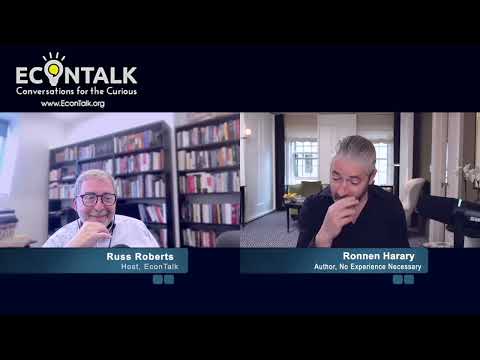
The common perception of risk in starting a business is flawed because it overemphasizes the downside and fails to account for the boundless potential of the upside. By not taking a chance, individuals risk wasting their most precious asset: time. This perspective encourages young people to consider the long-term value of their endeavors, framing entrepreneurship not just as a financial gamble, but as an investment in one's life screenplay.
The Unlikely Genesis of 'Earth Buddy'
The 'Earth Buddy,' a novelty toy made of nylon, sawdust, and grass seed that grows hair, was born from a newspaper article about a product popular in Israel. Harary, then 23, saw a market opportunity in North America due to the product's low penetration there. Despite its unconventional appearance, the magic of watching grass grow from a softball captivated consumers.
The 'Rooting For You' Factor
Harary posits that a significant, often overlooked, asset for young entrepreneurs is the widespread support they receive. People, especially those with experience, are often eager to help and see young individuals succeed, viewing it as an opportunity to give back. This 'rooting for you' factor, combined with passion and energy, can be a decisive element in securing opportunities, as demonstrated by Adrienne Zachs' decision.
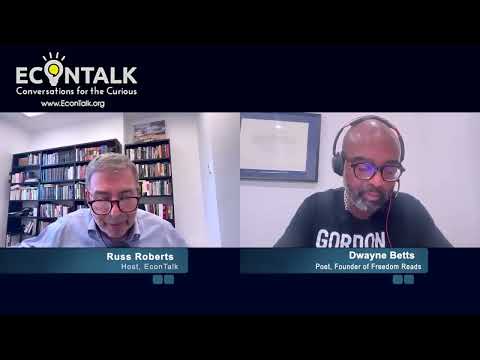
Dwayne Betts was surprised by the profound emotional impact of the Iliad, weeping at its conclusion despite knowing the story. He found the poem's exploration of characters facing seemingly predetermined fates, yet still making choices, deeply moving and reflective of his own life experiences.
Betts: The Iliad as a Chronicle of Lives Cut Short
Betts draws a parallel between the Iliad and Tim O'Brien's 'The Things They Carried,' viewing the epic as a series of elegies and obituaries. He highlights how the poem constantly evokes the lives soldiers left behind, emphasizing that their actions in war have profound ramifications for their families, turning the pursuit of glory into a source of sorrow.
Betts: The Iliad's Universal Themes and Personal Choice
Betts argues that the Iliad, through its vivid imagery and exploration of war's cost, reveals universal themes of family, friendship, and sorrow. He connects this to Yehuda Amichai's poem 'Diameter of a Bomb,' illustrating how even the smallest act of violence has a vast circle of pain, and emphasizes that the Iliad reminds us that every individual's life and suffering matters.