Biological age, distinct from chronological age, reflects an individual's physiological state and disease risk, and can be measured using various technologies, including molecular markers like DNA methylation. This concept is crucial for understanding why people of the same chronological age have different health outcomes and mortality risks.
The Landscape of Aging Clocks
Numerous biological aging clocks exist, utilizing diverse data like step counts, gait speed, imaging, gene expression, and DNA methylation. While each clock measures different aspects of aging, DNA methylation clocks, particularly those developed by Dr. Horvath, have shown strong correlations with aging and mortality, despite variations between different clock designs.
PhenoAge vs. GrimAge: Mortality Predictors
PhenoAge and GrimAge are advanced DNA methylation clocks that significantly predict mortality risk. PhenoAge tracks markers of organ dysfunction and inflammation, while GrimAge incorporates methylation estimates of smoking history and other stress-related factors, demonstrating superior predictive power for mortality compared to traditional biomarkers.
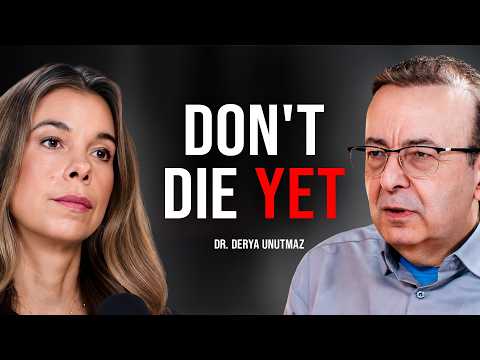
Dr. Unutmaz: The Next Decade Could Add 50 Years to Lifespan
Dr. Unutmaz posits that due to the exponential acceleration of AI, the next 10-15 years could see advancements that add approximately 50 years to human lifespan. This is driven by rapid progress in drug discovery, disease treatment, and potentially reversing the aging process, leading to a 'longevity escape velocity' where each year lived adds more than a year to one's life expectancy. He urges listeners to 'try not to die' in the immediate future to benefit from these impending breakthroughs. The ultimate resolution is that this rapid advancement makes the near future a critical juncture for humanity's potential longevity.
AI's Exponential Leap: From Productivity to Planning
Dr. Unutmaz explains that AI's intelligence is accelerating exponentially, far surpassing linear human thinking. Initially, AI provided productivity gains like literature scanning, but advanced models like GPT-4 and GPT-5 can now perform complex analysis, generate hypotheses, and suggest experiments. This capability allows AI to process vast biological datasets, extract insights, and design drugs in hours or days, drastically contracting R&D timelines that previously took months or years. The key takeaway is that AI's reasoning and planning abilities are transforming scientific discovery at an unprecedented pace.
Digital Twins: The Future of Clinical Trials and Personalized Medicine
The concept of a 'digital twin' – a comprehensive, simulated biological model of an individual – is presented as the solution to the lengthy validation process for new treatments. By integrating vast amounts of personal biological data (genomics, metabolomics, etc.), AI can simulate drug effects and predict outcomes with high accuracy. This could reduce clinical trial durations from years to months or weeks, allowing for highly personalized medicine where treatments are tailored to specific individuals. The resolution lies in AI's ability to predict outcomes digitally, minimizing the need for extensive human trials.